Steven J. Davis — “Some Economic Implications of COVID-Related Shocks”
30 Jan 2021 Leave a comment
in economic growth, economic history, fiscal policy, health economics, human capital, industrial organisation, labour economics, labour supply, macroeconomics, managerial economics, occupational choice, organisational economics, personnel economics, survivor principle, unemployment Tags: economics of pandemics, real business cycles
Vaccine politics look like normal politics – just more extreme
30 Jan 2021 Leave a comment

Point of Order has been consistent in anticipating an irritable post-Brexit relationship between Britain and the EU. But who would have thought vaccine politics would develop as a major flashpoint, let alone a possible relationship breaker?
Even hyper-critical Brits have had to acknowledge that the UK government is a leader in the global vaccination rollout. And as more background information seeps into the public arena, the British government’s decisiveness in supporting vaccine development, committing early to contracts and driving mass vaccination is looking better and better.
But the same comparisons spell political danger for European politicians. Co-ordination by the EU appears to have resulted in slowness: slowness in making commitments, in tweaking the production process and in approving the product.
View original post 324 more words
January 29th: Death of King George III of the United Kingdom in 1820 and the death of King Christian IX of Denmark in 1906.
30 Jan 2021 Leave a comment

Today is the anniversary of two deaths in European Royal history. The two royals are King George III of the United Kingdom and King Christian IX of Denmark.Today is the 115th anniversary of the death of King Christian IX of Denmark, Known as the ‘father-in-law of Europe’ and the ancestor of the monarchs of Denmark, Norway, the UK, Belgium, Luxembourg and Spain. The Duke of Edinburgh is one of his three surviving great-grandchildren.

Today I will highlight and focus on King George the third.
George III (George William Frederick; 4 June 1738 – 29 January 1820) was King of Great Britain and Ireland from 25 October 1760 until the union of the two kingdoms on 1 January 1801, after which he was King of the United Kingdom of Great Britain and Ireland until his death in 1820. He was concurrently Duke and Prince-elector of Brunswick-Lüneburg (“Hanover”) in the Holy Roman…
View original post 554 more words
Sex Ratios and the Marriage Market: WW1
30 Jan 2021 Leave a comment

Last week I wrote about the “marriage market“. In many ways, the marriage market is like a labor market: there are search costs, match quality, competition for mates, and so on. When one side of the market becomes more abundant, that side become less picky — their minimum willingness to accept goes down.
Today we examine war as a shock that makes women more abundant than men. The marriage market predicts this shock will mean a smaller fraction of women will marry but those that do receive a smaller share of the benefits from marriage. Also, a larger fraction of men will marry and receive a larger share of the benefits from marriage.
Ran Abramitzky, Adeline Delavande, and Luis Vasconcelos investigate marriage in pre-and-post World War 1 (WW1) France where an estimated 16.5 percent of the French male population died or were missing in WW1. You can see…
View original post 385 more words
The Tudors: Henry VII (1485-1509)
30 Jan 2021 Leave a comment

From out of the darkness of strife and civil war, late 15th century England emerged stable and filled with hope in the new ruling family: The Tudors. Thirty years of war, known as The Wars of the Roses, had torn the country apart in an unraveling a political struggle. At its height, the Plantagenets were the conquering victors at the battles of Crécy, Poitiers, and Agincourt. However, in its waning days, the Plantagenets had descended into madness and civil war. Two rival Plantagenet branches stemming from Edward III (the Houses of York and Lancaster) slaughtered each other mercilessly for decades until, in the end, the House of York under Richard III finally destroyed itself, and with it went the rule of the Plantagenets. It was a fitting end for the warrior kings of England.
The arrival of the Tudors promised a new path forward. It was the dawn of the…
View original post 2,163 more words
Big Battery Bunkum: Why Grid-Scale Storage of Renewable Energy Will Never Work
29 Jan 2021 Leave a comment


Banishing our good friends, logic and reason is essential to the notion of an ‘inevitable transition’ to an all wind and sun powered future. Ignorance of simple maths, the laws of physics, economics and meteorology helps, too.
Which explains why the naïve and gullible are merrily swallowing the story that we’re just a few mega-batteries away from our wind and solar powered Nirvana.
The ‘storage is a costless cinch’ is yet another myth peddled by those profiting handsomely from the greatest economic and environmental fraud, in history. And the need to spin the ‘batteries will save us’ story arises from the total and totally unpredictable collapses in wind power output and/or the inevitable daily solar power output collapse (aka ‘sunset’).
However, when we reengage our critical faculties, it’s pretty easy to see just how ludicrous the proposition being advanced is. To that end, here’s Willem Post attempting to bring us…
View original post 1,767 more words
How to make the world better. Really. With Dr. Bjorn Lomborg
29 Jan 2021 Leave a comment
in applied welfare economics, development economics, economic history, energy economics, environmental economics, global warming, growth disasters, growth miracles Tags: climate alarmists
The Great Explorer – Ernest Shackleton I WHO DID WHAT IN WW1?
28 Jan 2021 Leave a comment
in defence economics, economics of media and culture, war and peace Tags: World War I
Biden’s Bird Slaughter: Green New Deal’s Wind Turbines Will Kill 1,000,000 Birds Annually
28 Jan 2021 Leave a comment
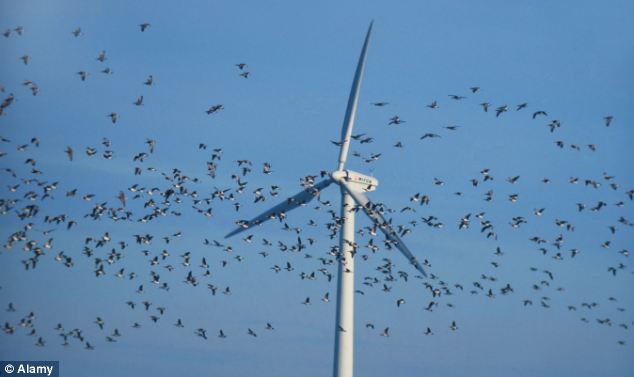
Biden, Harris and her Squad are itching to carpet the US in thousands of these things, with America’s birds and bats to join the list of casualties. Sure, rocketing power prices and unreliable power supplies are inevitable. So too, the destruction of once tranquil, peaceful and prosperous rural communities.
But where their hateful hypocrisy is most obvious, is in the environmental carnage wreaked by industrial wind turbines and large-scale solar plants.
American wind turbines and solar plants already exact a heavy toll on birds and bats; rare and endangered Vultures and Eagles are being slaughtered in their thousands each year.
However, with the imminent rollout of the Democrat’s Green New Deal, the scale of the avian onslaught will increase in orders of magnitude.
The American Bird Conservancy reckons that if America meets its 20% wind power target, by 2030, wind turbines will be killing over a million birds every year.
View original post 735 more words
The minimum wage paper that needs to be written
28 Jan 2021 Leave a comment

I have been following the debates on the minimum wage in view of the forthcoming increase of the federal minimum wage in the United States. And there is something that is bugging me to no end: the explanation provided by labor economist for why there’d be a limited employment effect.
Notice that I say employment effect and that I thus limit myself to the number of bodies hired. I am also not going to consider the distribution of elasticities found since the seminal work of Card and Krueger that tends to point to negative effects on employment and even clearer effects on hours of work. I am also not going to account for other adjustment channels like those that Brian Albrecht discusses here. I am especially going to discount issues of minimum wage enforcement.
I am just going to focus on the channel for why I’d be…
View original post 650 more words
The Best of Greta Thunberg | Spitting Image
28 Jan 2021 Leave a comment
in energy economics, environmental economics, global warming, politics - Australia, politics - New Zealand, politics - USA, television
Pearl Harbor – the Making of a Stupid, Fun Project
28 Jan 2021 Leave a comment
in defence economics, war and peace Tags: Pearl Harbor, World War II


Recent Comments