
Blaspheming while it is still legal
25 Dec 2020 Leave a comment
in economics of religion, liberalism, libertarianism, politics - New Zealand Tags: Blasphemy, free speech, Freedom of religion, political correctness, regressive left

Anti-science left @Greens @NZGreens @AOC @BernieSanders @GreenpeaceAP
20 Dec 2020 Leave a comment
in economics of education, environmental economics, global warming, health economics Tags: anti-GMOs movement, Anti-Science left, anti-vaccination movement, climate alarmists

Battle of the Bulge: Why were the Allies surprised?
18 Dec 2020 Leave a comment
in defence economics, war and peace Tags: World War II
What’s wrong with education? A Symposium featuring Bryan Caplan & Miguel Urquiola
16 Dec 2020 Leave a comment
in economics of education, economics of information, human capital, labour economics, labour supply, occupational choice, personnel economics, poverty and inequality, unemployment Tags: signaling
Nicole McKee’s maiden speech
08 Dec 2020 Leave a comment
in economics of crime, law and economics, property rights Tags: free speech
The Last of the R.S.I and Mussolini
08 Dec 2020 Leave a comment


History came full-circle on 29 October 1944, when Benito Mussolini made his last public speech in Milan. Exactly twenty-two years before, he had set out from this same city in the ‘March on Rome’ that brought him to power. That early triumph had been preceded by a period of violent struggle, just as years of difficult warfare seemed to culminate somehow in the 1944 mass-rally. The outpouring of popular support it generated for him inspired his sometimes flagging spirits, while stiffening the backbone of the Salo Republic under an increasingly heavy siege from the air. His words were broadcast from the…
View original post 2,592 more words
Stalin at Potsdam
08 Dec 2020 Leave a comment
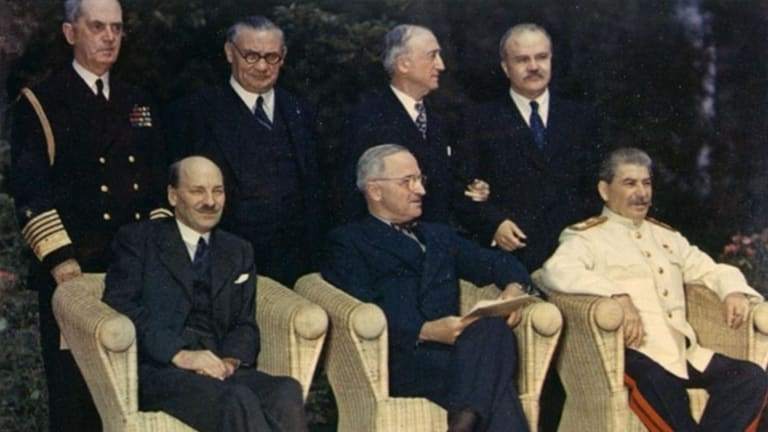
The Russian demand for reparations had been accepted in principle at Yalta. The special commission set up to examine the subject failed to reach agreement. At Potsdam, Stalin pressed constantly for acceptance of a figure for reparations. The Allies refused to be committed. They were incensed by reports that the Russians were already removing from occupied territories machinery and other property which were not accepted as booty of war. Various practical difficulties forced the Western Allies to abandon their policy of treating the German economy as a whole. New U.S. Secretary of State James Byrnes finally proposed that each power should satisfy its reparations claims from its own zone. Some 40 percent of the value of German industrial equipment deemed unnecessary for a peace economy was in the Soviet zone. Byrnes proposed further that 10 percent of such industrial equipment in the western zones should be given to Soviet Russia…
View original post 3,089 more words
The Great Escape from infectious diseases
08 Dec 2020 Leave a comment
in health economics Tags: The Great Escape, vaccines

Travel broadens the mind @Maori_Party. At Hiroshima ground zero memorial, just could not stop singing to myself “watching people fighting on Armistice Day, watching people fighting on Armistice Day”!
07 Dec 2020 Leave a comment
in defence economics, economic history, economics of crime, law and economics, laws of war, war and peace Tags: New Zealand politics, New Zealand wars

Eleanor Roosevelt – Pearl Harbor Radio Address – Dec. 7, 1941
07 Dec 2020 Leave a comment
in defence economics, war and peace Tags: Pearl Harbour, World War II
For Whom The Bell Tolls
06 Dec 2020 Leave a comment

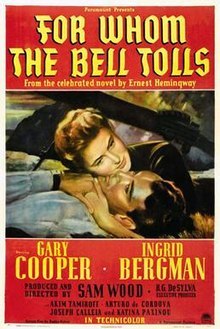
For Whom The Bell Tolls (1943) Director: Sam Wood
★★★★☆
For Whom The Bell Tolls is a beautiful technicolor film version of Ernest Hemingway’s famous novel of the same name. It is impossible to successfully compare the film version to Hemingway’s classic novel, as so much is lost without the modernist reflections of the complex protagonist, Robert Jordan, however Sam Wood’s production does a fabulous job of capturing the main narrative, despite the film being nearly three hours long. The Hays Code, active in Hollywood in the 1940s, blocked certain romantic scenes from being shown onscreen, scenes which are quite scandalous even in the novel. Hemingway was apparently involved in the production. He hand-selected both Gary Cooper and Ingrid Bergman for their respective roles in the film. The film was nominated for nine Academy Awards, winning one well-deserved award: Best Supporting Actress for Greek actress, Katina Paxinou who played the…
View original post 269 more words
THE MAORI PARTY SEEKS TO AIRBRUSH HISTORY
06 Dec 2020 Leave a comment


The Maori Party is in danger of losing any respect they might have otherwise enjoyed. They claim to speak for Maoridom so let’s first turn the spotlight on that. The reality is they polled just 1.17% in the Party vote (down 0.01% from that three years previously) and won two seats. They can only claim to speak for themselves and indeed, all the other four parties represented in the house have as many MPs of Maori descent as they do (and Labour and the Greens more). The Maori Party represents the essentially disaffected rump of Maoridom …. nothing less and certainly nothing more.
I guess I can put up with them defying dress standards and wearing silly hats in the House although one might have expected the Speaker to take a less charitable view of that having said that he expects Members to obey the rules requiring MPs to conform…
View original post 187 more words


Recent Comments