Why not blockade Japan into Surrender? (feat. D.M. Giangreco)
07 Aug 2020 Leave a comment
in defence economics, war and peace Tags: World War II
The High Costs And Low Benefits Of Electric Vehicles
07 Aug 2020 Leave a comment

 By Duggan Flanakin ~
The rush to decarbonize every nation in the world in one or maybe two decades reflects the “I want it all NOW!” philosophy imbued through modern education systems. Current and recent former students – and their teachers – demand a perfect world (since they can envision one) and exhibit zero patience (hence the nationwide riots in the U.S.).
 Hopefully the mad stampede to destroy the West’s ability to use fossil fuels at all will be sidelined by harsh realities of economics, logistics, and resource availability (including a hoped for reticence to rely on child slave labor to satisfy their blood lust). Yet the United Kingdom, formerly a bastion of sanity, has mandated, as part of its drive toward an all-electric society, the installation of electric vehicle charging stations in every home by 2030 and that all new cars and vans be hydrogen or electric vehicles (and…
View original post 912 more words
How many lockdowns are one too many? #COVID19 op-ed in @DomPost
07 Aug 2020 Leave a comment
in applied welfare economics, behavioural economics, economics of bureaucracy, health economics, law and economics, politics - Australia, politics - New Zealand, politics - USA, Public Choice Tags: economics of pandemics, offsetting behaviour, pessimism bias, The fatal conceit, unintended consequences

Stoners don’t like to pay tax nor like greentape @nzdrug
07 Aug 2020 Leave a comment
in economics of crime, health economics, law and economics, politics - New Zealand, politics - USA, public economics Tags: black markets, marijuana decrimilization, offsetting behaviour, The fatal conceit, unintended consequences

From DomPost 7 August 20
Richard Epstein on the first amendment
07 Aug 2020 Leave a comment
in law and economics, politics - USA, Richard Epstein Tags: constitution law, free speech
75 years ago to the day…
07 Aug 2020 Leave a comment

August 6, 1945, 8:15:17 seconds, a solitary bomb was released from a single B-29 over Hiroshima…
[Lyrics: Peart; music: Lee, Lifeson]
Imagine a time
When it all began
In the dying days of a war
A weapon that would settle the score
Whoever found it first
Would be sure to do their worst
They always had before…Imagine a man
Where it all began
A scientist pacing the floor
In each nation, always eager to explore
To build the best big stick
To turn the winning trick
But this was something more…[CHORUS:] The Big Bang took and shook the world
Shot down the Rising Sun
The end was begun
It would hit everyone
When the chain reaction was done
The big shots try to hold it back
Fools try to wish it away
The hopeful depend on a world without end
Whatever the hopeless may sayImagine…
View original post 338 more words
August 6, 1806. Dissolution of the Holy Roman Empire.
07 Aug 2020 Leave a comment

The dissolution of the Holy Roman Empire occurred de facto on August 6, 1806, when Emperor Franz II abdicated his Imperial title and released all imperial states and officials from their oaths and obligations to the empire. Although the abdication was considered legal, the dissolution of the imperial bonds was not and several states refused to recognise the end of the empire at the time.
Although today is the date the empire was dissolved, in many ways it was a mere formality as the empire had been deteriorating since the Treaty of Westphalia in 1648 that ended the Thirty Years War. The treaty gave the numerous states within the empire autonomy, ending the empire in all but name. The Swiss Confederation, which had already established quasi-independence in 1499, as well as the Northern Netherlands, also left the Empire at this juncture. The Habsburg Emperors then began to focus on consolidating…
View original post 815 more words
Why were sailors so unhealthy
07 Aug 2020 Leave a comment
in defence economics, economic history, health economics
#globalwarming #climateemergency @GreenpeaceAP @Greens
07 Aug 2020 Leave a comment
in environmental economics, global warming, politics - Australia Tags: climate alarmists, pessimism bias

David Seymour’s adjournment speech 2020
07 Aug 2020 Leave a comment
in comparative institutional analysis, constitutional political economy, economic growth, economics of bureaucracy, economics of crime, economics of regulation, health economics, income redistribution, law and economics, Marxist economics, politics - New Zealand, property rights, Public Choice, rentseeking Tags: 2020 New Zealand election, economics of pandemics, regressive left
Campaign granted permission for judicial review of £27 billion UK roads programme
06 Aug 2020 Leave a comment

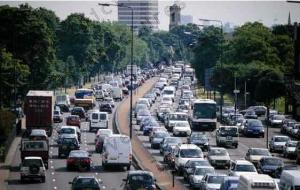
Once more the courts are asked to intervene in UK transport policy on the grounds of ‘climate change objectives’ and other supposed issues, while the roads get ever more overcrowded.
– – –
Transport Action Network (TAN) has been granted permission for judicial review of the Transport Secretary Grant Shapps’ decision to go ahead with the £27 billion roads programme (Roads Investment Strategy 2 or RIS2), reports Ekklesia.
Mrs Justice Lieven gave the go ahead for the review, saying that TAN’s case that Mr Shapps had not properly considered the impact of the multi-billion pound roads-building scheme on climate change objectives, including the carbon budgets under the Climate Change Act 2008 and the Paris Agreement, was arguable.
The Judge also declared the case to be “significant” which means it will be fast-tracked and should be heard at the High Court by early November.
View original post 201 more words

A revolting pocket borough: Morpeth in the late eighteenth century
06 Aug 2020 Leave a comment

In our latest Georgian Lords blog, in keeping with our general focus for the month on the county of Northumberland, Dr Charles Littleton considers the case of the pocket borough of Morpeth and its uneasy relations with the earls of Carlisle.
The Northumbrian borough of Morpeth had returned representatives to Parliament since 1553. From 1601 the Howards of Naworth were lords of the manor, and in 1661 Charles Howard was created earl of Carlisle. He and his descendants controlled Morpeth so thoroughly that in the mid-eighteenth century the selection of MPs was considered to be ‘totally in Lord Carlisle’. Morpeth would appear to be a textbook example of a ‘pocket borough’. However even this personal fiefdom needed careful management, and on occasion the townsmen could resist the earls’ domination.

The franchise lay in those admitted to the freedom of the borough. This provided the earls with a means to control…
View original post 915 more words


Recent Comments