
From https://www.dvrcv.org.au/knowledge-centre/our-blog/family-violence-aboriginal-communities
Celebrating humanity's flourishing through the spread of capitalism and the rule of law
11 Jun 2020 Leave a comment
in economics of crime, law and economics, politics - USA Tags: crime and punishment, law and order
11 Jun 2020 Leave a comment
Yesterday I featured a provocative blogginheads.tv discussion with Glenn Loury and John McWhorter, both of whom issued some opinions that would be condemned as racist if coming from white people.
But one opinion, which is not that controversial but does have its critics, is that the violence and looting accompanying the George Floyd protests should be loudly and unequivocally condemned. Some like Kareem Abdul-Jabbar don’t approve of the violence, but find it “understandable” in a way that comes close to excusing it. Others—some on this website—have said that the violent incidents are few and overplayed in a way that overshadows the peaceful protests. We should, they imply, simply ignore the violence. Others argue that all the looting and physical assaults were not committed by “real” protestors, but by white supremacists, Antifa-ites, or simply greedy people. I don’t accept that claim.
Now I’m not sure how many incidents of violence or…
View original post 1,177 more words
11 Jun 2020 Leave a comment
This past March, Public Choice published an article I found to be very interesting. It is called “The anti-discrminatory tradition in Virginia School public choice theory” by Phil Magness. I found this article interesting for two reasons. First, I’ve read a fair amount of public choice and, honestly, I had no idea that racial discrimination was a topic they dealt with in detail. Second, after the really misleading work by Nancy McLean on Buchanan, I wanted to read something written that is more level headed and, to be blunt, truthful.
So what is the article about? Magness examines the published and unpublished writings of scholars associated with the “Virginia School” of public choice theory, which focuses on how incentives affect state actors, the theory of rules and and constitutions, and issues like regulatory capture. He focuses on scholars who visited or were affiliated with the organizational home of public choice…
View original post 360 more words
11 Jun 2020 Leave a comment
Within a year of George’s accession the Whigs won an overwhelming victory in the general election of 1715. Several members of the defeated Tory Party sympathised with the Jacobites, who sought to replace George with Anne’s Catholic half-brother, James Francis Edward Stuart (called “James III and VIII” by his supporters and “the Pretender” by his opponents).
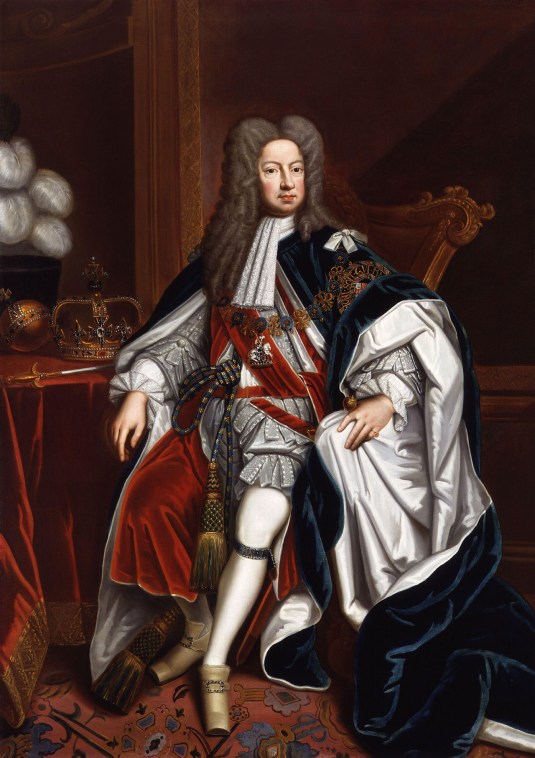
George’s distrust of the Tories aided the passing of power to the Whigs. Whig dominance grew to be so great under George that the Tories did not return to power for another half-century. After the election, the Whig-dominated Parliament passed the Septennial Act 1715, which extended the maximum duration of Parliament to seven years (although it could be dissolved earlier by the Sovereign).
After his accession in Great Britain, George’s relationship with his son (which had always been poor) worsened. George Augustus, Prince of Wales, encouraged opposition to his father’s policies, including measures designed…
View original post 801 more words
11 Jun 2020 Leave a comment
in applied price theory, economics of information, health economics, industrial organisation, labour economics, labour supply, macroeconomics, managerial economics, organisational economics, personnel economics, politics - Australia, politics - New Zealand, politics - USA, survivor principle, theory of the firm Tags: creative destruction, economics of pandemics
11 Jun 2020 2 Comments
in defence economics, economics of crime, law and economics, politics - Australia, politics - New Zealand, politics - USA, war and peace Tags: political correctness, regressive left, virtue signaling, World War II

11 Jun 2020 Leave a comment
in energy economics, environmental economics, global warming Tags: nuclear energy
11 Jun 2020 Leave a comment
in defence economics, war and peace Tags: World War II
11 Jun 2020 Leave a comment

Price gouging on the grand scale to keep the ruinables show on the road, regardless of electricity grid stability. But our leaders love this fiasco and label it as climate policy, so that’s OK? No, but they seem to face few obstacles to their blinkered obsession, even though the problems look bound to get worse.
– – –
Lockdown reveals the UK’s power grid is fragile, costly, and failing – because of renewables, says Dr. Benny Peiser @ Climate Change Dispatch.
The Global Warming Policy Foundation (GWPF) is today publishing a collection of papers by energy expert Dr. John Constable, documenting the rapid decay of the UK electricity system, with system balancing costs spiraling out of control over the last few weeks.
The cost of balancing the grid over the Bank Holiday weekend amounted to £50m, and National Grid has predicted additional costs of £700m from May to August…
View original post 234 more words
11 Jun 2020 Leave a comment
in defence economics, economic history, labour economics, Marxist economics, Public Choice, war and peace Tags: Stalin
10 Jun 2020 Leave a comment
in economics of media and culture
10 Jun 2020 Leave a comment
in economics of crime, law and economics, politics - USA Tags: law and order, political correctness, regressive left
10 Jun 2020 Leave a comment
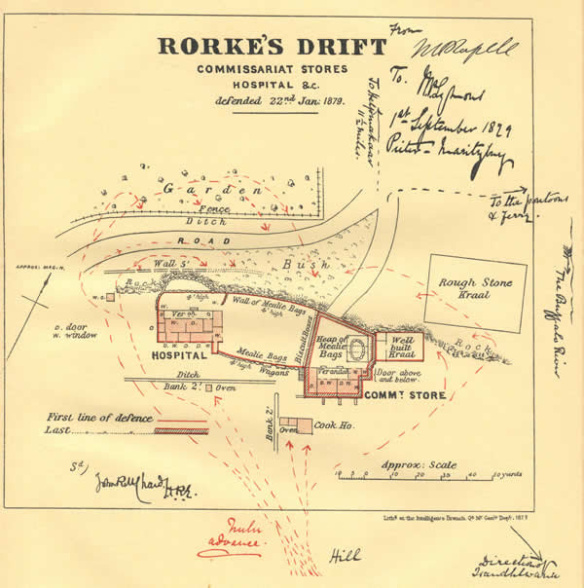
Lieutenant Chard’s famous drawing of the Rorke’s Drift battle, showing the main thrusts of the Zulu attack.
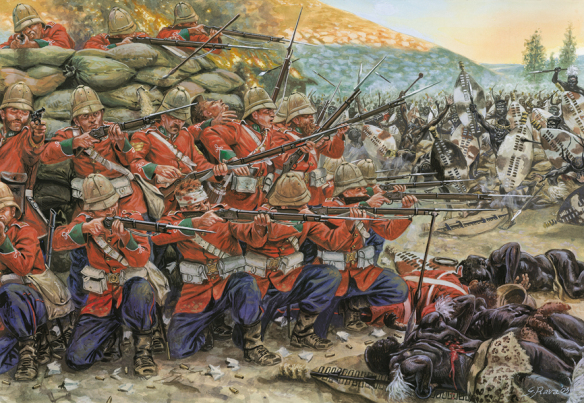
The Battle of Rorke’s Drift fully deserves its elevated status in the annals of British military history, if only as one of the most heroically fought and efficiently conducted small-scale military actions of the last 100-odd years. The British were, from the outset vastly outnumbered by up to thirty to one by their Zulu protagonists. In the context of the relatively confined space of the garrison, and the considerable opportunities for enemy concealment in the shrubs, bushes and caves outside and overlooking the garrison, British technical superiority had been much more limited than some observers have suggested. After the initial, albeit destructive volleys fired against the first wave of Zulu attackers, much (if not the majority) of the fighting was at close quarters. The survival of the garrison depended at its most…
View original post 1,438 more words
Celebrating humanity's flourishing through the spread of capitalism and the rule of law
Celebrating humanity's flourishing through the spread of capitalism and the rule of law
Celebrating humanity's flourishing through the spread of capitalism and the rule of law
Celebrating humanity's flourishing through the spread of capitalism and the rule of law
Celebrating humanity's flourishing through the spread of capitalism and the rule of law
Celebrating humanity's flourishing through the spread of capitalism and the rule of law
Celebrating humanity's flourishing through the spread of capitalism and the rule of law
Celebrating humanity's flourishing through the spread of capitalism and the rule of law
Celebrating humanity's flourishing through the spread of capitalism and the rule of law
A History of the Alt-Right
Econ Prof at George Mason University, Economic Historian, Québécois
Celebrating humanity's flourishing through the spread of capitalism and the rule of law
Scholarly commentary on law, economics, and more
Beatrice Cherrier's blog
Celebrating humanity's flourishing through the spread of capitalism and the rule of law
Celebrating humanity's flourishing through the spread of capitalism and the rule of law
Celebrating humanity's flourishing through the spread of capitalism and the rule of law
Why Evolution is True is a blog written by Jerry Coyne, centered on evolution and biology but also dealing with diverse topics like politics, culture, and cats.
Celebrating humanity's flourishing through the spread of capitalism and the rule of law
A rural perspective with a blue tint by Ele Ludemann
DPF's Kiwiblog - Fomenting Happy Mischief since 2003
Celebrating humanity's flourishing through the spread of capitalism and the rule of law
The world's most viewed site on global warming and climate change
Tim Harding's writings on rationality, informal logic and skepticism
A window into Doc Freiberger's library
Let's examine hard decisions!
Commentary on monetary policy in the spirit of R. G. Hawtrey
Thoughts on public policy and the media
Celebrating humanity's flourishing through the spread of capitalism and the rule of law
Politics and the economy
A blog (primarily) on Canadian and Commonwealth political history and institutions
Reading between the lines, and underneath the hype.
Economics, and such stuff as dreams are made on
"The British constitution has always been puzzling, and always will be." --Queen Elizabeth II
Celebrating humanity's flourishing through the spread of capitalism and the rule of law
Celebrating humanity's flourishing through the spread of capitalism and the rule of law
WORLD WAR II, MUSIC, HISTORY, HOLOCAUST
Undisciplined scholar, recovering academic
Celebrating humanity's flourishing through the spread of capitalism and the rule of law
Res ipsa loquitur - The thing itself speaks
In Hume’s spirit, I will attempt to serve as an ambassador from my world of economics, and help in “finding topics of conversation fit for the entertainment of rational creatures.”
Researching the House of Commons, 1832-1868
Reflections on books and art
Posts on the History of Law, Crime, and Justice
Celebrating humanity's flourishing through the spread of capitalism and the rule of law
Exploring the Monarchs of Europe




Recent Comments