From the Vaults: A defector reveals tactics of Trotskyists in the work place

Michael Ezra's avatarUnder the Ocular Tree

Roger Rosewell had been a full-time worker for International Socialists, the forerunner organisation to of the Trotskyist Socialist Workers Party (SWP), for five years in the 1970s.  He knew how the Party operated because he had been an operator. He used to direct shopfloor members and shop stewards in how to manipulate disputes between workers and management. He ultimately defected from the party and in 1982 his booklet, Dealing with the Marxist Threat to Industry, was published. It was here that Rosewell accused Trotskyist groups of “systematic, undemocratic, elitist manipulation” of workers. Reporting on this publication, John Ezard for The Guardian described the tactics that  Rosewell explained that the SWP and other Trotskysists used:

    • Positioning shop stewards so that only they could see and count a show of hands.
    • Deliberate cramming of indoor meetings into insufficiently large halls without seats so that workers could not see around them and could…

    View original post 102 more words

    Feminist Epistemology: An Exposé

    Michael Ezra's avatarUnder the Ocular Tree

    On March 23, 2017, I gave a talk to the philosophy society at Birkbeck College, University of London on feminist epistemology.  My talk was mainly about the feminist theory of domination and power as outlined by Catharine MacKinnon.  While I did not read my talk, had I read it, what I would have said would have been what is on the PDF below.

    Ezra – Feminist Epistemology – An Expose – Talk – Birkbeck 170323

    View original post

    Lost on the woke @AOC @BernieSanders @Greens @NZGreens

    The wages of sin: the Vice Fund, S&P 500 and #COVID19

    From https://www.bloomberg.com/quote/VICEX:US

    USA Mutuals Vitium Global Fund seeks long-term growth of capital by investing in equity securities of companies that derive a significant portion of their revenues from a group of vice industries that includes the alcoholic beverages, defense/aerospace, gaming and tobacco industries. The Fund will concentrate at least 25% of its net assets in this group of four vice industries.

    UK government may give drivers £6,000 to switch to electric cars 

    oldbrew's avatarTallbloke's Talkshop

    Not the latest model
    Obviously bribery is thought to be the only way, short of coercion, to appeal to reluctant drivers who see clearly enough the various disadvantages and high cost of EVs they were never asked if they wanted to buy. Under cover of the virus situation they plan to pour more public money down their ideological drain to appease the greenblob.
    – – –
    It has been reported that Boris Johnson is considering launching a car scrappage scheme to boost the automotive industry, says The Shropshire Star.

    Motoring and environmental groups have welcomed the prospect of a new car scrappage scheme encouraging motorists to switch to electric vehicles.

    The AA described it as “fantastic” while Greenpeace said it would be “moving in the right direction”.

    View original post 188 more words

    Dismantling (or defunding) police departments

    Can an app be designed to stop woke phones dialing 911?

    whyevolutionistrue's avatarWhy Evolution Is True

    One of the misguided goals of the recent protests ignited by the murder of George Floyd are the calls not just for “defunding” police departments, but to abolish them entirely. Now it’s often not clear what “defunding” means, but sometimes protestors conceive of it as diverting money from the police force to social programs.

    In the disturbing video below, Jacob Frey, the impossibly young mayor of Minneapolis (he’s 38), is asked by a protest leader if he’ll commit to defunding/dismantling the city’s police department. When he says he can’t commit to that, he was booed and driven away (this despite his promises to make “deep structural reforms” in the police department and admission that the city’s police culture was imbued with systemic racism). This is what happens when you try to compromise with wokeness. There is no compromise, and perhaps a mayor can’t commit to stuff like that with a…

    View original post 1,488 more words

    Now is the time for the Government to make the bold decision to do less

    julianhjessop's avatarPlain-speaking Economics

    Rishi Sunak is having a relatively good crisis. The Chancellor and his team certainly deserve plenty of credit for the way the Treasury has shielded the large majority of businesses and jobs during an unprecedented slump in economic activity. But this task has been made easier by the broad consensus on the appropriate policies and by the seemingly unlimited amounts of public money that the Government has been willing to spend. Now, the context is changing.

    In particular, the focus of economic policy is shifting towards supporting the recovery as the lockdown is lifted. This is likely to open up tensions between those who think the best way to revive the economy is for the Government to spend and borrow even more – which seems to be the political instinct of some at No.10 – and the Treasury’s traditional caution.

    We appear to be getting a taste of this already…

    View original post 627 more words

    Life of George I, King of Great Britain and Elector of Hanover. Part II.

    liamfoley63's avatarEuropean Royal History

    Part II

    Though George has his mistress Sophia-Dorothea had her own romance with the Swedish Count Philip-Christoph von Königsmarck. Threatened with the scandal of an elopement, the Hanoverian court, including George’s brothers and mother, urged the lovers to desist, but to no avail. According to diplomatic sources from Hanover’s enemies, in July 1694 the Swedish count was killed, possibly with George’s connivance, and his body thrown into the river Leine weighted with stones.

    E3C69034-FEA0-479D-B850-4F76A9861DC3
    George I of Great Britain

    The murder was claimed to have been committed by four of Ernst-August’s courtiers, one of whom, Don Nicolò Montalbano, was paid the enormous sum of 150,000 thalers, about one hundred times the annual salary of the highest-paid minister. Later rumours supposed that Königsmarck was hacked to pieces and buried beneath the Hanover palace floorboards. However, sources in Hanover itself, including Sophia, denied any knowledge of Königsmarck’s whereabouts.

    George’s marriage to Sophia-Dorothea was…

    View original post 463 more words

    The South Sea Bubble 300 Years On

    ehs1926's avatarThe Long Run

    by William Quinn (Queen’s University, Belfast)

    A special issue on the Tricentenary of the South Sea Bubble was published on The Economic History Review as open access, and it is available at this link

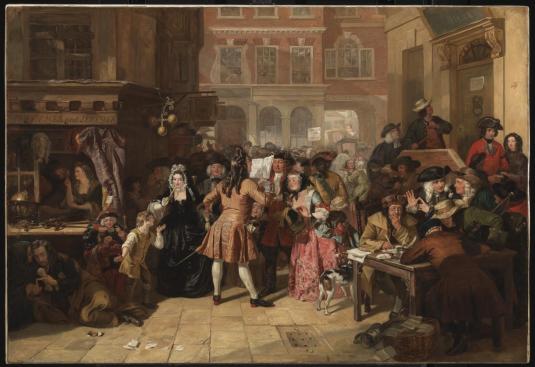
    The South Sea Bubble, a Scene in 'Change Alley in 1720 1847, exhibited 1847 by Edward Matthew Ward 1816-1879 Edward Matthew Ward (1847) The South Sea Bubble, a Scene in ‘Change Alley in 1720. Available at Tate Gallery

    In 1720, the British Parliament approved a proposal from the South Sea Company to manage the government’s outstanding debt. The Company agreed to issue shares, some of which would be bought using government annuities rather than cash. The Company would then pay the government a reduced rate of interest on these annuities. The government’s debt burden would be reduced, and in exchange, the Company believed it had gained the opportunity to establish itself as a competitor to the Bank of England (Kleer, 2012).

    Superficially, the scheme didn’t make much sense. How would the public be convinced to…

    View original post 824 more words

    Robert Barro on sticky prices

    Image

    MAGNIFICO: THE BRILLIANT LIFE AND VIOLENT TIMES OF LORENZO DE’ MEDICI by Miles J. Unger

    szfreiberger's avatarDoc's Books

    Lorenzo de Medici.jpg

    For the last few nights, my wife and I have binged Netflix’s Medici series.*  It brought me back to Garrett Mattingly’s classic, RENAISSANCE DIPLOMACY which argued that the relationship and machinations between Italian city-states was a microcosm of the 20th century in terms of actions resulting in numerous wars and plots.  It piqued my interest in one of the most important figures of the Renaissance, Lorenzo de’ Medici the subject of Miles J. Unger’s superb biography,  MAGNIFICO: THE BRILLIANT LIFE AND VIOLENT TIMES OF LORENZO DE’ MEDICI which argues that the Florentine leader was able to navigate the Italian city-states and Papal states surviving Papal, domestic Florentine, and other external plots by a Pope, a king, and a duke by employing his charm and diplomatic skill augmented by the occasional use of violence to preside over Florence, a city-state that supported and exhibited artistic brilliance in addition to the…

    View original post 981 more words

    Good Evidence? A 2013 Panel Discussion

    rogerpielkejr's avatarRoger Pielke Jr.

    A reader shared this with me (thanks MP), I was unaware that it was online. From 7 years ago …

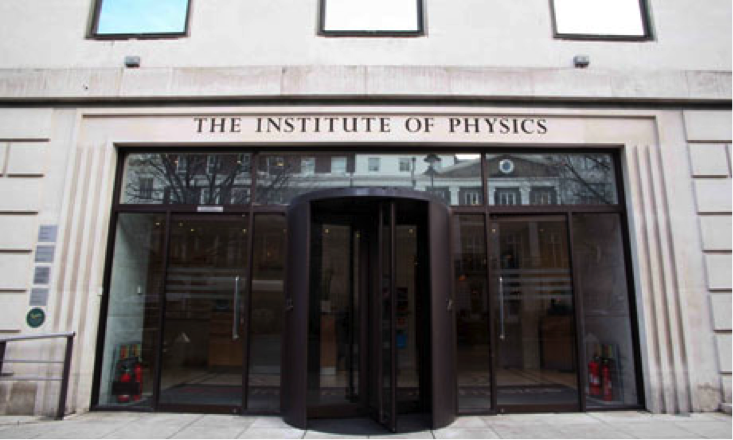
    Recording of a debate held at the Institute of Physics, 4th Feb 2013. Co-organised by Science Policy Research Unit, University of Sussex and the UCL’s department of Science & Technology Studies.

    Policymakers often talk up the importance of evidence-based policy, with increasing calls for randomised controlled trials (RCTs) as the best way of testing whether particular interventions work. But finding and applying evidence in policy is anything but straightforard. Evidence alone rarely wins complex political arguments. Often this merely shifts the locus of debate to what counts as evidence.

    Speakers: Roger Pielke Jr, Professor of Environmental Studies, University of Colorado at Boulder; Richard Horton, Editor of The Lancet; Georgina Mace, Professor of Biodiversity and Ecosystems, University College London; Jonathan Breckon, Alliance for Useful Evidence.

    Chair: James Wilsdon, Professor in…

    View original post 7 more words

    Wind keeping the system “nicely balanced”: does more wind power means better air and cleaner electricity?

    trustyetverify's avatarTrust, yet verify

    Let’s continue with the open letter from the energy company Eneco (see previous post), in which its CEO complains that his company “felt obliged” to shut down some of their windmills despite it was windy. It is framed as the result of the “inflexibility” of nuclear power that pushes wind aside and, most importantly for this post, as a choice for better air and cleaner electricity (translated from Dutch, my emphasis):

    Renewable energy could provide half of our consumption. In itself this is a good prospect: better air and cleaner electricity from wind & sun. We should all be pleased with that.

    The framing in the open letter made me wonder how much wind power was curtailed exactly? Also, assuming that nuclear power would get turned down a notch during the lockdown, how much cleaner would electricity production then get?

    View original post 829 more words

    Steve Pinker on police strikes

    Inclusion excludes

    https://twitter.com/FionneOrlander/status/1269395327100035072

    Previous Older Entries Next Newer Entries

    In My Tribe

    Celebrating humanity's flourishing through the spread of capitalism and the rule of law

    Coordination Problem

    Celebrating humanity's flourishing through the spread of capitalism and the rule of law

    Libertarian Land

    Celebrating humanity's flourishing through the spread of capitalism and the rule of law

    Arin’s Substack

    Celebrating humanity's flourishing through the spread of capitalism and the rule of law

    David Andolfatto

    Celebrating humanity's flourishing through the spread of capitalism and the rule of law

    Monetary Non-Neutrality

    Celebrating humanity's flourishing through the spread of capitalism and the rule of law

    Reason Magazine

    Celebrating humanity's flourishing through the spread of capitalism and the rule of law

    Coyote Blog

    Celebrating humanity's flourishing through the spread of capitalism and the rule of law

    Thoughts from the North

    Celebrating humanity's flourishing through the spread of capitalism and the rule of law

    Fardels Bear

    A History of the Alt-Right

    Vincent Geloso

    Econ Prof at George Mason University, Economic Historian, Québécois

    Bassett, Brash & Hide

    Celebrating humanity's flourishing through the spread of capitalism and the rule of law

    Truth on the Market

    Scholarly commentary on law, economics, and more

    The Undercover Historian

    Beatrice Cherrier's blog

    Matua Kahurangi

    Celebrating humanity's flourishing through the spread of capitalism and the rule of law

    Temple of Sociology

    Celebrating humanity's flourishing through the spread of capitalism and the rule of law

    Velvet Glove, Iron Fist

    Celebrating humanity's flourishing through the spread of capitalism and the rule of law

    Why Evolution Is True

    Why Evolution is True is a blog written by Jerry Coyne, centered on evolution and biology but also dealing with diverse topics like politics, culture, and cats.

    NoTricksZone

    Celebrating humanity's flourishing through the spread of capitalism and the rule of law

    Homepaddock

    A rural perspective with a blue tint by Ele Ludemann

    Kiwiblog

    DPF's Kiwiblog - Fomenting Happy Mischief since 2003

    The Dangerous Economist

    Celebrating humanity's flourishing through the spread of capitalism and the rule of law

    Watts Up With That?

    The world's most viewed site on global warming and climate change

    The Logical Place

    Tim Harding's writings on rationality, informal logic and skepticism

    Doc's Books

    A window into Doc Freiberger's library

    The Risk-Monger

    Let's examine hard decisions!

    Uneasy Money

    Commentary on monetary policy in the spirit of R. G. Hawtrey

    Barrie Saunders

    Thoughts on public policy and the media

    Liberty Scott

    Celebrating humanity's flourishing through the spread of capitalism and the rule of law

    Point of Order

    Politics and the economy

    James Bowden's Blog

    A blog (primarily) on Canadian and Commonwealth political history and institutions

    Science Matters

    Reading between the lines, and underneath the hype.

    Peter Winsley

    Economics, and such stuff as dreams are made on

    A Venerable Puzzle

    "The British constitution has always been puzzling, and always will be." --Queen Elizabeth II

    The Antiplanner

    Celebrating humanity's flourishing through the spread of capitalism and the rule of law

    Bet On It

    Celebrating humanity's flourishing through the spread of capitalism and the rule of law

    History of Sorts

    WORLD WAR II, MUSIC, HISTORY, HOLOCAUST

    Roger Pielke Jr.

    Undisciplined scholar, recovering academic

    Offsetting Behaviour

    Celebrating humanity's flourishing through the spread of capitalism and the rule of law

    JONATHAN TURLEY

    Res ipsa loquitur - The thing itself speaks

    Conversable Economist

    In Hume’s spirit, I will attempt to serve as an ambassador from my world of economics, and help in “finding topics of conversation fit for the entertainment of rational creatures.”

    The Victorian Commons

    Researching the House of Commons, 1832-1868

    Books & Boots

    Reflections on books and art

    Legal History Miscellany

    Posts on the History of Law, Crime, and Justice

    Sex, Drugs and Economics

    Celebrating humanity's flourishing through the spread of capitalism and the rule of law

    European Royal History

    Exploring the Monarchs of Europe