
No comment from @Greenpeace @Greens @NZGreens @jamespeshaw @AOC @BernieSanders
03 May 2020 Leave a comment
It had to be a pub in Ireland
03 May 2020 Leave a comment
in economic history, industrial organisation, survivor principle

May 2, 1536: Arrest of Anne Boleyn, Queen of England.
03 May 2020 Leave a comment

Anne Boleyn (c. 1501 – May 19, 1536) was Queen of England from 1533 to 1536 as the second wife of King Henry VIII. Their marriage, and her execution for treason and other charges by beheading, made her a key figure in the political and religious upheaval that marked the start of the English Reformation.
Anne was the daughter of Thomas Boleyn, 1st Earl of Wiltshire, and his wife, Lady Elizabeth Howard, and was educated in the Netherlands and France, largely as a maid of honour to Queen Claude of France. Anne returned to England in early 1522, to marry her Irish cousin James Butler, 9th Earl of Ormond; the marriage plans were broken off, and instead she secured a post at court as maid of honour to Henry VIII’s wife, Catherine of Aragon.

Anne, Queen Consort of England
Henry VIII and Anne formally married on January 25, 1533, after…
View original post 1,287 more words
A Day in the Life of a Socialist Citizen | Michael Walzer (1968) Dissent Magazine
03 May 2020 Leave a comment
in comparative institutional analysis, constitutional political economy, economics of bureaucracy, industrial organisation, labour supply, law and economics, managerial economics, Marxist economics, occupational choice, organisational economics, poverty and inequality, property rights, Public Choice, theory of the firm Tags: offsetting behaviour, The fatal conceit, unintended consequences

Prehistoric Beasts Size Comparison
03 May 2020 Leave a comment
in economics of education, economics of media and culture
The Soul of Man under Socialism by Oscar Wilde (1891)
03 May 2020 Leave a comment

Disobedience, in the eyes of anyone who has read history, is man’s original virtue. It is through disobedience that progress has been made, through disobedience and through rebellion.
A brief recap
Wilde debuted with a volume of slender and derivative poems in 1881 and was promptly invited to undertake a lecture tour of America in 1882 which proved fabulously successful. Throughout the 1880s he established himself via essays, reviews and articles (not least for The Woman’s World magazine which he edited for a spell) as a flamboyant journalist, leading representative of the Aesthetic movement, as well as fashioning himself into one of the London’s most notorious and newsworthy personalities.
Tiring of makepiece journalism, towards the end of the decade he made the transition to becoming a full-time writer of prose with a series of short stories and essays:
View original post 2,119 more words
Takes 6 to 36 months to manufacture a vaccine; 6 months to make a flu vaccine
02 May 2020 Leave a comment
in health economics Tags: economics of pandemics
Finn Kydland on his work and Ireland
02 May 2020 Leave a comment

I was going through this old interview of Finn Kydland, 2004 Laureate alongwith Ed Prescott.
He nicely explains his work and why he got the Nobel Prize:
View original post 587 more words
Ellen McGrattan on New Keynesian macroeconomic policy
02 May 2020 Leave a comment
in business cycles, great recession, job search and matching, labour economics, labour supply, macroeconomics, monetary economics
Climate confusion: worst carbon emissions scenario ‘misleading’
02 May 2020 Leave a comment


Maybe the climate alarmist leaders have finally grown tired of being panned for blatant exaggeration and dishonest fearmongering, based entirely on failing climate models. But of course much of the desired psychological damage has already been done.
Scientists should stop using the very worst predictions for carbon emissions, a study suggests – reporting by the BBC.
Referred to as “business as usual”, the scenario assumes a 500% increase in the use of coal, which is now considered unlikely.
View original post 294 more words
Some of the latest climate models provide unrealistically high projections of future warming
02 May 2020 Leave a comment
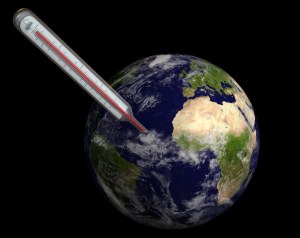 Image credit: livescience.com
They might do well to remember that historic climate data always show carbon dioxide rises *following* temperature rises, often with quite a long time lag, never leading them, which raises awkward questions for ‘heat-trapping’ theories and climate models based on them.
– – –
A new study from University of Michigan climate researchers concludes that some of the latest-generation climate models may be overly sensitive to carbon dioxide increases and therefore project future warming that is unrealistically high, says Phys.org.
In a letter scheduled for publication April 30 in the journal Nature Climate Change, the researchers say that projections from one of the leading models, known as CESM2, are not supported by geological evidence from a previous warming period roughly 50 million years ago.
The researchers used the CESM2 model to simulate temperatures during the Early Eocene, a time when rainforests thrived in the tropics of…
View original post 497 more words
The race for a COVID-19 vaccine, explained
02 May 2020 Leave a comment
in health economics Tags: economics of pandemics, vaccines
One is as locked-down as Lombardy; the other is as locked-down as Sweden #COVID19
02 May 2020 Leave a comment

More money is on tap for minimising waste – but going online to learn about the scheme could be a time-waster
02 May 2020 Leave a comment

The government has replenished another trough and is calling the hogs to get their snouts into an $8 million swill.
No, this one is not under the control of Shane Jones, the Minister of Munificence whose announcements regularly trigger the Point of Order Trough Monitor.
The announcement this time was made by Associate Environment Minister Eugenie Sage, who emulated Jones by emphasising the employment prospects.
Her press statement begins:
Creating jobs in the vital waste reduction sector is the focus of the latest application round for the Waste Minimisation Fund, which opens today.
View original post 694 more words
How will we pay for all this?
02 May 2020 Leave a comment

The coronavirus pandemic is of course primarily a social crisis, but the fiscal costs are also important. A sharp and sustained deterioration in the public finances could have major implications for future government spending and taxation. Fortunately, there are also some good reasons to be sanguine.
Let’s begin with the bad news. A slump in economic activity is inevitable and even desirable; we actually want most people to stop doing what they would normally be doing, in order to save lives. However, this will also lead to a surge in government borrowing, reflecting both the direct costs of the fiscal measures being taken to protect businesses, jobs and incomes, and the knock-on effects of a steep fall in GDP on welfare spending and tax revenues.
The headline figures are scary. Given all the uncertainties, it makes sense to talk in terms of ‘plausible scenarios’ rather than ‘forecasts’, and any hard…
View original post 1,104 more words


Recent Comments