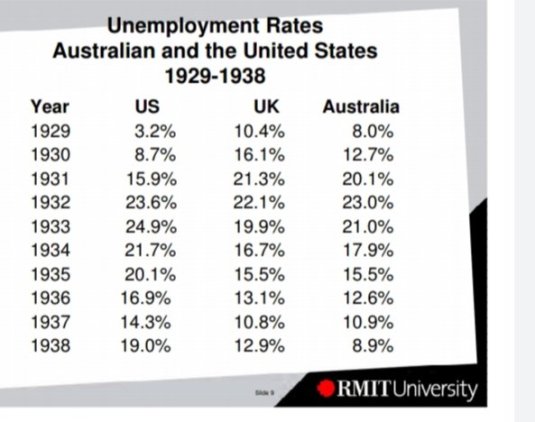
Source Sinclair Davidson
Celebrating humanity's flourishing through the spread of capitalism and the rule of law
30 Apr 2020 Leave a comment
in business cycles, economic growth, economic history, fiscal policy, great depression, labour economics, labour supply, macroeconomics, monetary economics, public economics, unemployment Tags: Keynesian macroeconomics
Source Sinclair Davidson
30 Apr 2020 Leave a comment

If you’re looking for a definition of ‘hopeless joke’, look no further than the daily contribution of Australia’s 6,960 MW industrial wind power fleet.
One hackneyed myth relied upon by the wind cult in this country (everywhere, really) is that the “wind is always blowing somewhere”. Which is complete and utter bollocks.
Spread from Far North Queensland, across the ranges of NSW, all over Victoria, Northern Tasmania and across South Australia its entire capacity routinely delivers just a trickle of its combined notional capacity.
Depicted above – courtesy of Aneroid Energy – is the output delivered by Australian wind power outfits to the Eastern Grid on 13 April.
Between Noon and 6pm output ranged between 110 and 170 MW, representing between 1.58% and 2.44% of the fleet’s combined notional capacity. That’s what we mean by “hopeless joke”.
Set out at the end of this post is the output, so far…
View original post 307 more words
30 Apr 2020 Leave a comment
The Despenser War
The long-threatened civil war finally broke out in England in 1321, triggered by the tension between many of the barons and the royal favourites, the Despenser family. Hugh Despenser the Elder had served both Edward and his father, while Hugh Despenser the Younger had married into the wealthy de Clare family, became the King’s chamberlain, and acquired Glamorgan in the Welsh Marches in 1317.
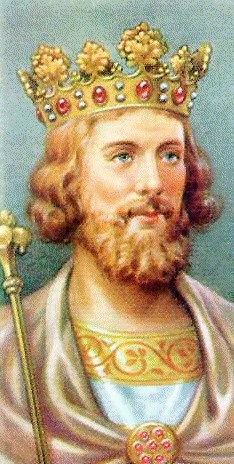
In early 1321, Lancaster mobilised a coalition of the Despensers’ enemies across the Marcher territories. Edward and Hugh the Younger became aware of these plans in March and headed west, hoping that negotiations led by the moderate Earl of Pembroke would defuse the crisis. This time, Pembroke made his excuses and declined to intervene, and war broke out in May.
The Earl of Lancaster held a high-level gathering of the barons and clergy in June which condemned the Despensers for having broken the…
View original post 212 more words
29 Apr 2020 Leave a comment
in financial economics, monetary economics
29 Apr 2020 Leave a comment
in business cycles, economic history, financial economics, global financial crisis (GFC), great depression, great recession, history of economic thought, macroeconomics, monetarism, monetary economics Tags: Keynesian macroeconomics, New Keynesian macroeconomics

29 Apr 2020 Leave a comment
in business cycles, economic history, Edward Prescott, financial economics, fiscal policy, global financial crisis (GFC), great depression, great recession, history of economic thought, macroeconomics, monetary economics
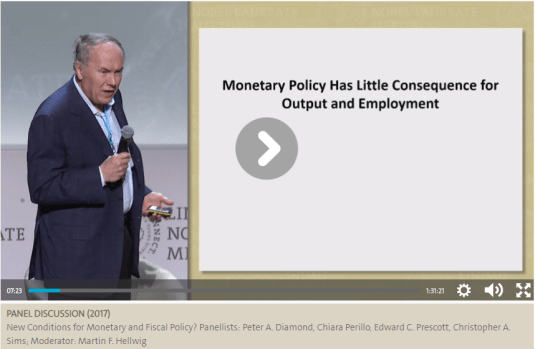
See lecture at https://www.mediatheque.lindau-nobel.org/videos/37267/panel-conditions-monetary-fiscal-policy/laureate-prescott
Edward Prescott, co-recipient of the Nobel Prize in 2004, took a different view in a presentation with the title ‘The Unimportance of Monetary Policy and Financial Crises on Output and Unemployment’. He cited financial crises that saw countries experiencing contrasting outcomes at the same time: the US and Asia in the 2008 crisis; Chile and Mexico in 1980; and Scandinavia and Japan in 1992.
‘Financial crises do not impede development,’ he claimed. While the 2008 financial crisis was localised in North America and the euro area, there was a short recession and quick recovery in Japan, Taiwan and South Korea and no recession in Scandinavia and Australia. ‘Countries where fiscal policy was irresponsible had problems’, he maintained. ‘Fiscal responsibility is crucial: to spend is to tax and to tax is to depress. That’s what happens every time.’
29 Apr 2020 Leave a comment
in human capital, labour economics, labour supply, movies, television, unions
29 Apr 2020 Leave a comment
Get me onto interwar economic history and I can get a little carried away. I don’t like to think quite how many books on the Great Depression – in all manner of countries – and events either side of it I bought when I first got fascinated by it, and my interest continues. New Zealand is a fascinating subset of that history/experience, although it is still the case that there is no single comprehensive economic, and economic policy, history for New Zealand in the interwar period, even though so much of interest/importance was going on.
Anyway, after yesterday’s post a reader kindly sent me a copy of a new NBER working paper by two prominent economic and monetary historians, Michael Bordo and Christopher Meissner. Their topic is “Original Sin and the Great Depression” – no nothing theological, but rather referring to the difficulty most countries long had (many still have)…
View original post 2,223 more words
29 Apr 2020 Leave a comment
Today Swedish journalist Nathalie Besèr and I have had a talk about the economic and political perspectives on the corona crisis from a Scandinavian perspective.
We among other things talk about the different policies in the Scandinavian countries and look at the economic consequences of the crisis.
Celebrating humanity's flourishing through the spread of capitalism and the rule of law
Celebrating humanity's flourishing through the spread of capitalism and the rule of law
Celebrating humanity's flourishing through the spread of capitalism and the rule of law
Celebrating humanity's flourishing through the spread of capitalism and the rule of law
Celebrating humanity's flourishing through the spread of capitalism and the rule of law
Celebrating humanity's flourishing through the spread of capitalism and the rule of law
Celebrating humanity's flourishing through the spread of capitalism and the rule of law
Celebrating humanity's flourishing through the spread of capitalism and the rule of law
Celebrating humanity's flourishing through the spread of capitalism and the rule of law
A History of the Alt-Right
Econ Prof at George Mason University, Economic Historian, Québécois
Celebrating humanity's flourishing through the spread of capitalism and the rule of law
Scholarly commentary on law, economics, and more
Beatrice Cherrier's blog
Celebrating humanity's flourishing through the spread of capitalism and the rule of law
Celebrating humanity's flourishing through the spread of capitalism and the rule of law
Celebrating humanity's flourishing through the spread of capitalism and the rule of law
Why Evolution is True is a blog written by Jerry Coyne, centered on evolution and biology but also dealing with diverse topics like politics, culture, and cats.
Celebrating humanity's flourishing through the spread of capitalism and the rule of law
A rural perspective with a blue tint by Ele Ludemann
DPF's Kiwiblog - Fomenting Happy Mischief since 2003
Celebrating humanity's flourishing through the spread of capitalism and the rule of law
The world's most viewed site on global warming and climate change
Tim Harding's writings on rationality, informal logic and skepticism
A window into Doc Freiberger's library
Let's examine hard decisions!
Commentary on monetary policy in the spirit of R. G. Hawtrey
Thoughts on public policy and the media
Celebrating humanity's flourishing through the spread of capitalism and the rule of law
Politics and the economy
A blog (primarily) on Canadian and Commonwealth political history and institutions
Reading between the lines, and underneath the hype.
Economics, and such stuff as dreams are made on
"The British constitution has always been puzzling, and always will be." --Queen Elizabeth II
Celebrating humanity's flourishing through the spread of capitalism and the rule of law
Celebrating humanity's flourishing through the spread of capitalism and the rule of law
WORLD WAR II, MUSIC, HISTORY, HOLOCAUST
Undisciplined scholar, recovering academic
Celebrating humanity's flourishing through the spread of capitalism and the rule of law
Res ipsa loquitur - The thing itself speaks
In Hume’s spirit, I will attempt to serve as an ambassador from my world of economics, and help in “finding topics of conversation fit for the entertainment of rational creatures.”
Researching the House of Commons, 1832-1868
Reflections on books and art
Posts on the History of Law, Crime, and Justice
Celebrating humanity's flourishing through the spread of capitalism and the rule of law
Exploring the Monarchs of Europe




Recent Comments