
Who pioneered the economics of information?
16 Feb 2020 Leave a comment
in applied price theory, economics of information, George Stigler Tags: information costs
Why Jordan Peterson is certain Icelands equal pay laws will fail
16 Feb 2020 Leave a comment
in discrimination, economics of education, economics of information, financial economics, gender, health and safety, human capital, income redistribution, industrial organisation, labour economics, labour supply, law and economics, managerial economics, market efficiency, occupational choice, organisational economics, personnel economics, politics - Australia, poverty and inequality, Public Choice, rentseeking, survivor principle, theory of the firm Tags: gender wage gap
What Happened To Giant Flying Boats? Saunders-Roe Princess Story
16 Feb 2020 Leave a comment
in defence economics, entrepreneurship, transport economics Tags: creative destruction
The Myth of the Rational Voter
16 Feb 2020 Leave a comment
in applied price theory, economics of information, politics - USA, Public Choice Tags: anti-foreign bias, anti-market bias, make-work bias, pessimism bias, rational irrationality
Enter Erwin Rommel – The British Advance in Africa – WW2 – 077 – February 15 1941
16 Feb 2020 Leave a comment
in defence economics, war and peace Tags: World War II
Capitalism Helps People in Poor Nations, Foreign Aid Helps Politicians in Poor Nations
16 Feb 2020 Leave a comment

I wrote last October about how poor nations that followed the pro-market recipe of the “Washington Consensus” in the 1980s and 1990s got good results. Johan Norberg addresses the same topic in this video.
Sadly, international organizations are infamous nowadays for the bizarre argument that developing nations should try to boost prosperity by imposing higher taxes and bigger government. I’m not joking.
I was even a credentialed participant at a conference on precisely this topic at the United Nations. It was a strange experience to be surrounded by anti-empirical people, but at least I wasn’t threatened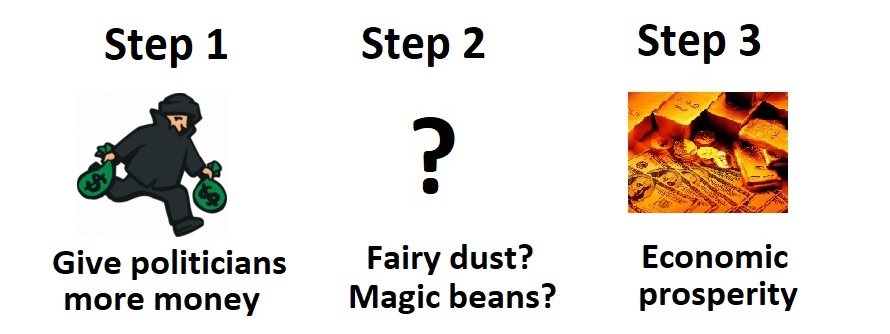 with arrest, as happened at an OECD event.
Needless to say, these folks also think it’s a good idea to use foreign aid to finance bigger fiscal burdens in poor nations.
I’ve previously explained why this is a bad idea, at least if we care about achieving more prosperity for people. Simply stated…
View original post 554 more words
Carbon Tax Event – Ross McKitrick
16 Feb 2020 Leave a comment
in energy economics, environmental economics, global warming, Public Choice, public economics Tags: carbon tax


Victor Davis Hanson | George S. Patton: American Ajax
16 Feb 2020 Leave a comment
in defence economics, laws of war, war and peace Tags: World War I, World War II
John Stuart Mill speaks
15 Feb 2020 Leave a comment
in law and economics Tags: free speech, political correctness, regressive left

2016 Annual GWPF Lecture – Matt Ridley – Global Warming Versus Global Greening
15 Feb 2020 Leave a comment
in development economics, economic history, energy economics, environmental economics, global warming Tags: climate alarmists, pessimism bias
Another supply-side driven pay gap. How do employers learn sexual orientations to favour and discriminate?
15 Feb 2020 Leave a comment
in applied price theory, discrimination, economics of education, economics of information, gender, human capital, labour economics, labour supply, law and economics, occupational choice Tags: gender wage gap

The wages of sin are still paying for the Vice Fund
15 Feb 2020 Leave a comment
in economics of regulation, entrepreneurship, financial economics, health economics Tags: active investing, efficient markets hypothesis, passive investing, picking winners

Money For Nothing: Scotland’s Wind Farms Earn More Revenue When They’re Turned Off!!
15 Feb 2020 Leave a comment


The fact that Scotland’s wind farms have pocketed £650m for not generating power has attracted more than just a little attention.
STT has run several stories over the last few months about wind power outfits being paid very handsomely to NOT generate electricity. Perhaps it’s the sense of outrage that comes with knowing a group of unscrupulous thugs are being paid for doing nothing that’s prompted a flurry of articles, including this one.
Wind turbines generate more cash when switched off and Scots customers shouldering £650m blame
Daily Record
Paul Rodger
17 January 2020
Constraint payments have been paid to energy firms in charge of wind farms, when demand for electricity falls or winds are too strong for turbines to operate.
Wind turbines generate more cash when they’re switched OFF than when they’re working – with customers shouldering nearly £650 million in payments over a decade.
So-called ‘constraint payments’, a…
View original post 311 more words


Recent Comments