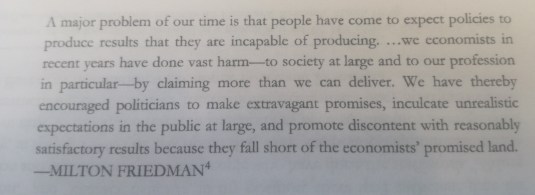
Machiavelli’s Advice For Nice Guys
25 Feb 2018 Leave a comment
in comparative institutional analysis, constitutional political economy, defence economics, economics of bureaucracy, law and economics, managerial economics, organisational economics, Public Choice, war and peace Tags: Machiavelli
BE PRESENT | The Prince by Niccolo Machiavelli
24 Feb 2018 Leave a comment
in comparative institutional analysis, constitutional political economy, defence economics, economics of bureaucracy, law and economics, managerial economics, organisational economics, Public Choice, war and peace Tags: Machiavelli
DO NOT BE NEUTRAL | The Prince by Niccolo Machiavelli
23 Feb 2018 1 Comment
in defence economics, economics of bureaucracy, Public Choice, war and peace
.@linda_polman on aid in war zones @OxfamNZ @TaxpayersUnion
21 Feb 2018 Leave a comment
in development economics, economics of bureaucracy, Public Choice, war and peace Tags: ODA
Polman observed the ‘crisis caravan’ of aid organizations in post-war situations. In the aftermath of the Rwandan genocide millions of people fled to neighbouring DR Congo. “The entire extremist Hutu government and army settled in those refugee camps … A lot of money went into the Hutu extremist movement who used it to gain strength and continue their genocidal struggle”.
Does @OxfamNZ know of this shakedown? Any in the Pacific? @TaxpayersUnion #oxfamscandal
19 Feb 2018 Leave a comment
in development economics, economics of bureaucracy, economics of crime, growth disasters, politics - New Zealand
Japanese ODA agencies budget 10% for donations. Their main interest is making sure that these donations go to the politicians who can actually deliver on removing roadblocks to their aid delivery rather than chancers who try it on and never deliver. Benazir Bhutto’s husband was Mr. 10% when she was first prime minister. He was a net plus to the country according to The Economist Magazine article of say 20 years ago because investors only had to pay him rather than dozens of petty bureaucrats, each wanting a taste. These payments are lawful under the laws of Western countries because they are facilitation payments. They are not bribes because the foreign company is only paying the politician or bureaucrat to do what is his duty to do in the first place rather than stall the process in the hope of a bribe.

From The Dictator’s Handbook.
Have you got all of these?
15 Feb 2018 Leave a comment
in comparative institutional analysis, constitutional political economy, economics of bureaucracy, Public Choice, rentseeking Tags: Machiavelli

Veniality haunts the state sector @TaxpayersUnion
04 Feb 2018 1 Comment
in economics of bureaucracy, economics of crime, politics - New Zealand
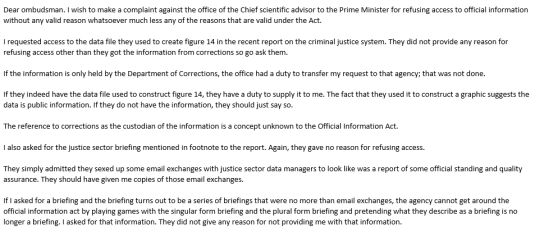
One of the first things I noticed after coming to New Zealand from Australia in 1998 was the petty veniality in government departments.

In my first week, I discovered employers pay for farewells. No chance in Canberra. We take our colleague out for lunch and have a whip-round to pay for their lunch. If it was a retirement function, such as for a long serving employee, the senior staff would pay for it out of their own pocket. The taxpayer never ever paid.
Then I noticed that public servants would charge lunches with each other to their government credit card. They would buy wine! By chance, I discovered when working at the Productivity Commission that the chairman was authorised to send out for sandwiches if a meeting ran over lunch time. He never did. The last time I remember a meeting running over lunch, the deputy chairman, who later went on to be the chairman, bought the sandwiches out of his own pocket.
It got worse when I noticed who went on overseas trips. When it was a more exotic location, a much more senior manager felt the need to represent his country. Enthusiasm in a minister’s office for going to a rather boring international meeting picked up no end when they discovered it was in Istanbul.
I thought most overseas travel was a waste of time in 1999 even with that so primitive an Internet back then so I actively avoided it and never proposed a trip. This became crystal clear when we were receiving cables from the embassy in Washington and London telling me what I had already read in the Washington Post and the London Times while they were sleeping. The Ministry of Foreign Affairs a couple years later installed desktop Internet access.
Then to my astonishment, I found that government employees would take holidays at the end of their business travel. If you tried that in Australia, you would be fired and hopefully your manager too for not setting the right tone. It would never be considered.
If you were on an interstate secondment, as some friends once were from Adelaide to Canberra for the Tax Office, they were entitled to take leave equal to the amount of time accrued while on that secondment. If they were away for one month, they were entitled to take one and a half days leave and receive travelling allowances and so forth for those one and a half days.
Clearly, it would give an appearance of bias when you are writing the business case if you could get it business class air ticket to the other side of the world and then take a long holiday on the way back. Appearances count, especially when you are thinking about taxpayers’ money.
New Zealand government departments seem to employ a lot of contractors as policy analysts. I have never heard of such things in Canberra when working at the Department of Finance, the Prime Minister’s Department and the Productivity Commission.
If a manager could not recruit and retain enough analysts to work through peaks and troughs in the workload, you were not a very good manager. If it was a real crisis, you found someone who was not busy from within the organisation and had them seconded to your team.
In more than a few places, these contractors seemed to be good friends of the manager. These contractors can be hired so quickly and in such number that a new manager can find no time to talk to his existing staff about what they do now, what they might do in the coming months or what skill sets they might have. Is always a bit odd that new managers can hire a couple of contractors but not have time to sign a performance agreement with any of his staff in that year.
I was talking to a colleague, also a migrant to this country from another state sector about how he would always refuse attempts by people to buy him lunch or a beer. Like me, he would be up the back eating his own sandwiches while the senior executives tucked into 3 course lunches plus wine provided by various lobby groups.
Until I came to New Zealand, the taxpayer had never bought me lunch or a beer. I was careful to refusal offers of hospitality. If an offer was made, I thought they were up to something.
But worst of all, worse than any of this veniality, the worst culture shock of all was until I came to Wellington, I had never been to a team meeting. When I was asked to go to my first team meeting, the 2nd day on the job, I just had to wing it.
In Australia, managers are expected to keep staff in the loop and staff are expected to talk to each other about what they are working on in case they can help each other. Managers and staff are expected to be frugal with their time as well as the taxpayers’ money paying their salaries.
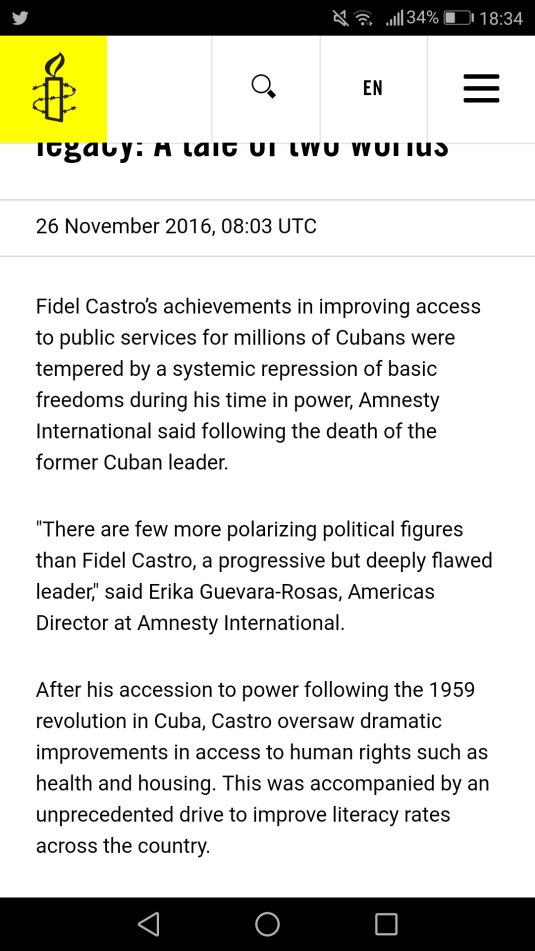
.@amnestynz is no longer about freeing prisoners of conscience, fair trials for political prisoners and opposition to torture and the death penalty. Its mission creep even extends to supporting abortion rights.
01 Feb 2018 Leave a comment
in economics of bureaucracy, International law, law and economics

Jordan B Peterson on “But That Wasn’t Real Communism, Socialism, or Marxism!”
31 Jan 2018 Leave a comment
in applied price theory, comparative institutional analysis, constitutional political economy, economic history, economics of bureaucracy, economics of crime, history of economic thought, law and economics, Marxist economics, Public Choice, rentseeking Tags: fall of communism, The fatal conceit
The Vision of Jeffrey Sachs
28 Jan 2018 Leave a comment
in applied price theory, development economics, economic history, economics of bureaucracy, entrepreneurship, growth disasters, growth miracles, Public Choice, rentseeking Tags: overseas aid, The fatal conceit
Our house too big for ultrafast broadband hook-up @stevenljoyce @TaxpayersUnion @EricCrampton
26 Jan 2018 Leave a comment
in economics of bureaucracy, entrepreneurship, industrial organisation, politics - New Zealand, Public Choice
Your picking loses detector is at maximum when governments are retrofitting infrastructure in the suburbs. We just had Chorus in to retrofit ultrafast broadband to our house. Our house is too big and complicated to rewire.

In addition to stringing a wire from the road to a ATC box, as with everybody, we need to rewire from that box to my office for another ultrafast broadband box next to my computer on the other side of the house 2 floors up. I was told I would need an electrician to do that as the house is already built, most of the wires will probably be external, ugly and I would have to pay for it and the drilling through my floors.
Seems like the political genius behind government paying for ultra fast broadband including fitting it into my house assumed everybody had a nice simple one story house where the office was near the ACT box so there would be minimal rewiring. That would involve minimal internal wiring.
If I want to proceed, I need to bring in an electrician and as the house is already been built, he will need to drill holes, string wires and then the chorus team will come back. The alternative was to have my modem just above the ATC box in the spare bedroom and the rest of the house operate including my desktop in my office on Wi-Fi which seems to very must defeat point of ultrafast broadband indeed.
When a plague of aid and NGO professionals descended upon Afghanistan
22 Jan 2018 Leave a comment

Source: Why Nations Fail.
Corruption in driver’s licenses
21 Jan 2018 Leave a comment
in development economics, economics of bureaucracy, economics of crime, economics of regulation, growth disasters, law and economics, Public Choice, transport economics Tags: economics of corruption, India
Corruption and Parking Tickets
20 Jan 2018 1 Comment
in applied price theory, comparative institutional analysis, development economics, economics of bureaucracy, economics of crime, growth disasters, law and economics, Public Choice Tags: economics of corruption
William Easterly and Dambisa Moyo: Emerging economies in 2013
20 Jan 2018 Leave a comment
in applied price theory, Bill Easterly, comparative institutional analysis, constitutional political economy, development economics, economic history, economics of bureaucracy, growth disasters, growth miracles, Public Choice, rentseeking Tags: overseas aid
Recent Comments