Gun Stocks Skyrocket Following Proposed Reforms https://t.co/y7L8BTlMox $SWHC $RGR pic.twitter.com/mTvbwju0cB
— ValueWalk – Exclusive hedge fund info (below) (@valuewalk) January 6, 2016
Gun share prices skyrocket
07 Jan 2016 Leave a comment
in economics of regulation, financial economics, politics - USA, Public Choice Tags: gun control
@LordAshcroft on @UKIP and the 2015 election
07 Jan 2016 Leave a comment
in constitutional political economy, Public Choice
Lord Ashcroft has written a fascinating review of the unexpected 2015 general election result in the UK based on his polling and focus group work. I will start my summary of it with UKIP because that party is the most interesting way to illustrate his analytical approach.
UKIP increased its vote from 3% in 2010 British general election to 12% in 2015. UKIP won 1 seat and came second in 120.
UKIP was initially seen as a threat to the Tory party. What will make the Tory party rather conflicted in winning those votes back is as many Tory voters vote UKIP as Tory voters vote for the Liberal Democrats. The Tories cannot win both blocs back.
UKIP voters have more of an attitude rather than a series of policies despite their preoccupation with immigration as Ashcroft explains:
It was true that those who were drawn to the party were more preoccupied than most with immigration, and would complain about issues such as Britain’s contribution to the EU or the international aid budget.
But their overarching view was that Britain was changing for the worse. They were pessimistic, even fearful, and did not think mainstream politicians were willing or able to keep their promises or change things for the better.
Surprisingly, European Union membership is not a top three priority for most UKIP voters. They are grumpy about the country they grew up in fading into their past to be replaced by political correctness and identity politics.
Not surprisingly UKIP voters are attracted to it because the party would ‘say things that need to be said but others are scared to say’. Nigel Farage was regarded by UKIP voters as entertaining and straight talking but a little too interested in the limelight.
Ashcroft has as fascinating way of cutting past social acceptability bias in responses of focus groups by asking them to think about a political party or leader as a car or house. In the case of UKIP, this is what they thought:
If UKIP were a house, it would have ‘a wrought-iron fence all round to keep everyone out’. The ageing residents would spend their time ‘talking about how things were in their day’ and would not get on with their neighbours ‘because they are a different colour’. The timer on the stereo would be set to play the national anthem every day at noon.
Surprisingly few UKIP voters have illusions about the competence or good sense of UKIP. They were voting for UKIP as a protest. They are voting UKIP because they wanted to give it a voice which they can build on and become more competent and sensible.
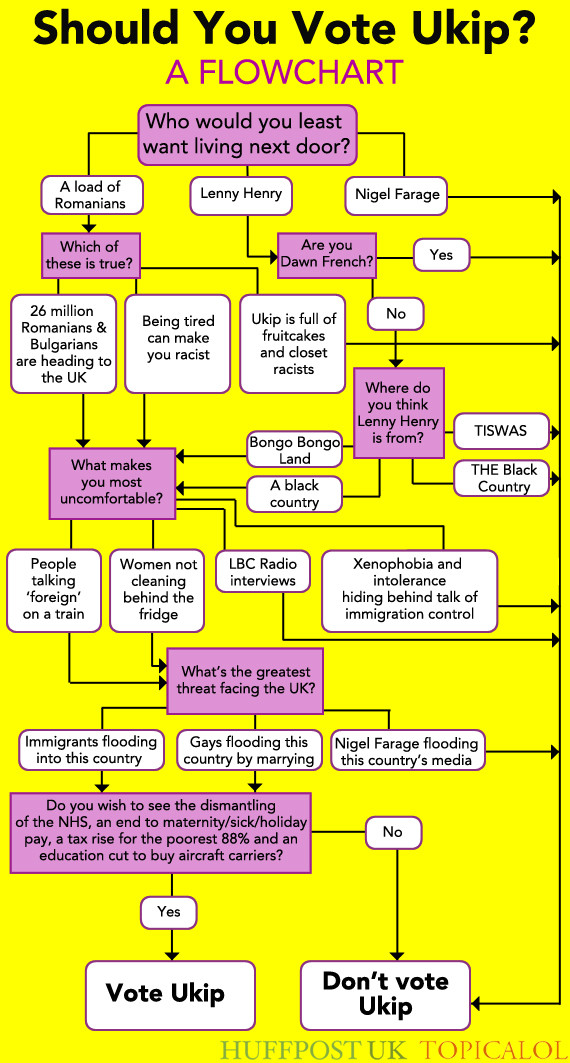
Source: FLOWCHART: Should You Vote Ukip?
Why taxi drivers are suddenly getting nicer?
07 Jan 2016 1 Comment
in applied price theory, economics of regulation, rentseeking, transport economics Tags: creative destruction, taxi regulation, Uber
Where I live, taxis suddenly starting texting to say they are five minutes away or outside.

Source: Why taxi drivers are suddenly getting nicer – The Washington Post
Jason Furman on residential housing supply, NIMBYism, and economic growth
05 Jan 2016 Leave a comment
in economics of regulation, environmental economics, politics - New Zealand, politics - USA, Public Choice, rentseeking, urban economics Tags: housing affordability, land use planning, RMA, zoning
The recession in jobs in the global warming industry
04 Jan 2016 Leave a comment
in energy economics, environmental economics, global warming, rentseeking
Let he who is without sin cast the first stone. A lot of jobs depends upon climate alarmism, far fewer than on climate scepticism.

Source: “climate change” Job Trends | Indeed.com.
Few jobs in economics depend upon climate alarmism because bureaucracies and politicians do not like the answers that economists give on the cost of global warming so they pre-emptively do not fund the research.
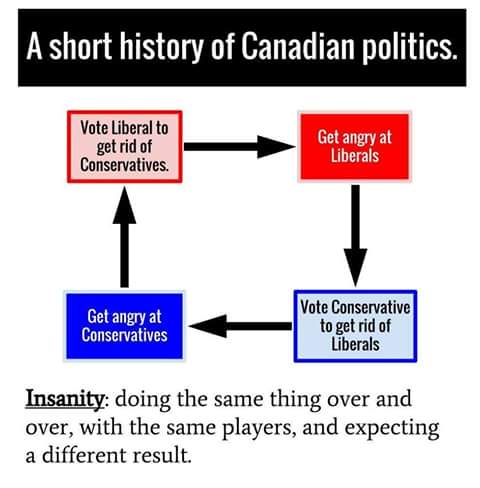
Whose voting base has succumbed to unthinking populists?
31 Dec 2015 Leave a comment
in applied price theory, comparative institutional analysis, constitutional political economy, economics of education, economics of information, economics of media and culture, income redistribution, international economics, Marxist economics, politics - New Zealand, Public Choice, rentseeking Tags: 2016 presidential election
Singapore Spring
29 Dec 2015 Leave a comment
in applied price theory, constitutional political economy, development economics, economic history, growth miracles, Public Choice Tags: Asian Tigers, Singapore
Places in the world where governments have lost control
28 Dec 2015 Leave a comment
in constitutional political economy, Public Choice Tags: anarchy, lawless regio lawless regionn, no-go areas
@Greenpeace why are German and Danish power prices so high?
24 Dec 2015 Leave a comment
in applied price theory, economic history, energy economics, environmental economics, global warming, Public Choice, rentseeking Tags: Big Solar, Big Wind, bootleggers and baptists, climate alarmism, Denmark, Germany, green rent seeking, power prices, solar power, wind power
Voter turnout rates among the less educated have collapsed since the 1970s
23 Dec 2015 Leave a comment
in economics of education, economics of media and culture, politics - USA, Public Choice Tags: expressive voting, rational ignorance, voter demographics, voter turnout
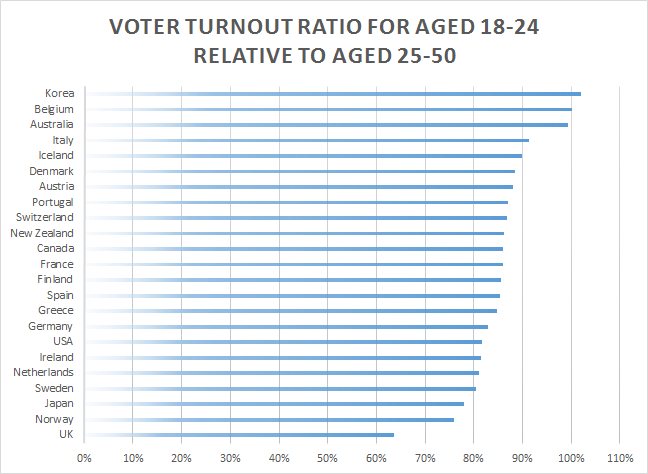
How much lower is youth voter turnout across the OECD?
23 Dec 2015 Leave a comment
in politics - Australia, politics - New Zealand, politics - USA, Public Choice Tags: rational ignorance, voter turnout
@jeremycorbyn really does need #toriesforcorbyn to win
22 Dec 2015 Leave a comment
in economics of media and culture, Public Choice
How big is Medsafe’s invisible graveyard? @PeterDunneMP @annetterongotai
17 Dec 2015 1 Comment
in economics of bureaucracy, economics of regulation, health economics, politics - New Zealand Tags: drug lags, Drug safety
Medsafe replicates in part or in whole the drug approval processes of its overseas counterparts. There is expedited processing for drugs already approved overseas.
Every day in which a drug approval application is sitting on the desk of a bureaucratic at Medsafe is a day in which another New Zealander may die but for that drug.
That delay in access to drugs because of the duplication in approval processes is the invisible graveyard of Medsafe. My Official Information Act requests so far have been unable to access a cost benefit analysis at the Ministry of Health that quantifies the size of that invisible graveyard.

If economists have a bitter drinking song it would be “how many people has the FDA killed today”. Many drugs became available years after they were on the market outside the USA because of drug approval lags at the FDA. The dead are many. To quote David Friedman:
In 1981… the FDA published a press release confessing to mass murder. That was not, of course, the way in which the release was worded; it was simply an announcement that the FDA had approved the use of timolol, a ß-blocker, to prevent recurrences of heart attacks. At the time timolol was approved, ß-blockers had been widely used outside the U.S. for over ten years.
It was estimated that the use of timolol would save from seven thousand to ten thousand lives a year in the U.S. So the FDA, by forbidding the use of ß-blockers before 1981, was responsible for something close to a hundred thousand unnecessary deaths.
The only rational basis for duplicating overseas drug safety approval processes is the honest belief that a New Zealand process can pick up errors. These errors must be so large that they justify the delay. If there are no such errors to pick up in a cost justified manner, the drug approval branch of Medsafe just adds to the invisible graveyard.
The Ministry of Health did advise its Minister of the unilateral recognition model in Singapore. If a drug is registered in two trusted jurisdictions, it is fast tracked. If it is registered in one other trusted jurisdiction, it goes through an expedited process. This process appears to only cut the registration process for a drug from 270 days to 240 days.
The truncated approaches when there is approval of the drug in a trusted jurisdiction usually call for access to evaluation reports and other red tape. What can drug trials in New Zealand
find out that is not already known? Medsafe targets processing applications for the approval of new drugs in New Zealand to be done within 200 days. That’s 200 days too many.

My preferred unilateral recognition process consists of authenticating the drug registration certificate from a trusted overseas jurisdiction. It would be a post-box process. The G7 countries plus Australia should be this list of trusted overseas jurisdiction. There should be automatic recognition in New Zealand of any drug registration in those jurisdictions.
There is no reason to believe that Medsafe will pick up errors of trusted jurisdictions overseas. Medsafe denied New Zealanders access to four drugs approved in comparable regulatory jurisdictions in the last three years. Medsafe rejected two other drugs in the last three years but these drugs were not approved in comparable jurisdictions. Medsafe is not involved in the funding of medicines; this is the responsibility of PHARMAC.
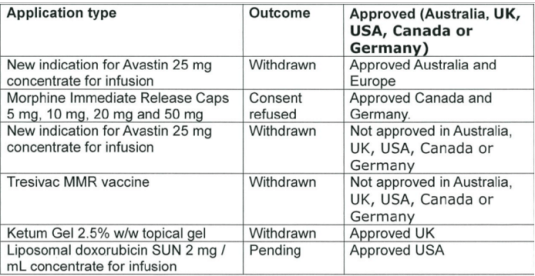
Source: data released 29 October 2015 pursuant to an Official Information Act request to the Ministry of Health.
Medsafe is turning down not even a handful of drugs were approved overseas jurisdictions in the past three years. Was that worth the wait? Was that worth a larger invisible graveyard?
The net benefits of the entire drug approval framework over the past three years in New Zealand is riding out on rejecting for approval half a dozen drugs, four of which are approved as safe in other comparable jurisdictions.
The size of the invisible graveyard has been quantified in the USA. The Prescription Drug User Fee Acts (PDUFA) reduced the drug approval time lag by 10 months:
Converting these economic gains into equivalent health benefits, we find that the more rapid access of drugs on the market enabled by PDUFA saved the equivalent of 140,000 to 310,000 life years.
A few drugs were approved that were later withdrawn. Their unfortunate consequences must always be weighed against the drugs that got to the market faster, saving lives, relieving pain and curing illnesses. That trade-off must be faced up to openly rather than as it is now left in the invisible graveyard.


Recent Comments