If you thought McDonald’s was some kind of public health hazard, using processes under the Resource Management Act to try to block one from opening in Wanaka would be among the stupidest possible ways of dealing with it. The country already has food safety regulations. If you thought that (in fact delicious and fine) McDonald’s food…
Misuse of land use planning
Misuse of land use planning
05 Dec 2024 Leave a comment
in economics of bureaucracy, economics of regulation, health economics, industrial organisation, law and economics, politics - New Zealand, property rights, Public Choice, rentseeking Tags: nanny state, zoning
The end of oil?
05 Dec 2024 Leave a comment
in applied price theory, econometerics, economics of climate change, energy economics, environmental economics, environmentalism, global warming, law and economics, politics - USA, property rights, Public Choice, rentseeking, resource economics Tags: peak oil
It is now plausible to envision scenarios in which global demand for crude oil falls to essentially zero by the end of this century, driven by improvements in clean energy technologies, adoption of stringent climate policies, or both. This paper asks what such a demand decline, when anticipated, might mean for global oil supply. One […]
The end of oil?
The Missing Myths
04 Dec 2024 Leave a comment
in applied price theory, comparative institutional analysis, constitutional political economy, discrimination, economic history, economics of climate change, economics of information, economics of media and culture, economics of regulation, energy economics, entrepreneurship, environmental economics, environmentalism, financial economics, gender, global warming, health economics, human capital, income redistribution, labour economics, labour supply, law and economics, liberalism, libertarianism, Marxist economics, occupational choice, politics - USA, poverty and inequality, property rights, Public Choice, rentseeking Tags: Age of Enlightenment, crime and punishment, criminal deterrence, free speech, gender wage gap, law and order, political correctness, racial discrimination, regressive left, sex discrimination
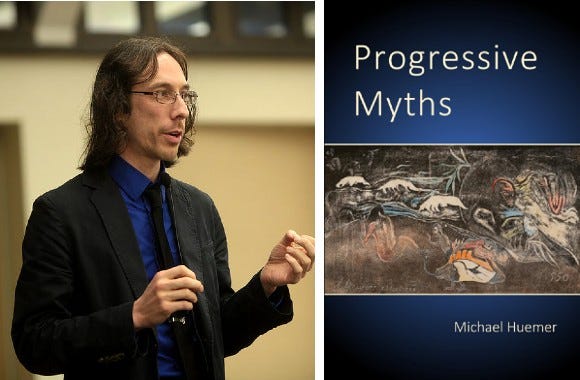
Michael Huemer’s Progressive Myths is the best book on wokeness. One of its many strengths is its focus on basic facts. As the author explains:I have selected beliefs that can be debunked fairly quickly and forcefully. Many other progressive beliefs require long argumentation and subjective judgment calls to assess. About these more difficult issues, I…
The Missing Myths
Paul Krugman Is Right…albeit Selectively and Hypocritically
04 Dec 2024 Leave a comment
in applied price theory, comparative institutional analysis, economic history, economics of bureaucracy, economics of regulation, entrepreneurship, income redistribution, industrial organisation, international economics, law and economics, politics - USA, property rights, Public Choice, public economics, rentseeking Tags: tarrifs
I like profits. But let me qualify that statement. I like profits that are the result of businesses providing goods and services that consumers value. Those profits are earned. By contrast, I don’t like it when businesses get in bed with government and get money via cronyism, bailouts, subsidies, protectionism, or industrial policy. Those profits […]
Paul Krugman Is Right…albeit Selectively and Hypocritically
Sabotaging productivity
03 Dec 2024 Leave a comment
in applied price theory, economics of bureaucracy, economics of regulation, health economics, law and economics, politics - New Zealand, property rights, Public Choice, rentseeking, urban economics Tags: land supply, nanny state, zoning
Is there any better – or should that be worse? – example of how the consenting process sabotages productivity than the current hearings on McDonalds’ application to open in Wanaka? Public submissions were sought, and of the 366 made, 339 were opposed, 21 in support and six wanted changes to the plan. Among the submissions […]
Sabotaging productivity
The Consequences of Limiting the Tax Deductibility of R&D
03 Dec 2024 Leave a comment
in applied price theory, econometerics, entrepreneurship, fiscal policy, macroeconomics, Public Choice, public economics Tags: taxation and entrepreneurship, taxation and investment
We study the tax payment and innovation consequences of limiting the tax deductibility of research and development (“R&D”) expenditures. Beginning in 2022, U.S. companies are required to capitalize and amortize R&D rather than immediately deduct these expenditures. We utilize variation in U.S. firms’ fiscal year ends to test the effects of the R&D tax change […]
The Consequences of Limiting the Tax Deductibility of R&D
Another corporate welfare failure
02 Dec 2024 Leave a comment
in applied price theory, comparative institutional analysis, energy economics, entrepreneurship, environmental economics, financial economics, global warming, income redistribution, industrial organisation, politics - New Zealand, Public Choice, rentseeking, survivor principle Tags: climate alarmism
The Herald reported: The Government has $115 million at risk from the collapse of SolarZero. Finance Minister Nicola Willis said she was seeking urgent advice on the SolarZero situation. She had no further comment. NZ Green Investment Finance – a “green investment bank” created by the previous Government to fund environmentally-friendly businesses – made a $145m…
Another corporate welfare failure
Seatbelts for a 5 km/hr Santa parade
01 Dec 2024 Leave a comment
in economics of bureaucracy, economics of regulation, health and safety, labour economics, labour supply, politics - New Zealand, Public Choice Tags: nanny state, road safety
NewstalkZB report: Santa and his elves must wear seatbelts for Christchurch’s Christmas parade following new health and safety advice – a move labelled by some city councillors as “woke nonsense” and “over the top”. Christchurch’s Christmas Show Parade director Jason Reekers said an audit of the parade’s floats recommended installing seatbelts on some of them. …
Seatbelts for a 5 km/hr Santa parade
Massachusetts has occupational licensing for fortune tellers
30 Nov 2024 Leave a comment
in economics of information, economics of regulation, human capital, industrial organisation, labour economics, labour supply, law and economics, occupational choice, occupational regulation, politics - USA, property rights, Public Choice, rentseeking Tags: cranks
Here is the link, “Prohibits fraudulently taking money by “pretended fortune telling.”” Seen referenced somewhere on Twitter.
Massachusetts has occupational licensing for fortune tellers
Usual suspects want more debt
30 Nov 2024 Leave a comment
in applied price theory, budget deficits, business cycles, economic growth, fiscal policy, labour economics, liberalism, macroeconomics, Marxist economics, monetary economics, politics - New Zealand, Public Choice, public economics, unemployment Tags: monetary policy
A group of economists have written to Nicola Willis complaining about the modest fiscal restraint imposed on the public sector. Grant Robertson grew government expenditure by $76 billion/year or a massive 7.6% of GDP, leaving NZ with a structural deficit. Many were champions of his policies or worked for him, and now they complain his […]
Usual suspects want more debt
Unauthorized Immigration and Local Government Finances
30 Nov 2024 Leave a comment
in applied price theory, econometerics, human capital, income redistribution, labour economics, labour supply, politics - USA, poverty and inequality, Public Choice, public economics Tags: economics of immigration
This paper examines how unauthorized immigration affects the fiscal health of local governments in the United States. Using detailed data on unauthorized immigrants’ countries of origin and arrival dates from the Syracuse TRAC database, we isolate immigration flows driven by social, economic, and political conditions in source countries. We predict local immigration patterns using a […]
Unauthorized Immigration and Local Government Finances
Try as they might, the Australian Green party can’t make university education free
25 Nov 2024 Leave a comment
in applied price theory, economics of education, human capital, income redistribution, labour economics, labour supply, liberalism, Marxist economics, occupational choice, politics - Australia, poverty and inequality, Public Choice, public economics, rentseeking Tags: College premium, regressive left
The Australian Green party has proposed cancelling all student debt in Australia, as part of an aim for government to provide “free education for life”. However, free education is not free. In an article in The Conversation earlier this month, Bruce Chapman (Australian National University) makes a case against the claim that cancelling student debt…
Try as they might, the Australian Green party can’t make university education free
The Treaty Principles debate: Parliament is having a third go at addressing this conundrum
25 Nov 2024 Leave a comment
in economics of bureaucracy, income redistribution, International law, law and economics, politics - New Zealand, property rights, Public Choice, rentseeking Tags: constitutional law
Muriel Newman writes- ACT’s Principles of the Treaty of Waitangi Bill was tabled in Parliament on November 7, and the first reading debate was held on November 14. The Bill was referred to the Justice Select Committee, where a closing date for submissions of 7 January 2024 has been set – full details can be found HERE. This […]
The Treaty Principles debate: Parliament is having a third go at addressing this conundrum
Automakers’ Costly Gamble on EVs: A Lesson in Ignoring Consumer Demand
25 Nov 2024 Leave a comment
in applied price theory, economics of bureaucracy, economics of regulation, energy economics, environmental economics, global warming, politics - USA, Public Choice, transport economics Tags: electric cars
Ultimately, the market will decide the winners and losers. Automakers that prioritize consumer satisfaction over government market manipulation will thrive, while those that gambled on an uncertain future may find themselves scrambling to survive. Tesla’s trajectory proves that it’s possible to innovate without compromising, and the rest of the industry would be wise to take notes.
Automakers’ Costly Gamble on EVs: A Lesson in Ignoring Consumer Demand
Milei and populism
23 Nov 2024 1 Comment
in applied price theory, budget deficits, comparative institutional analysis, constitutional political economy, development economics, economic growth, economics of bureaucracy, economics of regulation, fiscal policy, growth disasters, income redistribution, macroeconomics, monetarism, monetary economics, Public Choice, rentseeking, unemployment Tags: Argentina
Bryan Caplan and Daniel Klein both opine on Milei and populism, Dan being very enthusiastic, while Bryan praising Milei but more reserved in his praise of populism. I too am a big fan of Milei, and I think he is still on a good track. If his reforms do not succeed, likely it will not […]
Milei and populism
 Utopia, you are standing in it!
Recent Comments