Up Their Cazaly
16 Apr 2016 Leave a comment
in economics, economics of media and culture, sports economics
Is women’s soccer unusually profitable?
01 Apr 2016 Leave a comment
in discrimination, gender, labour economics, sports economics Tags: customer discrimination, employer discrimination, gender wage gap, television ratings, women's sports
If women soccer players are discriminated against, their employers must be making a lot of extra profits of their toil. If women soccer players are paid less than their marginal revenue product, the organisers of their tournaments and those that broadcasted them must be doing very well indeed.
The reality is pay in sports these days is determined by revenue from television rights. Players can top that up with sponsorship deals.
Do television commercials for men’s and women’s soccer tournaments sell for the same price? If so, do women receive a smaller percentage of that revenue stream? That is a good test of the hypothesis that they are discriminated against.
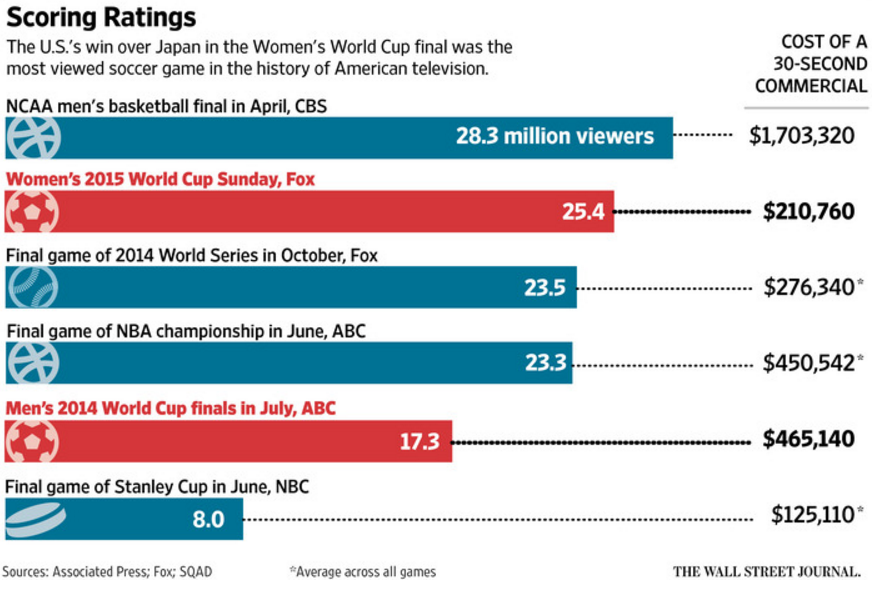
Despite the novelty of the US getting into the women’s World Cup, a 30 second commercial was sold for much much less. There may have been a ratings bonanza, but there was no accompanying revenue bonanza that could feed through to the pay of players from more generous television rights for future tournaments.
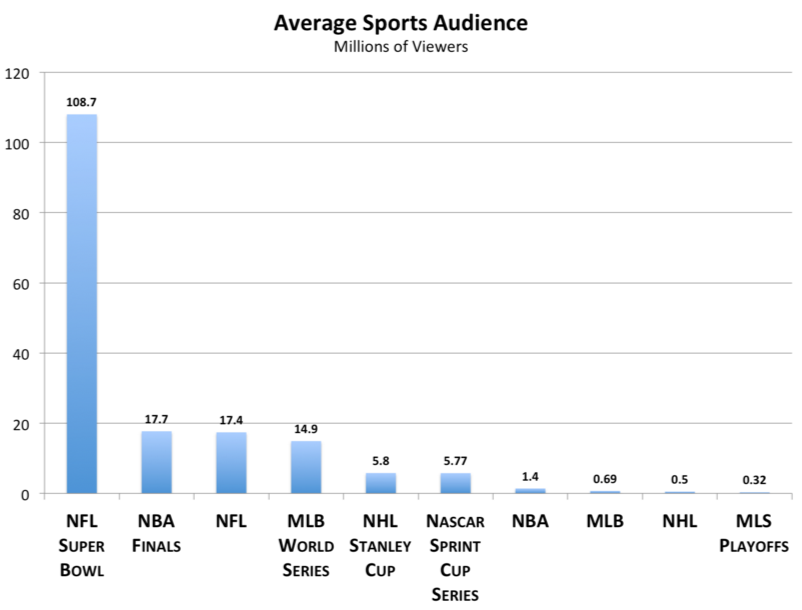
Women’s soccer is paid less because of the viewing preferences of audiences. Any sport that attracts high ratings will attract generous television rights. The money feeds through to the players.

This is a classic case of customer discrimination. Markets are very good at implementing customer discrimination, in this case giving viewers the sports they want to see.
A classic early example of that was the introduction of foreign and minority players. Part of sport is that could be me out there kicking the goal. In consequence, viewers had a lot of trouble identifying with people who are not like them. Mankiw explains:
Studies of sports teams suggest that racial discrimination is, in fact, common and that much of the blame lies with customers.
One study, published in the Journal of Labor Economics in 1988, examined the salaries of basketball players. It found that black players earned 20 percent less than white players of comparable ability. The study also found that attendance at basketball games was larger for teams with a greater proportion of white players.
One interpretation of these facts is that, at least at the time of the study, customer discrimination made black players less profitable than white players for team owners. In the presence of such customer discrimination, a discriminatory wage gap can persist, even if team owners care only about profit.
That barrier was quickly overcome when viewers discovered that these foreign players and minorities players were very good and helped the team win more. The preference for their team winning overcame the preference for the team winning with people who look like them.
The current successive US women’s soccer should not be overrated in terms of its implications for higher pay. The Women’s United Soccer Association (WUSA) was formed in 2000 after success in the 1999 FIFA Women’s World Cup. It lasted just three seasons before folding with losses of $100 million.
Women’s soccer in the USA did have one year broadcast deals with Fox sport and ESPN in 2014 and 2013. Although no TV deal is set for the 2015 season, the NWSL recently announced that all games will be broadcast on YouTube Live for free.
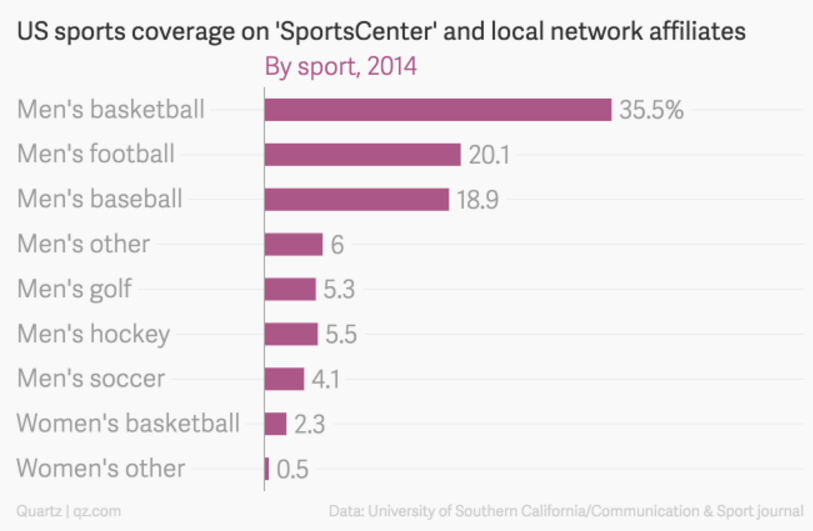
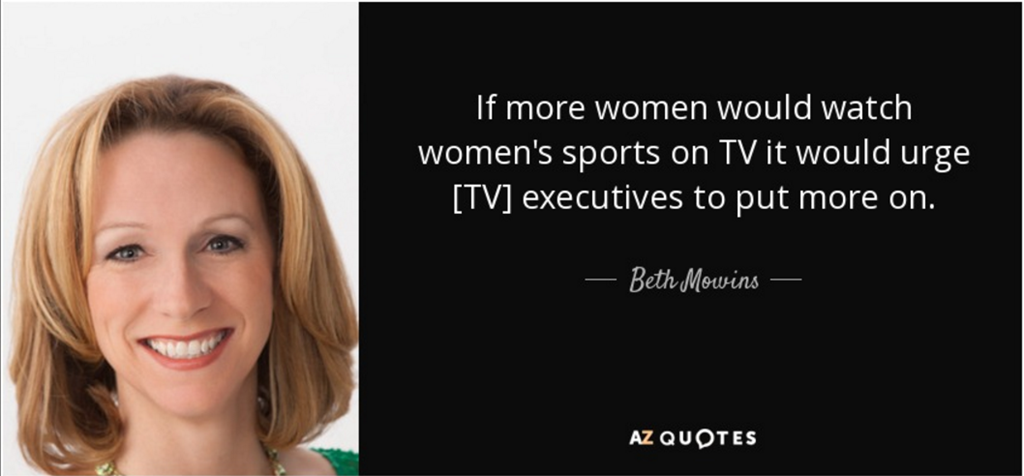
The women’s sports that are best paid without exception are the women’s sports with the most valuable television rights. Closing the gap between men’s and women’s sport is exclusively in the hands of viewer.
The sponsors of women’s sports are not hiding bags of money out the back which they could have paid for women out of secret television deals worth as the same as for men’s sports.
Justice Scalia on whether a disabled PGA golfer could ride a golf cart
14 Feb 2016 Leave a comment
in economics of bureaucracy, law and economics, sports economics
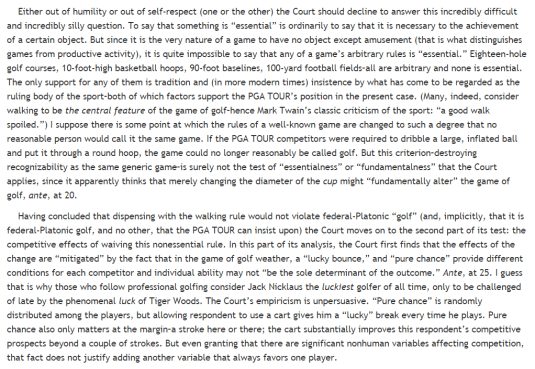
Source: PGA TOUR, INC. V. MARTIN via Jonathan Alder.
Cmon aussie c’mon original
13 Feb 2016 Leave a comment
in cricket, economic history, economics of information, economics of media and culture, entrepreneurship, industrial organisation, Ronald Coase, sports economics Tags: advertising, Australia, entrepreneurial alertness
Creative destruction in Kobe Bryant video game quality
31 Dec 2015 Leave a comment
in economics of media and culture, entrepreneurship, industrial organisation, sports economics Tags: creative destruction, video games
How much do the top sports stars earn?
28 Oct 2015 Leave a comment
in sports economics Tags: superstar wages, superstars
Some athletes make more money endorsing products than on the field: dadaviz.com/i/3810 #datastories #dataviz https://t.co/WI8QBVtgFq—
DataStories (@LindaRegber) October 26, 2015
Temporary rules posted at Britain’s Richmond Golf Club in 1940
25 Sep 2015 Leave a comment
in sports economics, war and peace Tags: Battle of Britain, British history, golf, World War II
Temporary rules posted at Britain's Richmond Golf Club after German bombs hit the course in 1940 http://t.co/7L291a2d8m—
History In Pictures (@historyepics) July 10, 2015
Following the money in European soccer
20 Sep 2015 Leave a comment
in sports economics Tags: football, professional sport, soccer
Europe's top 30 football clubs by revenue. Interesting how many not v good English clubs have Champions League income http://t.co/0ZQydU5AuA—
paulkirby (@paul1kirby) September 09, 2015
More evidence of mass kidnappings of #occupywallstreet activists
20 Aug 2015 Leave a comment
in applied price theory, human capital, income redistribution, labour economics, labour supply, politics - USA, poverty and inequality, Public Choice, rentseeking, sports economics Tags: expressive voting, Left-wing hypocrisy, Leftover Left, mass kidnappings, Occupy Wall Street, rational ignorance, rational irrationality, superstar wages, superstars, top 0.1%, top 1%
Ratio of Median Salary of Top 25 Highest Paid MLB Player to Avg. Worker Pay Increased from 100:1 to 700:1 Since 1988 http://t.co/5zLktBXS3D—
Mark J. Perry (@Mark_J_Perry) August 18, 2015
Zimbabwe Quietly Re-Opens Lion Hunts After Outcry Over The Killing of “Cecil the Lion”
12 Aug 2015 Leave a comment
The anti-hunting choir has a lot to answer for. #auspol http://t.co/2FGgC11VZp—
David Leyonhjelm (@DavidLeyonhjelm) August 17, 2015

 Zimbabwe has its ban on lion, leopard and elephant hunting that it imposed after the illegal killing of the beloved “Cecil the Lion” by Minnesota Dentist Walter Palmer. Hunting companies were told that they could start to line up wealthy trophy hunters again for bag the big game. In the meantime, conservationists have come forward to defend trophy hunting as a needed source of revenue for these parks.
View original post 165 more words
The discovery process in student athlete wages
04 Aug 2015 Leave a comment
in economics of education, entrepreneurship, human capital, labour economics, labour supply, sports economics Tags: entrepreneurial alertness, on-the-job training, superstar wages, superstars


FiveThirtyEightSports has a great piece about how much college quarterbacks are really worth in terms of market value. I’m neutral-but-leaning-against on the issue of paying college athletes, but the piece begins with University of Iowa Athletic Director Gary Barta giving a very bad reason to oppose it: it’s too complicated to figure out how much they should be paid. He’s right given how he’s conceiving the issue, he’s just not conceiving the issue in the right way.
Wages are not determined by a person or group of people independently evaluating what a job is “really” worth. That’s what markets do, i.e. that’s what innumerable decisions over time by innumerable anonymous consumers operating within the price system do. The failure to understand how the price system works in allocating resources by preferences is not unique to Barta. Very few people understand it, and lamentably even people who do understand it often…
View original post 619 more words
 Utopia, you are standing in it!
Recent Comments