Dailychart: How FIFA spends and makes its money econ.st/1HQpec4 http://t.co/cEHEsvvWyr—
The Economist (@TheEconomist) May 29, 2015
How FIFA spends and makes its money
29 May 2015 Leave a comment
Some top athletes do go through their money
23 May 2015 Leave a comment
in sports economics Tags: athletes, Celebrities, superstars
These 10 Professional Athletes Lost A Collective $1.3 Billion: samuelwbennett.com/the-struggle/t… #dataviz http://t.co/2dOKN09Jzu—
Randy Olson (@randal_olson) March 17, 2015
Football or soccer?
09 May 2015 Leave a comment
in sports economics Tags: soccer
Football vs Soccer – brilliantmaps.com/football-vs-so… http://t.co/rqCQ2YT7b2—
Brilliant Maps (@BrilliantMaps) April 29, 2015
The economics of the fight of the century
04 May 2015 Leave a comment
#Mayweather could earn $5m per minute in history's richest fight #MayPac dlvr.it/9f7v4W http://t.co/NqkZMxHRRe—
City A.M. (@CityAM) May 03, 2015
It is not only boxers and their money who are soon parted
21 Apr 2015 Leave a comment
in sports economics Tags: athletes, Celebrities, entrepreneurial alertness, superstars
The extraordinary rate of bankruptcy in the years following retirement from the NFL. nber.org/papers/w21085 http://t.co/9bekamG9S4—
Justin Wolfers (@JustinWolfers) April 13, 2015
George Steinbrenner was not just a figure of Seinfeld’s imagination
18 Apr 2015 Leave a comment
in economic history, entrepreneurship, sports economics, TV shows Tags: entrepreneurial alertness, Seinfeld
The value of the Yankees under the Steinbrenners. Not a bad investment. read.bi/18YaOY0 http://t.co/qIZso7TGS5—
Cork Gaines (@CorkGaines) March 26, 2015
300,000 fans descended on Wembley for the 1923 FA Cup Final
09 Apr 2015 Leave a comment
300,000 fans descended on Wembley for the 1923 FA Cup Final, causing a delay in the kick off #FACup #football http://t.co/4uAo2Pg81n—
History in pics (@history_inpics) March 09, 2014
The Modern Olympics begin in Athens today, 1896
06 Apr 2015 Leave a comment
in sports economics Tags: Olympics
On today's date: The Modern Olympics begin in Athens with eight nations participating (1896) http://t.co/u8pQCBWYPL—
Déjà vu News (@dejavunews) April 06, 2015
Bias in the bias against inheriting riches
14 Mar 2015 Leave a comment
in income redistribution, sports economics Tags: expressive politics, expressive voting, top 1%
Sports ranked by difficulty
06 Mar 2015 4 Comments
in sports economics Tags: sport
Boxing was a bit obvious because someone is punching you.
Court-siding as The Sting reborn?
16 Feb 2015 Leave a comment
in economics of crime, movies, sports economics
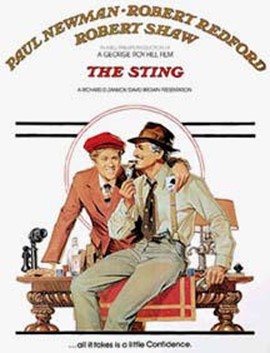 Court-siding in the Cricket World Cup yesterday reminded me of the 1973 classic movie The Sting with Paul Newman and Robert Redford. This movie is still worth watching today – a great Robert Redford, Paul Newman movie told with great wit.
Both court-siding and The Sting were both sharp practices by gamblers based on the delay in broadcasting sports results.
In court siding, the six or seven second delay in cricket broadcasts allow spectators with mobile phones to tip off gambling confederates in other parts of the world to place last second bets.
Court siding carries a 10 year prison term in the Australian State of Victoria. It is not illegal elsewhere and some have suggested that gambling syndicates turned to court siding because it’s easier to accomplish than match fixing.
Dozens of people are ejected from cricket games every year for court siding. They are easy to spot. They take no interest in the game, don’t cheer or clap and spend all their time on a mobile phone or laptop.
In The Sting, a bunch of grifters conned a gangster by pretending they could manipulate the distribution of horseracing results by the local telegraph office in the 1920s. The confederate delays the distribution of the racing results for several minutes, so the race is run and the result known before the bets are placed with the unsuspecting betting shop, relying on Telegraph racing results.
Central to the con, which is called the Wire is setting up a betting shop filled with grifters in on the con placing false bets. The only gambler who places a real bet is the mark.
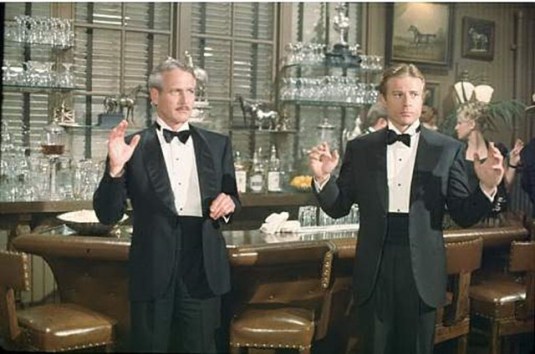
The wire was most popular in the early 20th century, when horse and dog race results were sent to betting parlours via the telegraph. As with court-siding, the con is time and personnel intensive requiring a large gang to be involved.
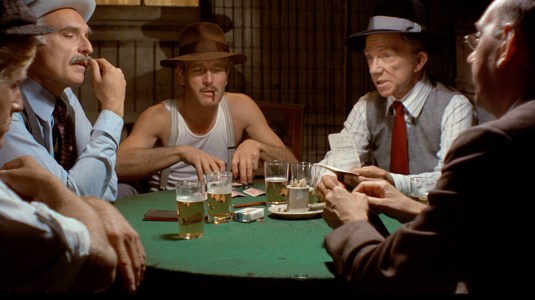
As with most cons, the Wire is based on manipulating the greed and deep pockets of the mark, including a willingness to act illegally to profit from gambling or other business ventures.
In the case of The Wire, there is corruption involved because a confederate of the telegraph office is supposed to be on the take. The confederate in the Telegraph office delays distribution of the race results, while the tips of his co-conspirators giving them enough time to place a bet.
In the case of court siding, this practice seems to me to be simply entrepreneurial alertness or arbitrage.
Betting in sport is often on spreads such as when a no ball is bowled, who is the first change bowler, who bowled a no ball or got out before a milestone such as 50 or 100 runs.
Court siding cannot be stopped by closing the betting shop 10 seconds early because they are not events that happen to a timetable such as closing the betting before the race starts.
It is up to bookmakers to solve this problem because it is an ordinary business problem. There is no corruption, bribery or any form of conspiracy between the employees of the bookmaker and the gamblers or between the gamblers and the players of the particular sport. The police should not be wasting their time with court siding.
Bookmakers could stop the practice of court-siding dead if they introduced a 10 second delay between lodging a bet online and when the bet is accepted. This 10 second delay is longer than the broadcasting delay that makes court siding possible and profitable.
Stranger than fiction: The reason why Zinedine Zidane was almost sacked as main coach of real Madrid B
30 Jan 2015 1 Comment
in economics of regulation, occupational regulation, rentseeking, sports economics Tags: Eurosclerosis, occupational regulation, soccer, Spain

Zinedine Zidane is one of the top 5 soccer players of all time (World Cup 1998, Euro Cup 2000, etc).
He retired and became assistant coach for Real Madrid in 2013 and in August 2014, main coach for Real Madrid B.

A director of the Spanish National Football Coach Education Centre because he does not have a three year higher education degree in Soccer coaching.
Zinedine Zidane was fined and expelled from Spanish league. His lawyer found a loophole due to his French citizenship and saved the day.
Zidane made his professional debut aged 16. Too busy becoming one of the greatest players of all time to spend three years at university. He spent his first weeks at his first club mainly on cleaning duty as a punishment for punching an opponent who mocked his ghetto origins.
HT: Lee Ohanian via John Cochrane
 Utopia, you are standing in it!
Recent Comments