Bias in the bias against inheriting riches
14 Mar 2015 Leave a comment
in income redistribution, sports economics Tags: expressive politics, expressive voting, top 1%
Sports ranked by difficulty
06 Mar 2015 4 Comments
in sports economics Tags: sport
Boxing was a bit obvious because someone is punching you.
Court-siding as The Sting reborn?
16 Feb 2015 Leave a comment
in economics of crime, movies, sports economics
 Court-siding in the Cricket World Cup yesterday reminded me of the 1973 classic movie The Sting with Paul Newman and Robert Redford. This movie is still worth watching today – a great Robert Redford, Paul Newman movie told with great wit.
Both court-siding and The Sting were both sharp practices by gamblers based on the delay in broadcasting sports results.
In court siding, the six or seven second delay in cricket broadcasts allow spectators with mobile phones to tip off gambling confederates in other parts of the world to place last second bets.
Court siding carries a 10 year prison term in the Australian State of Victoria. It is not illegal elsewhere and some have suggested that gambling syndicates turned to court siding because it’s easier to accomplish than match fixing.
Dozens of people are ejected from cricket games every year for court siding. They are easy to spot. They take no interest in the game, don’t cheer or clap and spend all their time on a mobile phone or laptop.
In The Sting, a bunch of grifters conned a gangster by pretending they could manipulate the distribution of horseracing results by the local telegraph office in the 1920s. The confederate delays the distribution of the racing results for several minutes, so the race is run and the result known before the bets are placed with the unsuspecting betting shop, relying on Telegraph racing results.
Central to the con, which is called the Wire is setting up a betting shop filled with grifters in on the con placing false bets. The only gambler who places a real bet is the mark.
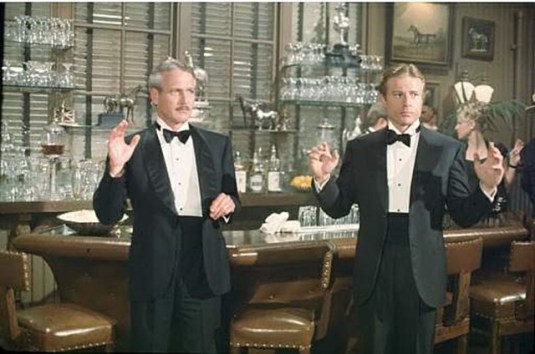
The wire was most popular in the early 20th century, when horse and dog race results were sent to betting parlours via the telegraph. As with court-siding, the con is time and personnel intensive requiring a large gang to be involved.
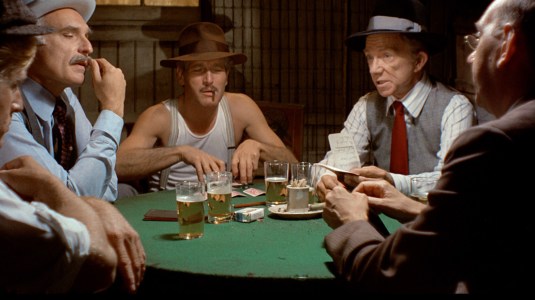
As with most cons, the Wire is based on manipulating the greed and deep pockets of the mark, including a willingness to act illegally to profit from gambling or other business ventures.
In the case of The Wire, there is corruption involved because a confederate of the telegraph office is supposed to be on the take. The confederate in the Telegraph office delays distribution of the race results, while the tips of his co-conspirators giving them enough time to place a bet.
In the case of court siding, this practice seems to me to be simply entrepreneurial alertness or arbitrage.
Betting in sport is often on spreads such as when a no ball is bowled, who is the first change bowler, who bowled a no ball or got out before a milestone such as 50 or 100 runs.
Court siding cannot be stopped by closing the betting shop 10 seconds early because they are not events that happen to a timetable such as closing the betting before the race starts.
It is up to bookmakers to solve this problem because it is an ordinary business problem. There is no corruption, bribery or any form of conspiracy between the employees of the bookmaker and the gamblers or between the gamblers and the players of the particular sport. The police should not be wasting their time with court siding.
Bookmakers could stop the practice of court-siding dead if they introduced a 10 second delay between lodging a bet online and when the bet is accepted. This 10 second delay is longer than the broadcasting delay that makes court siding possible and profitable.
Stranger than fiction: The reason why Zinedine Zidane was almost sacked as main coach of real Madrid B
30 Jan 2015 1 Comment
in economics of regulation, occupational regulation, rentseeking, sports economics Tags: Eurosclerosis, occupational regulation, soccer, Spain

Zinedine Zidane is one of the top 5 soccer players of all time (World Cup 1998, Euro Cup 2000, etc).
He retired and became assistant coach for Real Madrid in 2013 and in August 2014, main coach for Real Madrid B.

A director of the Spanish National Football Coach Education Centre because he does not have a three year higher education degree in Soccer coaching.
Zinedine Zidane was fined and expelled from Spanish league. His lawyer found a loophole due to his French citizenship and saved the day.
Zidane made his professional debut aged 16. Too busy becoming one of the greatest players of all time to spend three years at university. He spent his first weeks at his first club mainly on cleaning duty as a punishment for punching an opponent who mocked his ghetto origins.
HT: Lee Ohanian via John Cochrane
Cause Célèbre – Gender Split behind Celebrity Charity Work | Information Is Beautiful
18 Jan 2015 Leave a comment
in economics of media and culture, election campaigns, movies, Music, politics - USA, Public Choice, sports economics, televison, TV shows Tags: activists, Celebrities

HT: http://www.informationisbeautiful.net/2014/cause-celebre-gender-split-behind-celebrity-charity-work/
Olympic gold winning vaults 80 years apart
08 Jan 2015 1 Comment
Sports ranked by difficulty
19 Dec 2014 1 Comment
in economics of media and culture, sports economics
Why are superstars paid so much more than in the past?
16 Oct 2014 Leave a comment
in labour economics, sports economics Tags: Alfred Marshall, Sherwin Rosen, superstar wages
We all want the best. The best surgeon, the best TV shows, our favourite sports team, and the best lawyer. We will pay top dollar to get these stars.
In the last few decades, the top performers in many fields have earned extraordinarily large increases in wages, royalties and other forms of income. The top dogs in every field are paid many times more than the top dogs were paid a couple of decades ago.
Sport is an obvious example where cricketers in the early 1970s were paid $200 a test, with six tests per season, but are now paid $1 million a year.
In the past, a successful athlete might hope for an upper middle-class income and some savings for their retirement, which may come early due to injury.
Now, the top athletes in the sports that get on television are seriously rich and are among the richest in the world – athletes and celebrities are genuine members of the top 1%.
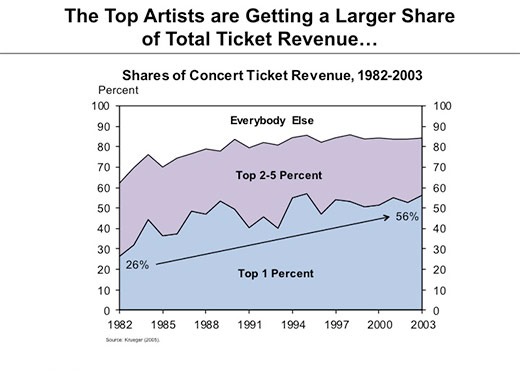
This wage effect is called the superstar effect and is a major driver of income inequality in our time. Superstar wages and income arise in markets that have two characteristics:
1. Every customer wants to enjoy the good supplied by the best producer; and
2. The good or service is produced with a technology that makes it possible for the best producer to supply additional customer at a low cost.
If it becomes much easier for the best of the best in a field to supply their services to a much larger market, these superstars will be paid a lot more than before.
Two economists pioneered the analysis of the superstar wages. The first was Alfred Marshall in 1890; the second was Sherwin Rosen in 1981. Marshall used verbal reasoning; Rosen use sophisticated mathematics.
Marshall’s explanation is easier to understand. Rosen’s mathematics allowed him to be credited for discovering and making sure that the phenomena of superstar wages stayed discovered by economists.
Marshall, by the way, was a critic of mathematics. In 1906, he wrote about his skepticism regarding the use of mathematics in economics:
[I had] a growing feeling in the later years of my work at the subject that a good mathematical theorem dealing with economic hypotheses was very unlikely to be good economics: and I went more and more on the rules –
(1) Use mathematics as a shorthand language, rather than an engine of inquiry.
(2) Keep to them till you have done.
(3) Translate into English.
(4) Then illustrate by examples that are important in real life.
(5) Burn the mathematics.
(6) If you can’t succeed in (4), burn (3). This last I did often.”
Rosen was one of the greatest labour economists of this century. He examined the economics of superstars to determine why
"relatively small numbers of people earn enormous amounts of money and seem to dominate the fields in which they engage.
Rosen argued that in superstar markets:
small differences in talent at the top of the distribution will translate into large differences in revenue… sellers of higher talent charge only slightly higher prices than those of lower talent, but sell much larger quantities; their greater earnings come overwhelmingly from selling larger quantities than from charging higher prices
Those who have above-average talent should earn more because consumers prefer to do more business with them. Consumer preferences dictate that small differences in talent become magnified in large earnings differences. For example, if a surgeon were 10 percent more successful in saving lives, most would be willing to pay more than a 10 percent premium for his services.
Preferences for the best are incapable of explaining the other aspect of the superstar phenomenon: the marked concentration of output (and rewards) on those few sellers who have the most talent.
This something else is technology rather than by tastes. The key is in many instances, one consumer’s consumption of the service does not reduce its availability to other consumers.
A performer or an author must put out more or less the same effort whether 10 or 1,000 or 1 million people show up in the (TV) audience or buy their book. This scale economy allows a few sellers to service the entire market – and the fewer that are needed to serve it, the more they can earn.
This scale economy is limited without the technology to mass duplicate their performance. Films, radio, television, records and CDs and other changes in technology have increased the scope of each performer’s audience. The top performers can reach much larger markets at little additional cost in the digital age.
Marshall had a very simple explanation for the superstar effect on wages, which had already emerged in the 19th century. Marshall explained that technology has greatly extended the power and reach of the most gifted performers.
Marshall referred to the British opera singer Elizabeth Billington. She had a strong voice that did not have access to a microphone or amplifier in 1798, let alone to CDs and the Internet. Elizabeth Billington could only reach a small audience. This limited her ability to dominate the market in the way artists do today.
The microphone was the first manifestation of the superstar effect in the entertainment industry. The architecture of theatres throughout the ages has spent an immense amount of time working out ways to amplify the voices of performers so more people could watch at little extra cost.
Throughout the Industrial Revolution, technological changes would allow the best performers in a given field to serve bigger markets and reap a greater share of its revenue.
A range of technological developments has largely favoured the very top performers in recent years.
Each communications and information technology breakthrough allowed the very top entertainment acts to reach a larger fan base and a bigger share of concert revenue. The second-best are paid not much at all because everyone preferred to buy the best and can do so at a very low cost. The best of the best are, in consequence, handsomely rewarded.
Forensic statistics and drugs in sport
22 Jul 2014 Leave a comment
in applied price theory, economics of crime, sports economics Tags: doping, drugs in sport

Years ago, I read a newspaper article in the Sydney Morning Herald about how forensic statistics was used to detect drugs in sport through the differences in athletic performance between men and women in track and field.
Drugs in certain sports make women disproportionately stronger, and therefore reduces the disparity between them and men in sports that require pure strength.
In the 1980s, the gap between men and women in track and field performances had been narrowing. In 1992, major improvements were made in drug testing. In consequence, the gap between men and women in athletic performance started to widen again.
In about 1992, as I recall, athletic records for women that used to be broken several times in one major international meeting such as the Olympics suddenly stood for years before they were broken again.

HT: Phil Hurst and SecureGame


Recent Comments