But despite some ominous signs, a close look at the data shows that travel to the United States is largely holding up — at least so far. Nearly as many foreign travelers have arrived at American airports this year than during the same period last year, according to an analysis by The New York Times […]
Has international travel to the U.S. really collapsed?
Has international travel to the U.S. really collapsed?
05 May 2025 Leave a comment
in politics - USA, transport economics Tags: 2024 presidential election
The importance of the chronometer
24 Mar 2025 1 Comment
in applied price theory, econometerics, economic history, industrial organisation, transport economics, urban economics Tags: Age of Discovery
The chronometer, one of the greatest inventions of the modern era, allowed for the first time for the precise measurement of longitude at sea. We examine the impact of this innovation on navigation and urbanization. Our identification strategy leverages the fact that the navigational benefits provided by the chronometer varied across different sea regions depending […]
The importance of the chronometer
Commerce Secretary Lutnick Is Among Those Government Officials Who Are Ignorant of Basic Economic Facts
21 Mar 2025 Leave a comment
in applied price theory, economic history, industrial organisation, international economics, market efficiency, politics - USA, survivor principle, transport economics Tags: 2024 presidential election, free trade, tarrifs
TweetHere’s a note to the Highland County Press. Editor: Commerce secretary Howard Lutnick asserts that NAFTA allowed U.S. automobile producers to “screw” American auto workers by shifting auto-industry production to Mexico and Canada (“Trump Cabinet members: Tariff plans are working; tariffs could eliminate federal income tax for those earning less than $150,000,” March 20). Mr.…
Commerce Secretary Lutnick Is Among Those Government Officials Who Are Ignorant of Basic Economic Facts
Share the “Deep Internal Conflict” of the Green Aussie Billionaire who Just Bought a Private Jet
15 Mar 2025 Leave a comment
in economics of climate change, energy economics, environmental economics, environmentalism, global warming, politics - Australia, transport economics Tags: climate activists
“… so I can run a global business from Australia, and still be a constantly present dad …”
Share the “Deep Internal Conflict” of the Green Aussie Billionaire who Just Bought a Private Jet
RODNEY HIDE: Fight! Fight! Fight!
04 Mar 2025 Leave a comment
in health economics, law and economics, liberalism, politics - New Zealand, transport economics Tags: economics of pandemics, free speech, political correctness, regressive left
It was shocking how the institutions we thought we could rely on crumbled like a stack of cards. The opposition, the media, the courts,…
RODNEY HIDE: Fight! Fight! Fight!
Lift the Ban on Supersonics: No Boom
28 Feb 2025 Leave a comment
in economics of regulation, transport economics
Boom, the supersonic startup, has announced that their new jet reaches supersonic speeds but without creating much of an audible boom. How so? According to CEO Blake Scholl: It’s actually well-known physics called Mach cutoff. When an aircraft breaks the sound barrier at a sufficiently high altitude, the boom refracts in the atmosphere and curls […]
Lift the Ban on Supersonics: No Boom
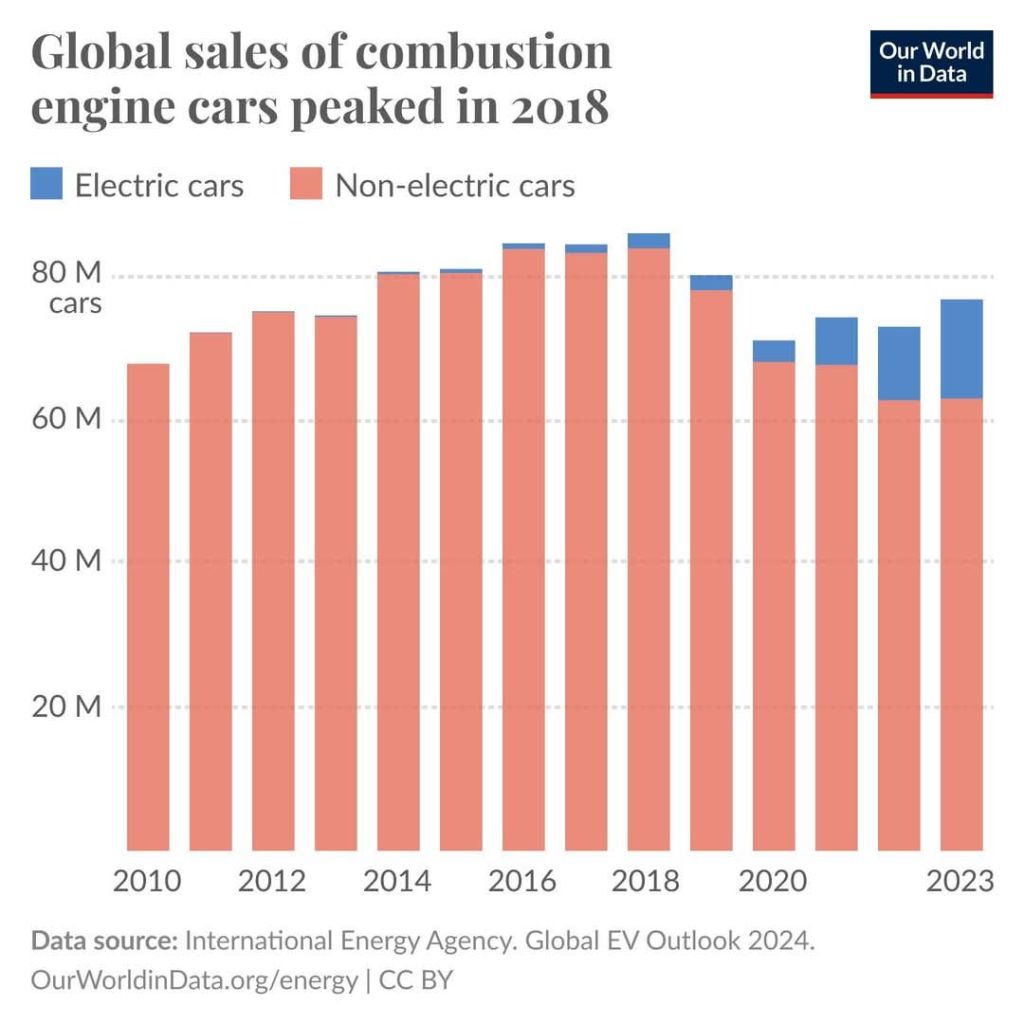
Bugger all
21 Feb 2025 Leave a comment
in energy economics, environmental economics, environmentalism, transport economics Tags: electric cars
The Royal Society Moves to Expel Musk Over His Political Views
21 Feb 2025 Leave a comment
in economics of education, entrepreneurship, law and economics, liberalism, Marxist economics, property rights, transport economics Tags: free speech, political correctness, regressive left, space

Founded in 1660, the Royal Society is one of the most prominent scientific organizations in the world with associations to such luminaries as Sir Isaac Newton and Charles Darwin. Despite that proud history, British scientists are pushing to politicize the society and expel Elon Musk because they disagree with his political views. It is not […]
The Royal Society Moves to Expel Musk Over His Political Views
Cordon Pricing Makes New York Congestion Worse
13 Feb 2025 Leave a comment
in applied price theory, transport economics, urban economics Tags: cordon pricing
Early reports claim that New York City’s so-called congestion pricing program is a great success, reducing the number of vehicles driving into lower Manhattan by 5 to 6 percent. However, because it really isn’t congestion pricing — that is, it doesn’t price roads by how much congestion there is but … Continue reading →
Cordon Pricing Makes New York Congestion Worse
The long road to housing affordability
11 Feb 2025 Leave a comment
in applied price theory, economics of bureaucracy, economics of regulation, income redistribution, law and economics, politics - New Zealand, property rights, Public Choice, rentseeking, transport economics, urban economics Tags: housing affordability, land supply, zoning
There is much work yet to be done in New Zealand to improve housing affordability, despite recent declines in valuations. Eric Crampton writes – It wasn’t that long ago that New Zealand’s housing market made international news because of its insanity. In 2016, The Guardian tagged Auckland as the “hottest property market in the world” […]
The long road to housing affordability
Trump Admin Moves To Toss Out Biden’s Fuel Economy Rules
31 Jan 2025 Leave a comment
in economics of climate change, economics of regulation, energy economics, environmental economics, environmentalism, global warming, politics - USA, transport economics Tags: 2024 presidential election
Newly-confirmed Department of Transportation (DOT) Secretary Sean Duffy is already moving to overturn the Biden-Harris administration’s stringent fuel economy standards for vehicles.
Trump Admin Moves To Toss Out Biden’s Fuel Economy Rules
Was Germany Really Starved Into Surrender in WW1? (Documentary)
20 Jan 2025 Leave a comment
in defence economics, international economics, International law, laws of war, resource economics, transport economics, war and peace Tags: Germany, World War I
Congestion charges work
19 Jan 2025 Leave a comment
in applied price theory, politics - USA, transport economics Tags: congestion charging, road pricing
Radio NZ reports: Traffic in Manhattan’s central business district fell by 7.5 percent last week and 273,000 fewer cars entered the borough’s central business district after the first congestion pricing fee in the US took effect on 5 January, New York City transit officials said on Monday. The fee was designed to reduce traffic and raise billions […]
Congestion charges work
One early report on congestion pricing in NYC
16 Jan 2025 1 Comment
in applied price theory, applied welfare economics, comparative institutional analysis, market efficiency, politics - USA, public economics, transport economics, urban economics Tags: road pricing
That is my latest Bloomberg column, here is one bit: The core version of the plan stipulates a $9 toll for drivers entering Manhattan below and including 60th Street. Implementation is by E-Z Pass, and the tolls can vary in complex ways. But if you don’t cross the line, you don’t pay. So residents below 60th Street are exempt, […]
One early report on congestion pricing in NYC
2024 Registrations Of New Electric Cars Plummet 27.5% In Germany…”Petrol Dominates”
15 Jan 2025 1 Comment
in economics of regulation, energy economics, environmental economics, global warming, industrial organisation, survivor principle, transport economics Tags: electric cars, Germany
How’s the Green New Deal working out in Germany? Not very well at all. Firstly, Germany has been in recession for almost 2 years now – thanks mostly to the policies of Economics Minster Robert Habeck (Green Party), who incidentally has no education in economics, business or finance. The guy just doesn’t know what he’s…
2024 Registrations Of New Electric Cars Plummet 27.5% In Germany…”Petrol Dominates”


Recent Comments