Watch a Tesla drive you to work
31 Oct 2016 Leave a comment
in transport economics Tags: self drive cars
Behind on my chemtrails blogging
20 Oct 2016 Leave a comment
in transport economics Tags: conspiracy theories, cranks, Quacks
Apparently, I am a paid hack for the motor industry as well
19 Oct 2016 Leave a comment
in Public Choice, transport economics
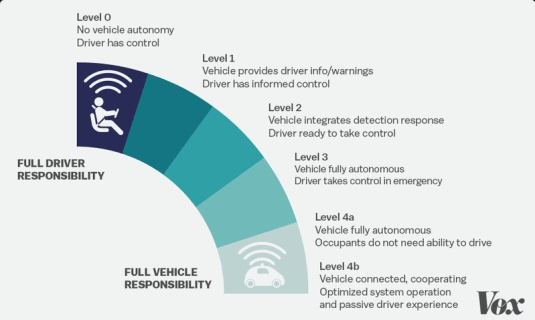
Autonomous Cars Will Discriminate Against Human Drivers
17 Sep 2016 Leave a comment
in transport economics Tags: self-driving cars
Electric cars are still terrible value for money @phil_goff
07 Sep 2016 Leave a comment
in environmental economics, transport economics
But for the celebrity technology status of electric cars, only two maybe three of these models would be on the road.

Source: Here’s how Tesla’s electric cars stack up against the competition | Business Insider.
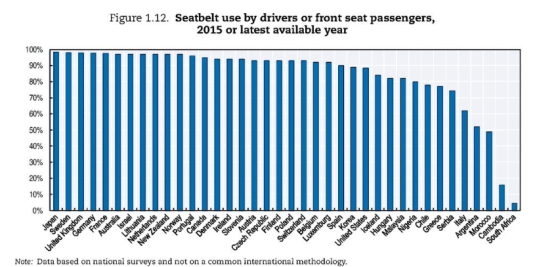
Seatbelt usage must have gone up big time in Japan since I live there
03 Sep 2016 Leave a comment
in economics of regulation, transport economics
You cannot even find that seatbelt in taxis because they have been pushed under the seat so that the locals did not have to sit on them. Not much point wearing a seatbelt if the passenger in the rear comes flying past you in the accident.

The gender commuting gap between mothers and fathers
28 Aug 2016 Leave a comment
in discrimination, economics of love and marriage, gender, human capital, labour economics, labour supply, occupational choice, poverty and inequality, transport economics Tags: asymmetric marriage premium, commuting times, compensating differentials, female labour force participation, gender gap, gender wage gap
The first three bars in each cluster of bars are for men. in almost all countries mothers with dependent children spend less time commuting than childless women. This might suggest that working mothers have found workplaces closer to home than women without children. The gender gap in commuting where it is present in the country is larger than the gap between mothers and other women in their commuting time.
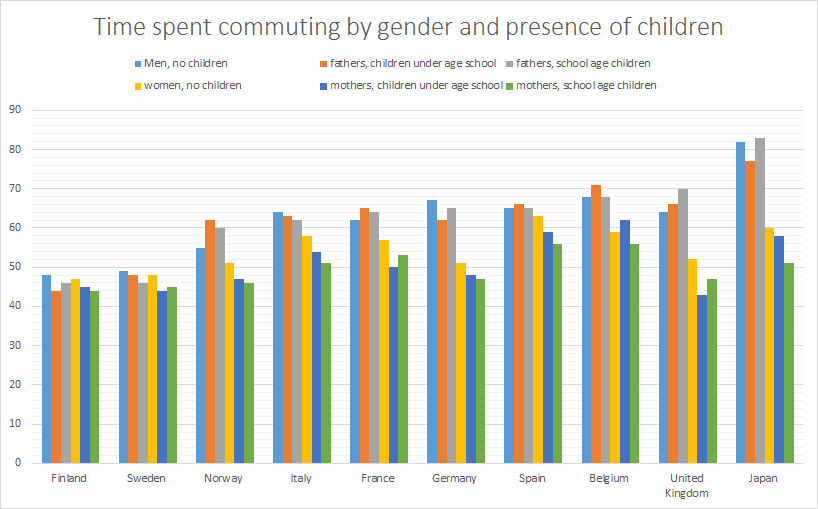
Source: OECD Family Database – OECD, Table LMF2.6.A.
The Forgotten American Concordes
26 Aug 2016 Leave a comment
in economics, transport economics Tags: Concorde
World’s first pizza delivery by drone
26 Aug 2016 Leave a comment
in economics, politics - New Zealand, technological progress, transport economics Tags: drones
Moral Machine
14 Aug 2016 Leave a comment
A platform for public participation in and discussion of the human perspective on machine-made moral decisions.
Source: Moral Machine
This plane could cross the Atlantic in 3.5 hours. Why did it fail? – Vox
21 Jul 2016 Leave a comment
in transport economics Tags: creative destruction
The Most Incredible Russian Dashcam Video
16 Jul 2016 Leave a comment
in economics of media and culture, transport economics Tags: Darwin awards, road safety, Russia
.@NZlabour wants to crash house prices! @NZGreens take on the NIMBYs! @PhilTwyford
14 Jul 2016 Leave a comment
in economics of regulation, environmental economics, politics - New Zealand, transport economics, urban economics Tags: housing affordability, land supply, New Zealand Greens, New Zealand Labour Party, NIMBYs
There has been an unexpected outbreak of political courage on the left of New Zealand politics.
The Labour Party wants to crash housing prices by not only abolishing the Auckland urban limit, but ensuring councils can fund the necessary infrastructure to bring new land to the market:
Labour will remove the Auckland urban growth boundary and free up density controls. This will give Auckland more options to grow, as well as stopping land bankers profiteering and holding up development. New developments, both in Auckland and the rest of New Zealand, will be funded through innovative infrastructure bonds.
In response, the Greens want to take on the inner city NIMBYs by greatly increasing housing density and new developments in their pristine suburbs
Like Labour, we believe that people should have a choice about where they live. But a lot of people want to live close to the central city where they work or study. That means delivering more high-quality, inner city housing options, not endless sprawling new suburbs.
It’s often easier and cheaper to revitalise central suburbs than it is to build new suburbs on the city fringes. Infrastructure for new sprawling subdivisions is very expensive.
This outbreak of courage is surprising after the resolute opposition of these parties to any reform of the Resource Management Act to loosen up the land supply.
It is a breakthrough nonetheless because at least the Labour Party admits that housing affordability is about increasing land supply by removing the Auckland urban limit.
 Utopia, you are standing in it!
Recent Comments