
‘What were you thinking?’: Police shocked at tourist driver – National News | TVNZ
16 Dec 2014 Leave a comment
in economics of regulation, health and safety, transport economics Tags: health and safety

A tourist caught driving with a kayak tied cross-ways across his car roof told shocked police that he was just trying to preserve his vehicle.
via ‘What were you thinking?’: Police shocked at tourist driver – National News | TVNZ.
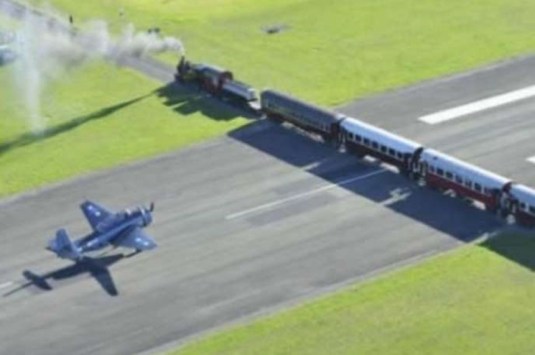
From If You Want To Live, You’ll Steer Clear From These Airports
15 Dec 2014 Leave a comment
in economics of regulation, transport economics
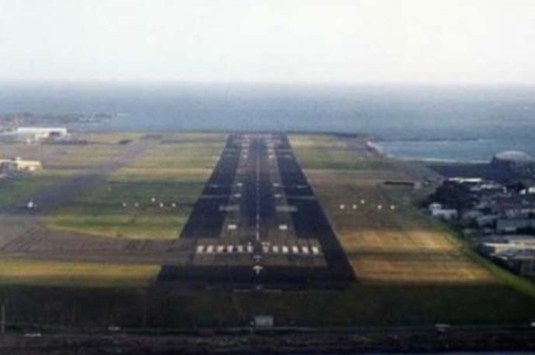
Wellington International Airport – New Zealand

My bullet train trip deep into the Japanese mountains
15 Dec 2014 Leave a comment
in fiscal policy, transport economics
My first trip on the bullet train was zipping from Tokyo to Kyoto and Osaka and then to Hiroshima. A great experience was my trip to Japan in 1993. An excellent tourist destination. I recommend Japan to anyone as a tourist destination. The language barrier is not a problem – there are plenty of English signs.
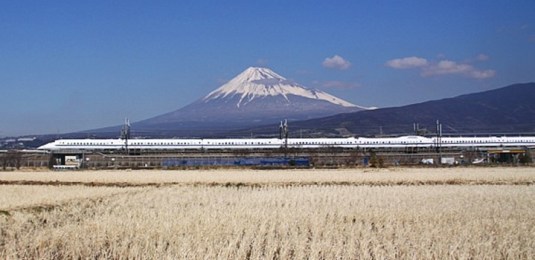
When I returned to Japan as a student in 1995, the last of my bullet train trips was into the Japanese mountains.
The class field trip travelled on a spur on the Bullet train to the Yamagata city in Yamagata prefecture.
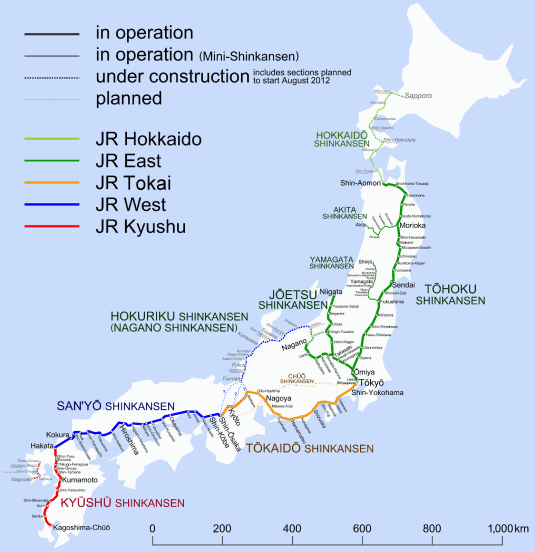
This bullet train line weaved its way through the mountains and rarely hit any sort of speed. The bullet train was no faster than the ordinary Japanese trains I have taken through the mountains in Japan.
When I asked my Professor of Land Transport when we are heading back from our field trip at an isolated rural train station waiting for the Bullet train, why was the Bullet train to such a remote place, he said that the Secretary General of the Liberal Democratic party always wanted the Bullet train to come to his home district.
Yamagata prefecture has a population of about 1 ½ million. Yamagata city has a population of about a quarter of 1 million. That is smaller than Greater Wellington.
The final station in this spur into Yamagata prefecture has a population of 40,000. Perhaps a Bullet train should come to my suburb in the eastern suburbs of Wellington?
Can crime be deterred: hijackings as a case study of the increase in the probability of apprehension
05 Dec 2014 1 Comment
in economics of crime, law and economics, transport economics Tags: crime and punishment, deterrence, economics of crime, hijacking, law and economics
In 1977, William Landes published a classic study of crime and punishment. He investigated what happened to the number of hijackings in the USA after mandatory screening of passengers and their carry-on luggage was introduced in 1973.
During the peak period of hijackings, 1968 to 1972, the probability of apprehension the hijacker was 15%. For those hijackers that were caught, their average prison sentence was 30 years in 1972 to 1974. One quarter of hijackers were committed to mental institutions. Hijackings became so common that:
[a]irliners carried approach plans for the Havana airport and crews were instructed not to resist hijackers. There were also standard diplomatic procedures for obtaining the return of planes and passengers
No hijackers were killed during the course of their crimes until 1971. After that, there is about a 10% chance of the hijacker being shot dead. Air marshals started riding on US planes in 1970; there were about 1200 of these air marshals, who had to be about the most boring job in the world.
The primary purpose of hijackings in the USA in the late 60s and early 70s in the USA initially was to obtain free transport to Cuba for the political purposes or to avoid prosecution for crimes. However, in the early 1970s, this demand for air transport started to decline as news filtered back about how poorly these hijackers were treated in Cuba. A few of these hijackers chose to return to the United States.
Interestingly, the substitute for flying to Cuba was para-hijackers. They demanded a ransom of an average of $300,000 and then parachuted out of the plane. One out of 18 succeeded. Their average prison sentence for the 11 that survived was 43 years.

As the table above shows, the number of hijackings in the USA immediately fell from over 20 per year, with a maximum of 38 in 1969, to one or two per year after the introduction of mandatory screening of passengers and their carry-on luggage In 1973.
All hijackers were apprehended between 1973 and 1976. Apparently, hijackers of all breeds and political complexions do not enjoy the prison experience. Criminals don’t like to be caught.
Interestingly, lunatics could be deterred. They retained sufficient capacity for planning to abandon their plans to hijack a plane because of the inevitability of arrest at the boarding gate after the metal detector sounded off from 1973 onwards. Only to the 12 offenders that were apprehended for attempted hijacking between 1973 and 1976 were committed to mental institutions. The remaining 10 were just plain stupid.
If lunatics cannot be deterred, do not respond incentives, they should have continued to hijack planes at the same rate as prior to the introduction of mandatory screening in 1973.
That said, mandatory screening was not cheap, which may explain why airlines and their passengers were putting up with up to 40 hijackings per year, as Landes explained using 1977 dollar, which was back when a dollar actually bought something:
Although the mandatory screening program is highly effective in terms of the number of hijackings prevented, its costs appear enormous.
The estimated net increase in security costs due to the screening program (which does not include the time and inconvenience costs to persons searched) is $194.24 million over the 1973 to 1976 period.
This, in turn, translates into a $3.24 to $9.25 million expenditure to deter a single hijacking. Put differently, if the dollar equivalent of the loss to an individual hijacked passenger were in the range of $76,718 to $219,221, then the costs of screening would just offset the expected hijacking losses.
I should add, however,that air travel was much more expensive and much less frequent in 1973. The jumbo jet had only been introduced two years previous. Air travel is much more frequent these days so would the contemporary travelling public be willing to put up with the equivalent of hundreds of hijackings per year?

Caption: A Northwest Orient Airlines plane that was hijacked on July 1, 1968, is pictured at the Miami International Airport after returning from Cuba.
What did happen after the crackdown on hijacking was the terrorists change tactics. Embassy takeovers another type of sieges surged. Prior to the crackdown on hijacking, these were rare.
When embassies became fortified, the terrorists instead started kidnapping or murdering diplomats after they left the Embassy compound. As Walter Enders and Todd Sandler found
The existence of complements and substitutes means that policies designed to reduce one type of attack may affect other attack modes.
For example, the installation of metal detectors in airports reduced skyjackings and diplomatic incidents but increased other kinds of hostage attacks (barricade missions, kidnappings) and assassinations.
In the long run, embassy fortification decreased barricade missions but increased assassinations.
Forecasting errors: road traffic growth forecasts
29 Nov 2014 Leave a comment
in transport economics Tags: forecasting errors
Official estimates for the value of a statistical life for road accidents in selected countries
24 Jul 2014 Leave a comment
in transport economics Tags: value of life
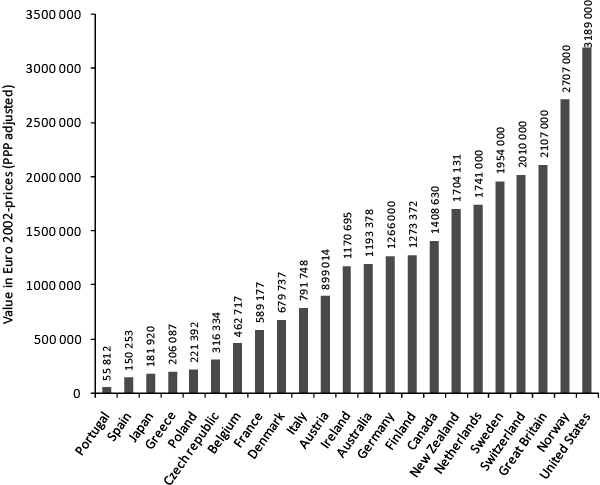
I feel very valued compared to Australia.
HT: https://www.regjeringen.no/en/dokumenter/nou-2012-16/id700821/?docId=NOU201220120016000EN_EPIS&q=&navchap=1&ch=11

The value of a statistical life through time in the USA
06 Jul 2014 Leave a comment
in economics of regulation, environmental economics, health economics, technological progress, Thomas Schelling, transport economics Tags: Thomas Schelling, value of life

Thomas Schelling’s crucial contribution in 1968 at RAND was the notion of statistical lives—mortality risks—in contrast to valuing the lives of specific, identified individuals. His insight was that economists could evade the moral thicket of valuing life and instead focus on people’s willingness to trade-off money for small reductions in the risks they face.
In praise of traffic cops
05 May 2014 1 Comment
in applied welfare economics, constitutional political economy, law and economics, transport economics Tags: crime and deterrence, James Buchanan, punishment dilemma
Due to budget cuts, 35% of Oregon State Highway Police were laid off. These mass layoffs dramatically reduced citations and resulted in a 10-20% increase in injuries and fatalities.

The strongest effects were under fair weather conditions outside of city-limits where state police employment levels were most relevant.
These results in DeAngelo and Hansen’s “Life and Death in the Fast Lane: Police Enforcement and Traffic Fatalities” American Economic Journal: Economic Policy 2014 suggest that a highway fatality can be prevented with $309,000 of additional expenditures on traffic police.
A standard measure of the “value of a statistical life” is it is worth taking regulatory or law enforcement actions that reduce the risks of death when the costs of these actions are less than about $9 million per life saved.
Road safety is an area where James Buchanan’s punishment dilemma is strong:
For some laws or behavioural rules, the individual’s self-interest may override adherence [to the law], at least in certain circumstances.
Traffic violations offer a good example here.
Recognizing that he may himself violate traffic regulations on occasion, the individual may be reluctant to accept institutions that impose severe penalties, despite his preferences that all “others” than himself should be led to obey the general rules by sufficiently severe sanctions.
Just as the individual prefers that all others abide voluntarily by law while he remains free to violate it, so, too, he prefers that differentially severe punishment for law violation be meted out to others than himself.
Voters are less than keen to support strong penalties and convict when sitting on juries because of the fear that there but for the grace of god go I: that they would be in the dock at the receiving end of the heavy punishments.
If we commit to punish offenders and those who might commit offenses are deterred by this commitment to punish them, there would be fewer offenses. This also means doing the unpleasant things of meeting out these punishment when there are offenses by the undeterred:
- It is painful to subject others to punishment (“son, this is going to hurt me as much as it hurts you”); and
- It is even more painful to vote for penalties that may be imposed on yourself in person.
The initially low penalties for causing death by dangerous driving is an example of the punishment dilemma. These penalties only slowly increased over several decades as societal attitudes hardened.
@NZGreens @GreenpeaceNZ The scrapping of the trolley buses is great news – killer green technology alert
27 Apr 2014 1 Comment
in environmental economics, politics - New Zealand, transport economics Tags: expressive voting, killer green technologies, Wellington buses
The extra costs associated with the wire network and the difficulty of changing the buses’ routes were the main factors in this great decision.
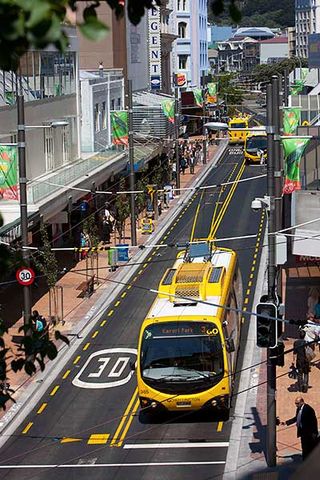
Trolley buses cause backlogs when they brake down because they cannot overtake a broken-down bus. The trolley buses just stake-up behind the broken-down bus because they cannot overtake.
I have been trapped on a diesel express bus this way commuting to work many times. Central Wellington grinds to halt when one trolley bus breaks-down.
The 50-year-old power system would need upgrading soon costing “tens of millions of dollars,” and maintaining the 160 kilometres of wires and 15 substations costs $6m a year. The one-off cost of dismantling this network is cheaper than this!
Trolley bases are a killer green technology: drivers have been killed while standing on the road behind the bus reconnected the arms on the top of the bus to the overhead wires. These arms disconnect frequently, and have even hit people on the side of the road.
Wellington is earthquake prone. Having public transport run off a single electric power source connected to overhead wires is fool hardy.
I grew up in a small country town. I have none of the obsessions that big-city folk and the inner-city green voters, in particular, have with buses.
Congestion pricing – Swedish style
06 Apr 2014 Leave a comment
in politics, Public Choice, transport economics Tags: congestion charges
Sweden had a novel approach to introducing a road congestion charge. The congestion toll is put in place in 2006 for six months and then was lifted for another seven months.

A local referendum was then held on whether to bring the road tolls back or stay with the old traffic congestion. Road traffic passing in and out of the cordon in Stockholm Municipality reduced by between 20-25% during the period of the trial.
Neat.
 Utopia, you are standing in it!
Recent Comments