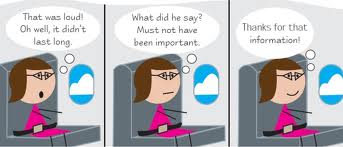
In flight wi-fi – new use

Image

Darwin awards: Two daredevils playing tennis on a flying airplane

https://twitter.com/classicepics/status/561327505077186560

Is surge pricing by Uber another name for overtime and weekend pay

Uber is in strife of late for charging more at peak timesUber calls it surge pricing. We don’t object paying more for a meal at a restaurant at dinner time rather than at lunchtime but the same people object to paying more for the taxi late at night where the driver must risk the dangers of solitary night-time work and picking up strangers who might have had a few too many.

Under Uber’s now-national policy, price surging is capped during disasters and states of emergency at the fourth-highest nonemergency surge seen in the previous two months.

Embedded image permalink

We all expect to pay more for air tickets at peak times, such as school holidays and Christmas. Indeed, one reason we are able to delay booking is we know seats will be available because they are selling at a premium for those who booked late. Others who make their plans early quite enjoy getting the cheaper for early bird bookings.

Is surge pricing another name for over time and night and weekend pay? Union contracts provide for overtime pay, if you work more than the specified 8 hours a day.

The Holidays Act in New Zealand provides that if an employee works at the weekends, they are paid at 150% of the normal rate; and double party on public holidays. Not many employees object of this wage premium for work in it inconvenient times. Cafes and restaurants routinely charge of 10-15% price premium on public holidays to cover this overtime pay.

As would be expected under the theory of compensating differentials, there are wage premiums for jobs where the worker must work at inconvenient or unsocial times, in jobs with a greater risk  of injury, or otherwise work more unpleasant than the average.

Viscusi estimated the wage premium for hazardous jobs to be rather large in the United States:

The extra pay for job hazards, in effect, establishes the price employers must pay for an unsafe workplace.

Wage premiums paid to U.S. workers for risking injury are huge; they amount to about $245 billion annually (in 2004 dollars), more than 2 percent of the gross domestic product and 5 percent of total wages paid. These wage premiums give firms an incentive to invest in job safety because an employer who makes the workplace safer can reduce the wages he pays.

Those who don’t like Uber’s surge pricing can always hail a cab. As I remember from American TV programmes, at peak times, prospective customers on the side of the road hail cabs at peak times with several fingers raised to indicate how much more than the standard fare, they are willing to pay.

469154205-man-hails-a-taxi-in-the-snow-on-february-13-2014-in-new

There is nothing new under the sun. Uber’s app allows you to do the price bidding for a taxi on your cellphone rather than out in the cold 

Faith In Humanity Restored

https://twitter.com/FascinatingVids/status/558068129163935744

Image

A rather effective safety notice

Why are airport announcements so loud but so incomprehensible?

image

Image

Travelling today: Economy class ain’t what it used to be

https://twitter.com/HistoryInPics/status/547184867482808321

PJ O’Rourke on the bête noire of the Greens: the car

Image

‘What were you thinking?’: Police shocked at tourist driver – National News | TVNZ

A tourist driver was caught carrying a kayak crossways across his roof. Photo / Police

A tourist caught driving with a kayak tied cross-ways across his car roof told shocked police that he was just trying to preserve his vehicle.

via ‘What were you thinking?’: Police shocked at tourist driver – National News | TVNZ.

Gisborne Airport – New Zealand

Image

From If You Want To Live, You’ll Steer Clear From These Airports

Wellington International Airport – New Zealand

Gibraltar International Airport

Image

My bullet train trip deep into the Japanese mountains

My first trip on the bullet train was zipping from Tokyo to Kyoto and Osaka and then to Hiroshima. A great experience was my trip to Japan in 1993. An excellent tourist destination. I recommend Japan to anyone as a tourist destination. The language barrier is not a problem – there are plenty of English signs.

When I returned to Japan as a student in 1995, the last of my bullet train trips was into the Japanese mountains.

The class field trip travelled on a spur on the Bullet train to the Yamagata city in Yamagata prefecture.

This bullet train line weaved its way through the mountains and rarely hit any sort of speed. The bullet train was no faster than the ordinary Japanese trains I have taken through the mountains in Japan.

When I asked my Professor of Land Transport when we are heading back from our field trip at an isolated rural train station waiting for the Bullet train, why was the Bullet train to such a remote place, he said that the Secretary General of the Liberal Democratic party always wanted the Bullet train to come to his home district.

Yamagata prefecture has a population of about 1 ½ million. Yamagata city has a population of about a quarter of 1 million. That is smaller than Greater Wellington.

The final station in this spur into Yamagata prefecture has a population of 40,000. Perhaps a Bullet train should come to my suburb in the eastern suburbs of Wellington?

Can crime be deterred: hijackings as a case study of the increase in the probability of apprehension

In 1977, William Landes published a classic study of crime and punishment. He investigated what happened to the number of hijackings in the USA after mandatory screening of passengers and their carry-on luggage was introduced in 1973.

During the peak period of hijackings, 1968 to 1972, the probability of apprehension the hijacker was 15%. For those hijackers that were caught, their average prison sentence was 30 years in 1972 to 1974. One quarter of hijackers were committed to mental institutions. Hijackings became so common that:

[a]irliners carried approach plans for the Havana airport and crews were instructed not to resist hijackers. There were also standard diplomatic procedures for obtaining the return of planes and passengers

No hijackers were killed during the course of their crimes until 1971. After that, there is about a 10% chance of the hijacker being shot dead. Air marshals started riding on US planes in 1970;  there were about 1200 of these  air marshals, who had to be about the most boring job in the world.

The primary purpose of hijackings in the USA in the late 60s and early 70s in the USA initially was to obtain free transport to Cuba for the political purposes or to avoid prosecution for crimes. However, in the early 1970s, this demand for air transport started to decline as news filtered back about how poorly these hijackers were treated in Cuba. A few of these hijackers chose to return to the United States.

Interestingly, the substitute for flying to Cuba was para-hijackers. They demanded a ransom of an average of $300,000 and then parachuted out of the plane.  One out of 18 succeeded. Their average prison sentence for the 11 that survived was 43 years.

Hijacking incidences from 1930-1976 from the study of William Landes of University of Chicago Law School focused on hijacking's economic impact. Study was done in year 1977.

As the table above shows, the number of hijackings in the USA  immediately fell from over 20 per year, with a maximum of 38 in 1969, to one or two per year after the introduction of mandatory screening of passengers and their carry-on luggage In 1973.

All hijackers were apprehended between 1973 and 1976. Apparently, hijackers  of all breeds and political complexions do not enjoy the prison experience. Criminals don’t like to be caught.

Interestingly, lunatics could be deterred. They retained sufficient capacity for planning to abandon their plans to hijack a plane because of the inevitability of arrest at the boarding gate after the metal detector sounded off from 1973 onwards. Only to the 12 offenders that were apprehended for attempted hijacking between 1973 and 1976 were committed to mental institutions. The remaining 10 were just plain stupid.

If lunatics cannot be deterred, do not respond incentives, they should  have continued to hijack planes at the same rate as prior to the introduction of mandatory screening in 1973.

That said, mandatory screening was not cheap, which may explain why airlines and their passengers were putting up with up to 40 hijackings per year, as Landes explained using 1977 dollar, which was back when a dollar actually bought something:

Although the mandatory screening program is highly effective in terms of the number of hijackings prevented, its costs appear enormous.

The estimated net increase in security costs due to the screening program (which does not include the time and inconvenience costs to persons searched) is $194.24 million over the 1973 to 1976 period.

This, in turn, translates into a $3.24 to $9.25 million expenditure to deter a single hijacking. Put differently, if the dollar equivalent of the loss to an individual hijacked passenger were in the range of $76,718 to $219,221, then the costs of screening would just offset the expected hijacking losses.

I should add, however,that air travel was much more expensive and much less frequent in 1973. The jumbo jet had only been introduced two years previous. Air travel is much more frequent these days so would the contemporary travelling public be willing to put up with the equivalent of hundreds of hijackings per year?

cuba plane hijacked, Northwest Orient Airlines plane

Caption: A Northwest Orient Airlines plane that was hijacked on July 1, 1968, is pictured at the Miami International Airport after returning from Cuba.

What did happen after the crackdown on hijacking  was the terrorists change tactics.  Embassy takeovers another type of sieges surged. Prior to the crackdown on hijacking, these were rare.

When embassies became fortified, the terrorists instead started kidnapping or murdering diplomats after they left the Embassy compound. As Walter Enders and Todd Sandler found

The existence of complements and substitutes means that policies designed to reduce one type of attack may affect other attack modes.

For example, the installation of metal detectors in airports reduced skyjackings and diplomatic incidents but increased other kinds of hostage attacks (barricade missions, kidnappings) and assassinations.

In the long run, embassy fortification decreased barricade missions but increased assassinations.

Forecasting errors: road traffic growth forecasts

Previous Older Entries Next Newer Entries

Thoughts from the North

Celebrating humanity's flourishing through the spread of capitalism and the rule of law

Fardels Bear

A History of the Alt-Right

Vincent Geloso

Econ Prof at George Mason University, Economic Historian, Québécois

Bassett, Brash & Hide

Celebrating humanity's flourishing through the spread of capitalism and the rule of law

Truth on the Market

Scholarly commentary on law, economics, and more

The Undercover Historian

Beatrice Cherrier's blog

Matua Kahurangi

Celebrating humanity's flourishing through the spread of capitalism and the rule of law

Temple of Sociology

Celebrating humanity's flourishing through the spread of capitalism and the rule of law

Velvet Glove, Iron Fist

Celebrating humanity's flourishing through the spread of capitalism and the rule of law

Why Evolution Is True

Why Evolution is True is a blog written by Jerry Coyne, centered on evolution and biology but also dealing with diverse topics like politics, culture, and cats.

NoTricksZone

Celebrating humanity's flourishing through the spread of capitalism and the rule of law

Homepaddock

A rural perspective with a blue tint by Ele Ludemann

Kiwiblog

DPF's Kiwiblog - Fomenting Happy Mischief since 2003

The Dangerous Economist

Celebrating humanity's flourishing through the spread of capitalism and the rule of law

Watts Up With That?

The world's most viewed site on global warming and climate change

The Logical Place

Tim Harding's writings on rationality, informal logic and skepticism

Doc's Books

A window into Doc Freiberger's library

The Risk-Monger

Let's examine hard decisions!

Uneasy Money

Commentary on monetary policy in the spirit of R. G. Hawtrey

Barrie Saunders

Thoughts on public policy and the media

Liberty Scott

Celebrating humanity's flourishing through the spread of capitalism and the rule of law

Point of Order

Politics and the economy

James Bowden's Blog

A blog (primarily) on Canadian and Commonwealth political history and institutions

Science Matters

Reading between the lines, and underneath the hype.

Peter Winsley

Economics, and such stuff as dreams are made on

A Venerable Puzzle

"The British constitution has always been puzzling, and always will be." --Queen Elizabeth II

The Antiplanner

Celebrating humanity's flourishing through the spread of capitalism and the rule of law

Bet On It

Celebrating humanity's flourishing through the spread of capitalism and the rule of law

History of Sorts

WORLD WAR II, MUSIC, HISTORY, HOLOCAUST

Roger Pielke Jr.

Undisciplined scholar, recovering academic

Offsetting Behaviour

Celebrating humanity's flourishing through the spread of capitalism and the rule of law

JONATHAN TURLEY

Res ipsa loquitur - The thing itself speaks

Conversable Economist

In Hume’s spirit, I will attempt to serve as an ambassador from my world of economics, and help in “finding topics of conversation fit for the entertainment of rational creatures.”

The Victorian Commons

Researching the House of Commons, 1832-1868

The History of Parliament

Articles and research from the History of Parliament Trust

Books & Boots

Reflections on books and art

Legal History Miscellany

Posts on the History of Law, Crime, and Justice

Sex, Drugs and Economics

Celebrating humanity's flourishing through the spread of capitalism and the rule of law

European Royal History

Exploring the Monarchs of Europe

Tallbloke's Talkshop

Cutting edge science you can dice with

Marginal REVOLUTION

Small Steps Toward A Much Better World

NOT A LOT OF PEOPLE KNOW THAT

“We do not believe any group of men adequate enough or wise enough to operate without scrutiny or without criticism. We know that the only way to avoid error is to detect it, that the only way to detect it is to be free to inquire. We know that in secrecy error undetected will flourish and subvert”. - J Robert Oppenheimer.

STOP THESE THINGS

The truth about the great wind power fraud - we're not here to debate the wind industry, we're here to destroy it.

Lindsay Mitchell

Celebrating humanity's flourishing through the spread of capitalism and the rule of law

Alt-M

Celebrating humanity's flourishing through the spread of capitalism and the rule of law