Garry Moller writes: If I had it my way, I would scrap many of Wellington’s cycleways, and do it better. Allow me to elaborate. … For Wellington to thrive, ample on-street parking is essential. Despite the influx of more public service employees and contractors in recent years, central Wellington is struggling. Many long-term Wellington residents, […]
Gary Moller on Wellington cycleways
Gary Moller on Wellington cycleways
10 Aug 2024 Leave a comment
in politics - New Zealand, Public Choice, public economics, rentseeking, transport economics, urban economics
Fast Takes on *Build, Baby, Build*: David Schleicher
07 Aug 2024 Leave a comment
in comparative institutional analysis, constitutional political economy, economics of bureaucracy, economics of regulation, income redistribution, law and economics, politics - USA, property rights, Public Choice, rentseeking, urban economics Tags: housing affordability, land supply
I met Yale Law’s David Schleicher when he was still a law professor at GMU. Back then, we argued about the best model of non-rigged one-party democracy, often seen in major cities… and Singapore. Since then, David’s become a powerful academic voice for YIMBY. Last month, David joined me for another Fast Take on Build,…
Fast Takes on *Build, Baby, Build*: David Schleicher
Did a Christchurch Environment Judge called Prudence just end NZ’s Dreams of higher tech-based productivity growth that would’ve fixed our health system & ended poverty?
06 Aug 2024 1 Comment
in economics of bureaucracy, economics of regulation, environmentalism, politics - New Zealand, Public Choice, public economics, urban economics
New Zealand citizen, Peter Thiel, who is one of the world’s richest men, and business associate of Elon Musk, has had his house application in Wanaka rejected on appeal by the Environment Court. Theil was the first investor in Shane Legg’s company, Deep Mind, which started the Artificial Intelligence revolution. Legg is a former student…
Did a Christchurch Environment Judge called Prudence just end NZ’s Dreams of higher tech-based productivity growth that would’ve fixed our health system & ended poverty?
How Politicians Should Debate: Kemi Badenoch
05 Aug 2024 Leave a comment
in applied price theory, discrimination, economic growth, economics of bureaucracy, economics of crime, economics of regulation, gender, income redistribution, labour economics, law and economics, macroeconomics, Public Choice, public economics, rentseeking, urban economics Tags: British politics

She’s been one of the rising stars of the British Conservative Party for some time now, and I’ve covered stories about her before (Would be nice if a US Democrat said this about Critical Race Theory and A Tory warning for the National Party of 2032), but I’ve finally decided to add Kemi Badenoch as a tag […]
How Politicians Should Debate: Kemi Badenoch
Olympic Records in Cost Overruns
05 Aug 2024 Leave a comment
in applied price theory, economic history, economics of bureaucracy, industrial organisation, Public Choice, public economics, sports economics, theory of the firm, urban economics Tags: Olympic Games

When a city bids to host the Olympic Games, part of the bid is a commitment that the city or the national government will cover any cost overruns–and experience suggests the cost overruns will be large. Alexander Budzier and Bent Flyvbjerg discuss the patterns in “The Oxford Olympics Study 2024: Are Cost and Cost Overrun…
Olympic Records in Cost Overruns
Talking BBB with Veronique de Rugy
03 Aug 2024 Leave a comment
in applied price theory, comparative institutional analysis, economic history, economics of bureaucracy, economics of regulation, income redistribution, law and economics, politics - USA, property rights, Public Choice, public economics, rentseeking, urban economics Tags: housing affordability, land supply
Here’s a lively AIER podcast on Build, Baby, Build with the one and only Veronique de Rugy. Best French libertarian since Bastiat? Décider vous-même!P.S. Capla-Con 2024 starts two weeks from tomorrow in Fairfax, Virginia. You’re all invited! Feel free to coordinate ride-sharing in the comments.
Talking BBB with Veronique de Rugy
Wellington rates skyrocket
31 Jul 2024 Leave a comment
in economics of bureaucracy, environmental economics, income redistribution, law and economics, politics - New Zealand, property rights, Public Choice, rentseeking, transport economics, urban economics
The Post reports: Many Wellington City home owners have received a nasty surprise after new rates costs came out with increases higher than the already-eye-watering planned increases. My rates have gone up over $900 a year, or just over 20%. This is not due to more investment in water infrastructure. This is due to the […]
Wellington rates skyrocket
The Minimum Wage, Rent Control, and Vacancies or Who Searches?
31 Jul 2024 Leave a comment
in applied price theory, comparative institutional analysis, econometerics, economic history, economics of regulation, income redistribution, labour economics, labour supply, law and economics, minimum wage, politics - USA, property rights, Public Choice, regulation, rentseeking, unemployment, urban economics Tags: housing affordability, regressive left, rent control

In an interesting new paper Federal Reserve economists Marianna Kudlyak, Murat Tasci and Didem Tüzemen look at what happens to job vacancy postings when the minimum wage increases. The vacancy data in our analysis come from the job openings data from the Conference Board as a part of its Help Wanted OnLine (HWOL) data series. […]
The Minimum Wage, Rent Control, and Vacancies or Who Searches?
Rent Control Reduces New Development: Bug or Feature?
30 Jul 2024 Leave a comment
in applied price theory, comparative institutional analysis, income redistribution, law and economics, politics - USA, property rights, Public Choice, rentseeking, urban economics Tags: housing affordability, land supply, regressive left, rent control
The minimum wage will tend to increase unemployment among low-skill workers, often minorities. To many people that’s an argument against the minimum wage. But to progressives at the opening of the 20th century that was an argument for the minimum wage–progressive’s demanded minimum wages to get women and racial minorities out of the work force. […]
Rent Control Reduces New Development: Bug or Feature?
PETER WILLLIAMS: The costs of Te Mana o te Wai are worse than we thought
29 Jul 2024 Leave a comment
in economics of bureaucracy, economics of regulation, law and economics, politics - New Zealand, property rights, Public Choice, rentseeking, urban economics
Last month I wrote about the Government’s failure to repeal David Parker’s mad ‘te Mana o te Wai’ (literally meaning the mana of the water) requirements. A few days ago, the research team at the Taxpayers’ Union were sent the details on how the rules are playing it out in my local area: Otago. While…
PETER WILLLIAMS: The costs of Te Mana o te Wai are worse than we thought
Fast Takes on *Build, Baby, Build*: Ed Glaeser
27 Jul 2024 Leave a comment
in applied price theory, economics of bureaucracy, economics of regulation, income redistribution, politics - New Zealand, politics - USA, Public Choice, regulation, rentseeking, urban economics Tags: housing affordability, land supply

Ed Glaeser is the chairman of Harvard’s Department of Economics. He’s also widely credited with reviving the entire field of Urban Economics. His 2018 “The Economics of Housing Supply” (with Joe Gyourko) in the Journal of Economic Perspectives was a major inspiration for my Build, Baby, Build. So in the latest “Fast Takes” interview, I…
Fast Takes on *Build, Baby, Build*: Ed Glaeser
Flooding Housing Policy
22 Jul 2024 Leave a comment
in applied price theory, economics of regulation, law and economics, macroeconomics, monetary economics, politics - New Zealand, property rights, urban economics Tags: housing affordability, land supply, monetary policy
The Minister of Housing’s ambition is to reduce markedly the ratio of house prices to household incomes. If his strategy works it would transform the housing market, dramatically changing the prospects of housing as an investment. Brian Easton writes – Leaving aside the Minister’s metaphor of ‘flooding the market’ I do not see how the […]
Flooding Housing Policy
BBB in the NYT
15 Jul 2024 Leave a comment
in applied price theory, applied welfare economics, comparative institutional analysis, economic history, economics of bureaucracy, economics of regulation, income redistribution, law and economics, politics - USA, property rights, Public Choice, rentseeking, urban economics Tags: housing affordability, land supply, zoning
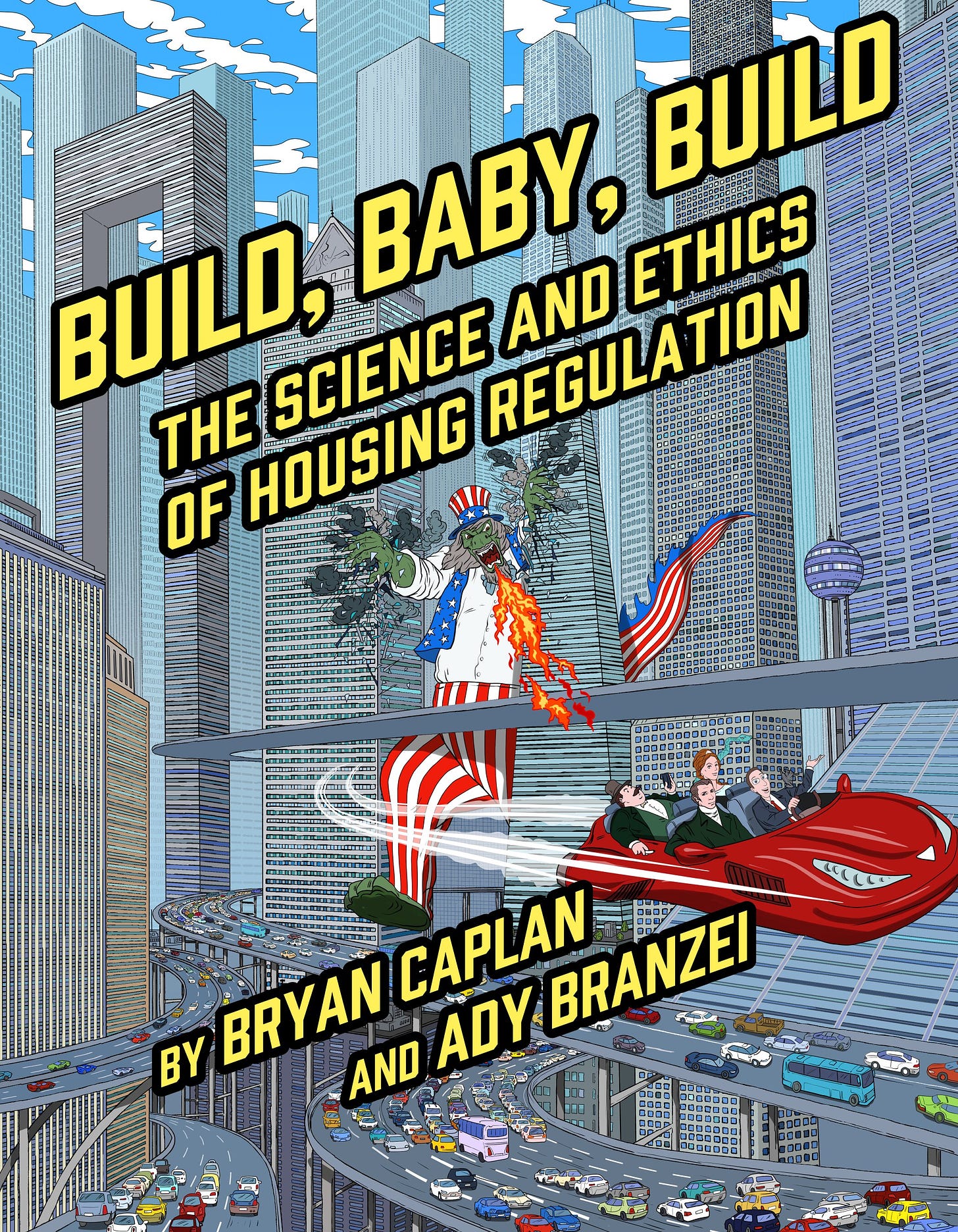
I pitch Build, Baby, Build in today’s New York Times. No illustrations, but a bunch of cool graphs cooked up by Sara Chodosh of the NYT data analytics team. The original title was “The Panacea Policy,” but now it’s “Yes in My Backyard: The Case For Housing Deregulation.” And for you, dear readers, it’s ungated!…
BBB in the NYT
Biden’s Desperate Vote-Buying Proposal for Nationwide Rent Control
15 Jul 2024 Leave a comment
in applied price theory, comparative institutional analysis, economic history, economics of regulation, income redistribution, law and economics, politics - USA, property rights, Public Choice, rentseeking, urban economics Tags: rent control
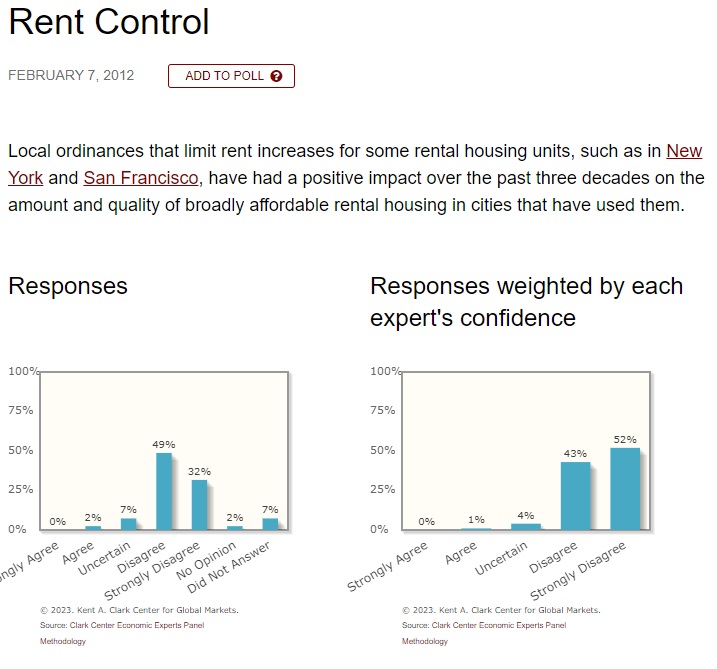
I’m not a political pundit, but I’m guessing that yesterday’s despicable assassination attempt on Donald Trump increases the likelihood that he reclaims the White House. That’s probably not good news for trade policy (though Biden has been just as bad), but it will be very good news for housing policy. Not because of what Trump […]
Biden’s Desperate Vote-Buying Proposal for Nationwide Rent Control
DON BRASH: ANOTHER OUTSTANDING SPEECH FROM CHRIS BISHOP
13 Jul 2024 Leave a comment
in applied price theory, economics of regulation, income redistribution, law and economics, politics - New Zealand, property rights, Public Choice, rentseeking, urban economics Tags: housing affordability, land supply, zoning
Four months ago, I described a speech by Chris Bishop in his capacity as Minister of Housing as perhaps the most important speech given by any Government minister since the election last year. He’s just given another, arguably even more important, laying out in words of one syllable what the Government plans to do…
DON BRASH: ANOTHER OUTSTANDING SPEECH FROM CHRIS BISHOP
 Utopia, you are standing in it!
Recent Comments