If every European succession movement succeeded
05 Mar 2017 Leave a comment
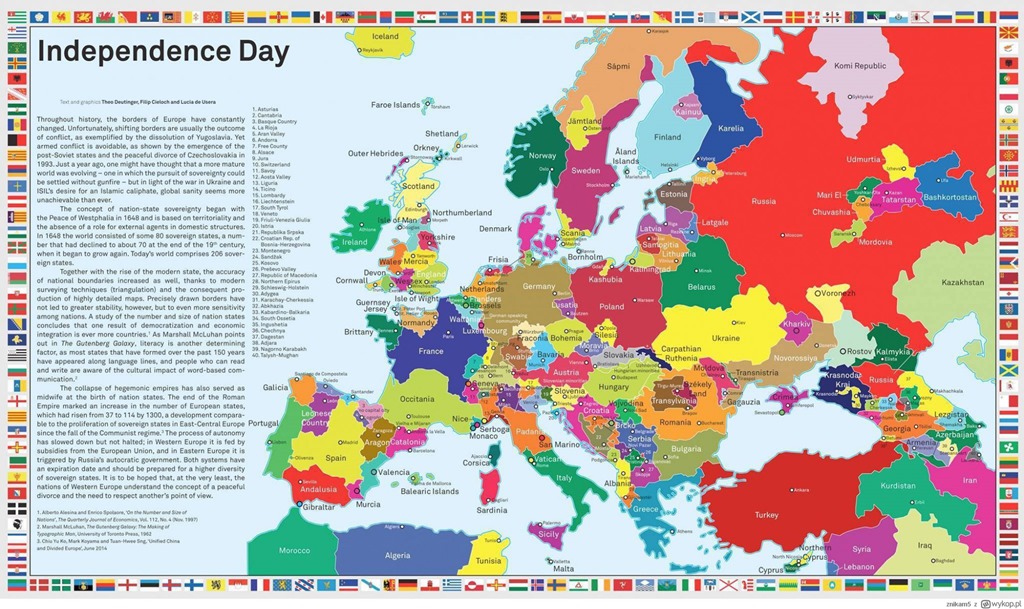
Source: http://imgur.com/f685nks
The World’s Strangest Borders Part 2: Spain
18 Feb 2017 Leave a comment
in international economics, International law Tags: economics of borders, maps, Spain

Co-Principality of Andorra Explained: Why the President of France is a Prince
26 Jan 2017 Leave a comment
in International law Tags: economics of borders, maps

Step Inside The Most Densely Populated Place on Earth
18 Jan 2017 Leave a comment
in constitutional political economy, development economics, international economic law, international economics, International law, urban economics Tags: Hong Kong
Israeli settlements, explained | Settlements Part I
29 Dec 2016 2 Comments
in constitutional political economy, defence economics, international economics, International law Tags: Gaza Strip, Israel, West Bank
Do trade and investment sanctions against a dictator work?
24 Sep 2016 Leave a comment
in constitutional political economy, international economics, International law, Public Choice
Sanctions only work at all if there is trade and investment to sanction – think of North Korea. This means the autocrat has already liberalised first for there to be trade and investment to sanction. But if the dictator, be it a tin-pot dictator or a totalitarian, has liberalised, it must build loyalty around that liberalisation quickly or risk a coup. All revolutions are palace coups.
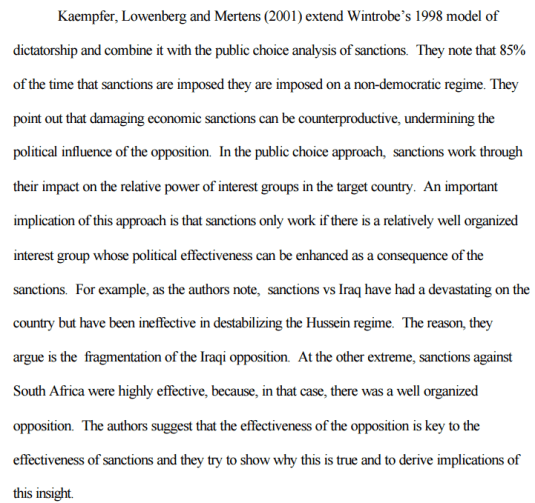
Source: Ronald Wintrobe (2002) Dictatorship.
A dictator who agrees to liberalise puts himself in danger of being deposed, and it is no surprise that dictators like Castro, Hussein and Milosevic were all reluctant to do so. The Austro-Hungarian emperor opposed the introduction of railways because he thought they would bring revolution with them.
Neither trade sanctions nor airstrikes worked against Afghanistan under the Taliban. There is nothing to destroy or degrade.
 Utopia, you are standing in it!
Recent Comments