Do climate scientists understand the scientific method?

Karl Popper argued that the three golden rules of science were test, test and test. A good hypothesis forbid certain things to occur, and the more it forbids, the better, more scientific the hypothesis is.

That is because if what the hypothesis forbids occurs, the hypothesis is refuted. Science is a set of testable propositions, propositions that can be refuted.

Looking around for confirmation is an old trick of Marxists and astrologists. Once they read their sacred texts, everything around them was explained except for a few glaring anomalies that actually refuted their hypothesis:

I found that those of my friends who were admirers of Marx, Freud, and Adler, were impressed by a number of points common to these theories, and especially by their apparent explanatory power. These theories appeared to be able to explain practically everything that happened within the fields to which they referred.

The study of any of them seemed to have the effect of an intellectual conversion or revelation, opening your eyes to a new truth hidden from those not yet initiated. Once your eyes were thus opened you saw confirming instances everywhere: the world was full of verifications of the theory.

Whatever happened always confirmed it. Thus its truth appeared manifest; and unbelievers were clearly people who did not want to see the manifest truth; who refused to see it, either because it was against their class interest, or because of their repressions which were still "un-analysed" and crying aloud for treatment.

Marxists and astrologers and other pseudoscientists got around the inconvenience of repeated refutation by specifying a protective belt of axillary hypotheses, which grew with time that explained away these growing anomalies in their basic hypothesis.
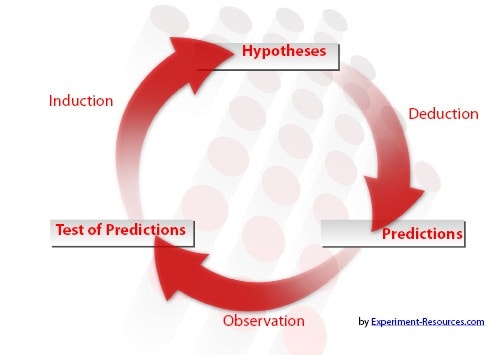
Too much of current public discussion of climate science is about what particular instances confirm rather than contradict. What does the global warming hypothesis strictly forbid?

Popper argued that you look for what contradicts rather than confirm. He developed quite simple rules early in life:

These considerations led me in the winter of 1919-20 to conclusions which I may now reformulate as follows.

(1) It is easy to obtain confirmations, or verifications, for nearly every theory-if we look for confirmations.

(2) Confirmations should count only if they are the result of risky predictions;that is to say, if, unenlightened by the theory in question, we should have expected an event which was incompatible with the theory-an event which would have refuted the theory.

(3) Every "good" scientific theory is a prohibition: it forbids certain things to happen. The more a theory forbids, the better it is.

(4) A theory which is not refutable by any conceivable event is non-scientific. Irrefutability is not a virtue of theory (as people often think) but a vice.

(5) Every genuine test of a theory is an attempt to falsify it, or to refute it. Testability is falsifiability; but there are degrees of testability; some theories are more testable, more exposed to refutation, than others; they take, as it were, greater risks.

(6) Confirming evidence should not count except when it is the result of a genuine test of the theory; and this means that it can be presented as a serious but unsuccessful attempt to falsify the theory. (I now speak in such cases of"corroborating evidence.")

(7) Some genuinely testable theories, when found to be false, are still upheld by their admirers-for example by introducing ad hoc some auxiliary assumption, or by re-interpreting theory ad hoc in such a way that it escapes refutation. Such a procedure is always possible, but it rescues the theory from refutation only at the price of destroying, or at least lowering, its scientific status. (I later described such a rescuing operation as a "conventionalist twist" or a"conventionalist stratagem.")

One can sum up all this by saying that the criterion of the scientific status of a theory is its falsifiability, or refutability, or testability.

When a hypothesis is tested and fails the test because what it forbid to happen actually occurred , for example,  new insights into the underlying science are frequently gained. Clinging tenaciously to correct theories leads only to a sterile science. This is the fundamental difference between science and superstition. When the facts contradict, you can learn from that refutation and grow rather than become defensive.

Karl Popper on the most fundamental analytical step

Science may be described as the art of systematic over-simplification — the art of discerning what we may with advantage omit.  - Karl Popper

Image

Karl Popper on the science is settled

The game of science is, in principle, without end. He who decides one day that scientific statements do not call for any further test, and that they can be regarded as finally verified, retires from the game.  - Karl Popper

Image

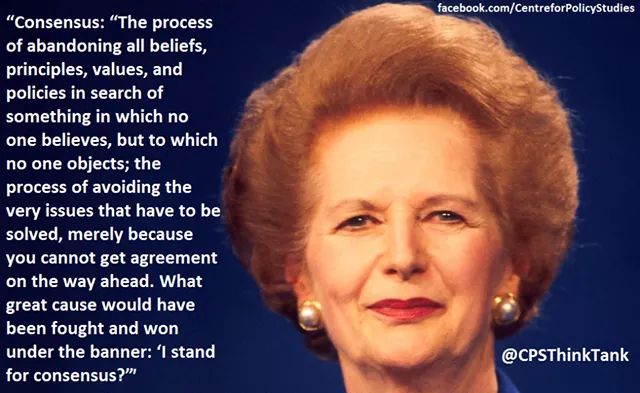
Thatcher on the role of consensus in the growth of knowledge

image

Image

Popper explains the nature of analysis

Science may be described as the art of systematic over-simplification — the art of discerning what we may with advantage omit.  - Karl Popper

Image

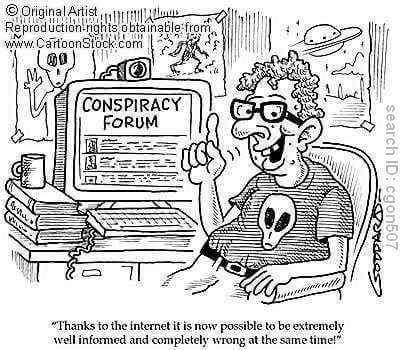
The Internet is a mixed blessing

image

Image

Global warming – where there is and is not a consensus to deny | Ordinary Times

The motte for climate change activists are the following:

  • Global temperatures are rising.
  • Greenhouse gases lead to increased temperatures.
  • Greenhouse gases emitted by humans have led to measurable increases in temperature beyond what would have occurred without any humans.

The above points are highly defensible because Science. I believe they are true (though I do so only via trust in others rather than having evaluated any of the research involved personally).

Activists, however, do not sit in this motte for long. They often go on to make a lot of other claims in the bailey:

  • Long-term projections of the Earth’s climate are accurate.
  • Catastrophe will result in a few decades due to human carbon emissions.
  • Nuclear energy is not a viable alternative to fossil fuels.
  • Carbon capture is not viable.
  • Geoengineering is not viable.
  • Unilateral subsidization of renewables by Western industrialized nations is an effective way to reduce global emissions of greenhouse gases.
  • Subsidies of energy-efficient products are a better use of resources rather than research and development.
  • Subsidizing vehicles that pollute less than other vehicles will provide a net reduction in greenhouse emissions.
  • LEED-certified buildings are more energy-efficient than old buildings.
  • Building new LEED-certified buildings reduces net greenhouse emissions relative to not building them.
  • Sending oil by railcar will result in less net emissions than sending oil through a pipeline (e.g. the Keystone pipeline).

Not all activists make all of these claims, but I think most make at least some claims that are less defensible than those in the motte.

The end result is that anyone who opposes any of the views, even questionable ones sitting in the bailey, can be branded an anti-science denialist. Strictly speaking, this is unfair since there certainly isn’t a scientific consensus on questions like whether it makes sense to spend thousands of dollars subsidizing Chevy Volts while taxing bicycles and safety helmets at 8%.

via An Example of the Motte and Bailey Doctrine | Ordinary Times.

Karl Popper on consensus versus fertilisation and growth of ideas

What is television for – facts, confirmation or infotainment?

Test, test, test are the three golden rules in the growth of knowledge

Image

Popper on the most misunderstood aspect of scientific analysis

Image

Karl Popper on the role of consensus in the growth of knowledge

Image

Popper on the road to hell

Image

The power and self-discipline of parsimonious analysis

Some bristle over the small size of the basic analytical tool kit of economists and the leanness of the behavioural assumptions therein (Stigler 1987). 

Simpler explanations and more parsimonious abstractions are better ‘engines for the discovery of concrete truth’ about how people will respond to changes in their economic and social environments.

A limited set of causes or postulates in a theory reduces the chances that one or more of the assumptions on a more extensive list inadvertently explains away in an ad hoc manner every possible anomaly, or allows for a deft reinterpretation and/or adaptation to temporise and escape refutation. An every growing number of auxiliary hypotheses and ah hoc assumptions to co-op inconvenient facts may forever immunise the basic theory under scrutiny against testing and falsification (Olson 1982; Popper 1963). More parsimonious abstractions are less likely to found theories that seem to have successfully explained a particular social phenomenon spuriously by chance.

Complex human objectives are not assumed in economic analysis because everything could be explained and nothing could be falsified. Every empirical anomaly could be covered in advance by assuming human objectives that are sufficiently complex and large enough in number that are pursued with a high frequency of error and inertia (Friedman 1990; Popper 1963).

Subsequent ad hoc reinterpretations that add new objectives or additional sources of human frailty can finesse major anomalies to make the basic theory compatible with the facts to side-step refutation. Heavily qualified theories and intricate explanations of narrow application rarely come in the open for long enough to be found wanting.

A good theory is a prohibition: the theory forbids certain things to happen. The more that a theory forbids, the better the theory is. Bold, novel and chancy predictions are even better still.

These predictions are less likely to explain social and economic behaviour spuriously by chance. If incorrect or incomplete, bold and novel predictions are more likely to be quickly found at odds with experience and the basic theory is either revised or is discarded (Popper 1963).

Measurement and theory – can the facts just speak for themselves?

Measurement without theory is a futile and self-deceiving exercise. Our observations of the world are always selective and theory-laden (Popper 1963).

The number of factors which predate and lead to any event, past, present, or future, is indefinitely large, and knowledge of all of these factors is impossible, even in principle (Popper 1963).

In the social sciences, there is no laboratory where facts can be isolated and controlled and manipulated one-by-one. The facts of history are complex – the result of many causes including changing human motives and ideas, changes in relative prices and expanding technological possibilities. This rich tapestry of causes can be only isolated by theory, theory that is necessarily developed prior to these historical (including statistical) facts.

Every analyst must come prepared with a theory to tell them ‘what to look for’ (Koopmans 1947).

Our experiences and past knowledge selects, shapes, influences, organised, classifies and measures any phenomena we seek to understand (Popper 1963).

A theory allows us to think deeply and to figure out how to attain and verify knowledge about the world. The purpose of theory is to aid in the interpretation of experience and history. A scientific community cannot practice its trade without some set of received beliefs about what the world is like. These beliefs create avenues of inquiry, formulate questions, select methods to examine questions and define areas of relevance (Kuhn 1962).

The questions asked in any research and which data is to be reviewed or reconsidered are not random choices. The variables to be defined, and the specific data to be collated and interrogated are all chosen in light of past research findings. Empirical and theoretical anomalies and prior theoretical beliefs also decide what is relevant or not, where to start and when to stop, and how new findings are to be melded with and even justify overturning existing understandings (Koopmans 1947; Popper 1963).

Empiricists are able to believe that facts can be understood without any theory only because they failed to recognise a theory is already contained in the very linguistic terms involved in every act of thought.

To apply language, with its words and concepts to anything is at the same time to approach it with a theory. The choice is never between theory and no theory. The choice is between articulated and defended theory and unarticulated and non-defended theory.


Praxeology and Thymology

Previous Older Entries Next Newer Entries

Vincent Geloso

Econ Prof at George Mason University, Economic Historian, Québécois

Bassett, Brash & Hide

Celebrating humanity's flourishing through the spread of capitalism and the rule of law

Truth on the Market

Scholarly commentary on law, economics, and more

The Undercover Historian

Beatrice Cherrier's blog

Matua Kahurangi

Celebrating humanity's flourishing through the spread of capitalism and the rule of law

Temple of Sociology

Celebrating humanity's flourishing through the spread of capitalism and the rule of law

Velvet Glove, Iron Fist

Celebrating humanity's flourishing through the spread of capitalism and the rule of law

Why Evolution Is True

Why Evolution is True is a blog written by Jerry Coyne, centered on evolution and biology but also dealing with diverse topics like politics, culture, and cats.

Down to Earth Kiwi

Celebrating humanity's flourishing through the spread of capitalism and the rule of law

NoTricksZone

Celebrating humanity's flourishing through the spread of capitalism and the rule of law

Homepaddock

A rural perspective with a blue tint by Ele Ludemann

Kiwiblog

DPF's Kiwiblog - Fomenting Happy Mischief since 2003

The Dangerous Economist

Celebrating humanity's flourishing through the spread of capitalism and the rule of law

Watts Up With That?

The world's most viewed site on global warming and climate change

The Logical Place

Tim Harding's writings on rationality, informal logic and skepticism

Doc's Books

A window into Doc Freiberger's library

The Risk-Monger

Let's examine hard decisions!

Uneasy Money

Commentary on monetary policy in the spirit of R. G. Hawtrey

Barrie Saunders

Thoughts on public policy and the media

Liberty Scott

Celebrating humanity's flourishing through the spread of capitalism and the rule of law

Point of Order

Politics and the economy

James Bowden's Blog

A blog (primarily) on Canadian and Commonwealth political history and institutions

Science Matters

Reading between the lines, and underneath the hype.

Peter Winsley

Economics, and such stuff as dreams are made on

A Venerable Puzzle

"The British constitution has always been puzzling, and always will be." --Queen Elizabeth II

The Antiplanner

Celebrating humanity's flourishing through the spread of capitalism and the rule of law

Bet On It

Celebrating humanity's flourishing through the spread of capitalism and the rule of law

History of Sorts

WORLD WAR II, MUSIC, HISTORY, HOLOCAUST

Roger Pielke Jr.

Undisciplined scholar, recovering academic

Offsetting Behaviour

Celebrating humanity's flourishing through the spread of capitalism and the rule of law

JONATHAN TURLEY

Res ipsa loquitur - The thing itself speaks

Conversable Economist

In Hume’s spirit, I will attempt to serve as an ambassador from my world of economics, and help in “finding topics of conversation fit for the entertainment of rational creatures.”

The Victorian Commons

Researching the House of Commons, 1832-1868

The History of Parliament

Articles and research from the History of Parliament Trust

Books & Boots

Reflections on books and art

Legal History Miscellany

Posts on the History of Law, Crime, and Justice

Sex, Drugs and Economics

Celebrating humanity's flourishing through the spread of capitalism and the rule of law

European Royal History

Exploring the Monarchs of Europe

Tallbloke's Talkshop

Cutting edge science you can dice with

Marginal REVOLUTION

Small Steps Toward A Much Better World

NOT A LOT OF PEOPLE KNOW THAT

“We do not believe any group of men adequate enough or wise enough to operate without scrutiny or without criticism. We know that the only way to avoid error is to detect it, that the only way to detect it is to be free to inquire. We know that in secrecy error undetected will flourish and subvert”. - J Robert Oppenheimer.

STOP THESE THINGS

The truth about the great wind power fraud - we're not here to debate the wind industry, we're here to destroy it.

Lindsay Mitchell

Celebrating humanity's flourishing through the spread of capitalism and the rule of law

Alt-M

Celebrating humanity's flourishing through the spread of capitalism and the rule of law

croaking cassandra

Economics, public policy, monetary policy, financial regulation, with a New Zealand perspective

The Grumpy Economist

Celebrating humanity's flourishing through the spread of capitalism and the rule of law