

Murray Rothbard (1982) on Israeli settlements in the West Bank
10 Aug 2014 Leave a comment
in International law, libertarianism, Murray Rothbard, war and peace Tags: Israel, Murray Rothbard, revanchism, West Bank

To be fair, on the State of Israel, Murray Rothbard was an anti-Zionist warmongering revanchist. In 1969, for example, he argued that there are some wars that can be blamed more on one state than another and that the Israelis were to blame for most of the Israeli-Arab wars.

Christchurch Earthquake | Libertarianz TV
04 Aug 2014 Leave a comment
in economics of natural disasters, economics of regulation, liberalism, libertarianism, politics - New Zealand, urban economics Tags: Christchurch earthquake, economics of natural disasters
Devastating effect of government bureaucracy following the earthquakes of 2010 and 2011. As told by two business owners, an economist and an engineer. Concludes with the Libertarianz policy to make Christchurch a free enterprise zone.
Market Failure, Considered as an Argument both for and Against Government| David Friedman
24 Jul 2014 Leave a comment
in applied price theory, applied welfare economics, comparative institutional analysis, constitutional political economy, David Friedman, liberalism, libertarianism Tags: David Friedman, externality, government failure, market failure

Murray Rothbard and the Bourbon Democrats
13 Jun 2014 Leave a comment
in liberalism, libertarianism, Murray Rothbard, Public Choice Tags: Bourbon Democrats, Third party sytem
The American political system is complicated with the Republicans and Democrats moving around the political spectrum. Remember, Teddy Roosevelt’s Progressive Party, with its rather left wing agenda split from the Republicans, not from the Democrats in 1912.
Murray Rothbard saw a lot of anti-big government sentiments in the pre-1896 Democratic Party under the Third Party System, and especially in the Second Party System prior to the Civil War with Andrew Jackson and Martin Van Buren. The 19th century Democratic Party tended to be the party of peace, anti-militarism, and anti-imperialism. Rothbard referred to Grover Cleveland
The Third Party System was dominated by the newly created Republican Party, which supported national banks, railroads, high tariffs, homesteading rights and aid to the land-grant colleges.
The Fourth Party System from 1896 to 1932 was made up of a majority centrist Republican Party against a minority Democratic Party from the South together with urban Catholics in the Northern cities – a volatile brew – which soon had an ideology scarcely distinguishable from the Republicans.
Both parties under the Third party System that operated prior to 1896 comprised broad-based voting coalitions divided between the parties on racial, ethnic and religious lines with high voter turnout and strong partisanship.
- Methodists, Congregationalists, Presbyterians, and Scandinavian Lutherans were closely linked to the Republican Party.
- Catholics, Episcopalians, and German Lutherans, looked to the Democratic Party for protection from moralism and prohibition.
- The Democrats gained more support from the lower classes than did the Republicans.
Bourbon Democrat was a term used in the US from 1876 to 1904 for members of the Democratic Party, conservative or classical liberal, and especially those who supported President Grover Cleveland in 1884–1888 and 1892–1896. Rothbard referred to Grover Cleveland as “a hard-money laissez-faire Democrat” and
the continuity of quasi-libertarian thought that the Democrat Party brought to the United States throughout the nineteenth century
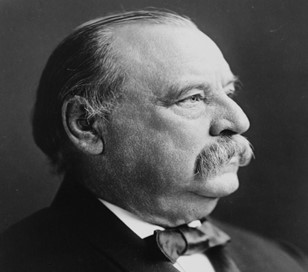
The Bourbon Democrats represented business interests, generally supporting the goals of banking and railroads but opposed to subsidies for them and were unwilling to protect them from competition.
Bourbon Democrats were promoters of laissez-faire capitalism (which included opposition to the protectionism that the Republicans advocated). The Bourbon Democrats opposed imperialism and U.S. overseas expansion, fought for the gold standard, and opposed bimetallism.
The notion that the Democratic Party was once the home of classical liberals in the USA at one time and the Republican Party was the party of regulation and big government is so foreign to the modern party divides in the USA today. Political parties in the United States certainly are big tents as they say.

Greens as heirs of the 19th century Tory radicals
08 May 2014 1 Comment
in libertarianism, political change, politics - Australia, politics - New Zealand, Public Choice Tags: 19th century British Tory Radicals, green voters
The Greens are no more than a reincarnation of the 19th century British Tory Radicals with their aristocratic sensibilities that combined strong support for centralised power with a paternalistic concern for the plight of the poor:
- 19th century Tory radicals opposed the middle classes and the aesthetic ugliness they associated with an industrial economy; and
- Like the 19th century Tory Radicals, today’s green gentry see the untamed middle classes as the true enemy.
Environmentalists have an aristocratic vision of a stratified, terraced society in which the knowing ones would order society for the rest of us.
Environmentalism offered the extraordinary opportunity to combine the qualities of virtue and selfishness
Many left-wingers thought they were expressing an entirely new and progressive philosophy as they mouthed the same prejudices as Trollope’s 19th century Tory squires: attacking any further expansion of industry and commerce as impossibly vulgar, because it was:
ecologically unfair to their pheasants and wild ducks.
Neither the failure of the environmental apocalypse to arrive nor the steady improvement in environmental conditions because of capitalism has dampened the ardour of those well-off enough to be eager to make hair-shirts for others to wear.

The 19th century Tory radical’s disdain for the habits of their inferiors remains undiminished in their 21st century heirs and successors.
True to its late 1960s origins, political environmentalism gravitates toward bureaucrats and hippies: toward a global, little-brother government that will keep the middle classes in line and toward a back-to-the-earth, peasant-like localism, imposed on others but presenting no threat to the inner city elites’ comfortable middle class lives.
Unlike most, green voters tend to be financially secure and comfortable enough to be able to put aside immediate self-interest when imposing their political opinions.
The rising Green vote is a product of increasing tertiary education. Green voters are typically tertiary educated or undergoing tertiary education.
Green votes are defined by what they studied at university: arts, society and culture, architecture and education. Professionally they tended to be consultants, or worked in the media, health or education. Theses jobs are heavily concentrated in tertiary disciplines that are focused on much more than just making money.
Greens are very well-paid inner-urban dwellers who make more use of public transport and have few religious convictions. They tend not to have children until their 30s, if at all, which makes them even richer and gives them lots more spare time to organise political activities and annoy the rest of us. Some of them still haunt campuses, churning out more arts graduates, but increasingly, green voters comprise a well-heeled professional group.
Greens are distinct from the typical Labor or National voter demographic but they support the the Green Party for social rather than economic reasons. Not unlike middle-class Catholics in the 1950s and 1960s who voted Labour.
How ironic that the green gentry—progressives against progress—turn out to be nothing more than nineteenth-century urbane conservatives. There is nothing new under the sun.
Big HT: http://www.city-journal.org/2010/20_3_american-liberalism.html
Three cheers for rude political discourse
25 Mar 2014 Leave a comment
in law and economics, liberalism, libertarianism Tags: Attack Ads, hate speech, Jerry Falwell, Larry Flynt, political discourse
There is nothing unusual about ill-mannered political discourse. In the 1980s, a cartoonist went in search of Ronald Reagan’s brain.
A good discussion on political manners is in the Supreme Court judgment on the Larry Flynt, Jerry Falwell case, which included a 200-year history of American political cartoons.

The Court noted that the political cartoon is a weapon of attack, of scorn and ridicule and satire. It is usually as welcome as a bee sting and is always controversial to some and continuously goes beyond the bounds of good taste and conventional manners.
From the viewpoint of history, the Court held that it is clear that our political discourse would have been considerably poorer without them. The Court stated:
Debate on public issues will not be uninhibited if the speaker must run the risk that it will be proved in court that he spoke out of hatred; even if he did speak out of hatred, utterances honestly believed contribute to the free interchange of ideas and the ascertainment of truth.
Shrillness is commonplace in political discourse as is ignorance and ill manners. The Court held that:
The appeal of the political cartoon or caricature is often based on exploitation of unfortunate physical traits or politically embarrassing events – an exploitation often calculated to injure the feelings of the subject of the portrayal.
Everyone has the right to speak and all adults can vote, including those who disagree with you and even fill you with revulsion.
Politics and hatred of your opponents go hand in hand. Politics is a blood sport for driven people.
More than a few hate capitalism and speak in unflattering, even hateful, tones of the successful and other class enemies. Mises explained the youthful allure of socialism:
It promises a Paradise on earth, a Land of Heart’s Desire full of happiness and enjoyment, and—sweeter still to the losers in life’s game—humiliation of all who are stronger and better than the multitude…
Liberalism and capitalism address themselves to the cool, well-balanced mind. They proceed by strict logic, eliminating any appeal to the emotions.
Socialism, on the contrary, works on the emotions, tries to violate logical considerations by rousing a sense of personal interest and to stifle the voice of reason by awakening primitive instincts.
Every day spent pondering on the rudeness of your opponents is a day not spent showing the middle ground that the opposing viewpoint is wrong.
You play into their hands by taking your eyes off the prize. Back to that former union boss Ronald Reagan:
American politics is littered with, as George Will added eloquently, the bleached bones of those who under-estimated Ronald Reagan.
 Utopia, you are standing in it!
Recent Comments