
Preferences are demonstrated through choices – nothing more and nothing less
04 Sep 2014 Leave a comment

Time I want back on my deathbed: listening to social credit and other monetary cranks
02 Sep 2014 1 Comment
by Jim Rose in Austrian economics, business cycles, economic growth, inflation targeting, monetarism, monetary economics, Murray Rothbard Tags: Austrian school of economics, business cycle, fractional reserve banking, hyperinflation, inflation, monetary business cycle, monetary cranks, quantity theory of money
I lost a good 15 minutes of my life that I will not get back on my deathbed listening to some monetary cranks at a Meet the Candidates forum last night for the New Zealand general election.

Monetary cranks advocate boundless inflation and credit expansion as the patent medicine for all our economic ills:
those who have Found the Light about Money take up their pens and write, with a conviction, a persistence and a devotion otherwise only found among the disciples of a new religion.
It is easy to scoff at these productions: it is not so easy always to see exactly where they go wrong. It is natural that practical bankers, vaguely conscious that the projects of monetary cranks are dangerous to society, should cling in self-defence to the solid rock, or what they believe to be so, of tradition and accepted practice. But it is not open to the detached student of economics to take refuge from dangerous innovation in blind conservatism.
D.H. Robertson (1928)
Listening to these monetary cranks in the audience last night rates with the worst movies I have ever ever seen for time I want back my deathbed. I think the worst movie I have ever seen was Absolute Beginners starring David Bowie. After that it, might be Last Tango in Paris.

These particular monetary cranks with their obsessions about factional reserve banking are from the social credit party in New Zealand. They are followers of Major C.H. Douglas, whom Keynes referred to as a:
private, perhaps, but not a major in the brave army of heretics
Social credit and other monetary cranks believe that all the world’s problems will be sold if the reserve bank prints money and they seem to think that was really easy because there is a fractional reserve banking system.
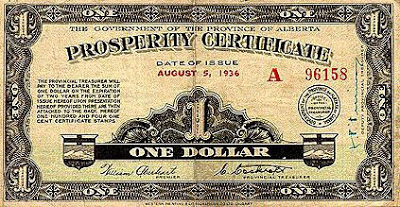
No one in the room who knew better wanted to lose more time that they wanted back on their deathbed explaining why printing money doesn’t make you richer. The “money is wealth” error is the defining affliction of the monetary crank.

The good economist will know that money creation is no short-cut to wealth. Only the production of valued goods and services in a market which reflects the consumer’s willingness to pay can relieve poverty and promote prosperity. A people are prosperous to the extent they possess goods and services, not money. All the money in the world—paper or metallic—will still leave one starving if goods and services are not available.
Obviously, none of them were persuaded by the quantity theory of money: if you increase the supply of money without a matching increase in the rate of real growth in the production of goods and services, you’ll have more money chasing the same amount of goods so prices will go up. It’s called inflation. Printing money creates inflation.

There is a school of thought in economic school, the Austrian school of economics, does get excited about fractional reserve banking. The reason it does is to explain how fractional reserve banking creates inflation and promotes the business cycle.

A cycle of booms and busts is not looked upon as a good thing by the Austrian school of economics.

The Austrian school wants to get rid of fractional reserve banking as a way of reducing inflation and reducing the possibility of a loose monetary policy causing booms and busts in the economy.

These monetary cranks from social credit party honestly believed that printing more money will make you wealthier. Thankfully no one asked them to explain their position.

A few supporters of the monetary cranks in the audience asked other members of their views on the ideas of these monetary cranks. Sensibly, they all gave short answers that did not provoke them further and waste more of their precious life listening to them talk nonsense.

If printing money was a winner, as with any populist policy that has a half a chance of working, the parties of the centre-left and centre right would be all over it like flies to s…
Rate this:
Murray Rothbard (1982) on Israeli settlements in the West Bank
10 Aug 2014 Leave a comment
by Jim Rose in International law, libertarianism, Murray Rothbard, war and peace Tags: Israel, Murray Rothbard, revanchism, West Bank

To be fair, on the State of Israel, Murray Rothbard was an anti-Zionist warmongering revanchist. In 1969, for example, he argued that there are some wars that can be blamed more on one state than another and that the Israelis were to blame for most of the Israeli-Arab wars.
Rate this:
Palestinian revanchism is a recipe for endless wars
06 Aug 2014 8 Comments
by Jim Rose in laws of war, Murray Rothbard, war and peace Tags: Gaza Strip, Hamas, irredentism, Murray Rothbard, revanchism, warmongering

Why are borders in 1861, 1919, 1945, 1948, 1956 or 1967 or any other time morally superior?
Palestinian revanchism is a recipe for endless wars. Revanchism is the desire to reverse territorial losses.
Revanchism is linked with irredentism, the conception that a part of the cultural and ethnic nation remains “unredeemed” outside the borders of its appropriate nation-state.
• A return of German revanchism would plunge Europe back into war as Germany marched to reclaim Western Poland and the Sudetenland lost after the massive ethic cleansing in 1945 and the moving of Poland 1/3rd to the left after Potsdam.
• The Balkans and Eastern Europe would be plunged into war to revise the 1945 and the 1919 boundaries.
• Irish revanchism and irredentism over protestant Northern Ireland led to war from 1922 onwards.

The just war doctrine of the Catholic Church found in the 1992 Catechism of the Catholic Church, which is a convenient summary as any on what is and is not a just war, lists four strict conditions for legitimate defence by military force:
- the damage inflicted by the aggressor on the nation or community of nations must be lasting, grave, and certain;
- all other means of putting an end to it must have been shown to be impractical or ineffective;
- there must be serious prospects of success;
- the use of arms must not produce evils and disorders graver than the evil to be eliminated (the power of modern means of destruction weighs very heavily in evaluating this condition).
Hamas does not have any serious prospects of success in its attacks on Israel. Therefore any military action by Hamas is an unjust war
Rate this:
Every time the Fed tightens the money supply, interest rates rise (or fall); every time the Fed expands the money supply, interest rates rise (or fall).
08 Jul 2014 Leave a comment
by Jim Rose in macroeconomics, Murray Rothbard Tags: inflation, interest rates, Murray Rothbard

The problem is that… there are several causal factors operating on interest rates and in different directions.
If the Fed expands the money supply, it does so by generating more bank reserves and thereby expanding the supply of bank credit and bank deposits. The expansion of credit necessarily means an increased supply in the credit market and hence a lowering of the price of credit, or the rate of interest. On the other hand, if the Fed restricts the supply of credit and the growth of the money supply, this means that the supply in the credit market declines, and this should mean a rise in interest rates.
And this is precisely what happens in the first decade or two of chronic inflation. Fed expansion lowers interest rates; Fed tightening raises them.
But after this period, the public and the market begin to catch on to what is happening. They begin to realize that inflation is chronic because of the systemic expansion of the money supply.
When they realize this fact of life, they will also realize that inflation wipes out the creditor for the benefit of the debtor. As creditors begin to catch on, they place an inflation premium on the interest rate, and debtors will be willing to pay it.
Hence, in the long run anything which fuels the expectations of inflation will raise inflation premiums on interest rates; and anything which dampens those expectations will lower those premiums. Therefore, a Fed tightening will now tend to dampen inflationary expectations and lower interest rates; a Fed expansion will whip up those expectations again and raise them.
There are two, opposite causal chains at work. And so Fed expansion or contraction can either raise or lower interest rates, depending on which causal chain is stronger.
Which will be stronger? There is no way to know for sure. Will In the early decades of inflation, there is no inflation premium; in the later decades, such as we are now in, there is. The relative strength and reaction times depend on the subjective expectations of the public, and these cannot be forecast with certainty
Rate this:
Economists, using charts or high-speed computer models, can accurately forecast the future
01 Jul 2014 Leave a comment
by Jim Rose in entrepreneurship, macroeconomics, Murray Rothbard Tags: forecasting errors, Murray Rothbard, The pretence to knowledge

Many studies, formal and informal, have been made of the record of forecasting by economists, and it has been consistently abysmal.
Forecasters often complain that they can do well enough as long as current trends continue; what they have difficulty in doing is catching changes in trend. But of course there is no trick in extrapolating current trends into the near future.
You don’t need sophisticated computer models for that; you can do it better and far more cheaply by using a ruler.
The real trick is precisely to forecast when and how trends will change, and forecasters have been notoriously bad at that. No economist forecast the depth of the 1981–82 depression, and none predicted the strength of the 1983 boom.
The next time you are swayed by the jargon or seeming expertise of the economic forecaster, ask yourself this question: If he can really predict the future so well, why is he wasting his time putting out newsletters or doing consulting when he himself could be making trillions of dollars in the stock and commodity markets?
![]()
Rate this:
Defer to experts except when they are economists putting limits on your utopian thinking
30 Jun 2014 Leave a comment


Recent Comments