Money For Nothing: Inside the Federal Reserve – Trailer
21 Oct 2018 Leave a comment
in business cycles, economic growth, economics of bureaucracy, global financial crisis (GFC), great recession, inflation targeting, macroeconomics, monetary economics, politics - USA, Public Choice Tags: economics of central banking
Submission to Select Committee on Equal Pay Amendment Bill
21 Oct 2018 Leave a comment
in discrimination, economics of education, gender, human capital, industrial organisation, labour economics, labour supply, occupational choice, politics - New Zealand
This submission is made up of 6 attachments because that is the maximum I could load.

Attachments 1 and 2 are the main part of submission and argue that pay equity is unfair to fair employers. An employer can hire and promote on merit, pay the going wage and still be successfully sued. Their name blackened forever. As a question of social justice, it is wrong to sue someone as a discriminating employer, when there is nothing they could do to right the supposedly wrong they were successfully sued. Barnardo’s can no longer compete with social workers because of the pay equity settlement in the public sector. It relies on donations and tendering for public contracts. It has no capacity to raise wages but could be successfully sued and driven out of business.
Attachments 3 to 5 explains that the gender pay gap is the result of the work-life balance choices of women interacting with some professions penalising an inability to work specific hours or long hours much more than. Pay equity will address none of these issues.
Attachment 6 explains how more than 40 years ago Solomon Polachek found that the gender pay gap was driven by factors such as the number and spacing of children. Employers cannot discriminate against women because they do not know this information and it is now unlawful to ask. It is a strange misogyny that employers hire single women on merit but have a bias against mothers who have several children whose birthdates on widely spaced apart.
To conclude this overview, as attachment 3 shows in a graphic, the gender pay gap for women at the bottom and middle of the labour market is barely 3-5%. It is rather odd to be offering 30% pay rises for a group of women whose pay gap with men at the bottom and middle of the labour market is not more than 5%. Clearly the comparable worth methodology misses something.
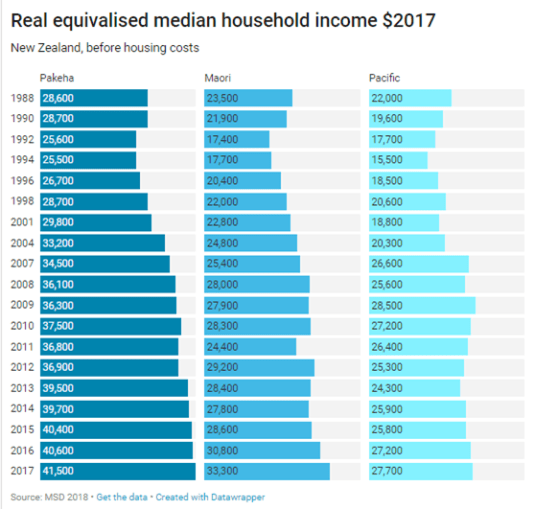
Maori incomes up 88% since 1994; Pasifika incomes up 78%; Pakeha incomes up only 63%
21 Oct 2018 Leave a comment
in economic history, politics - New Zealand

Who Could Trump Beat In 2020?
20 Oct 2018 Leave a comment
in politics - USA Tags: 2020 presidential election
.@thinkprogress explains why @jamespeshaw doesn’t want to know the cost of #globalwarming as % of NZ GDP
20 Oct 2018 Leave a comment
in applied price theory, applied welfare economics, environmental economics, global warming, politics - New Zealand Tags: climate alarmists

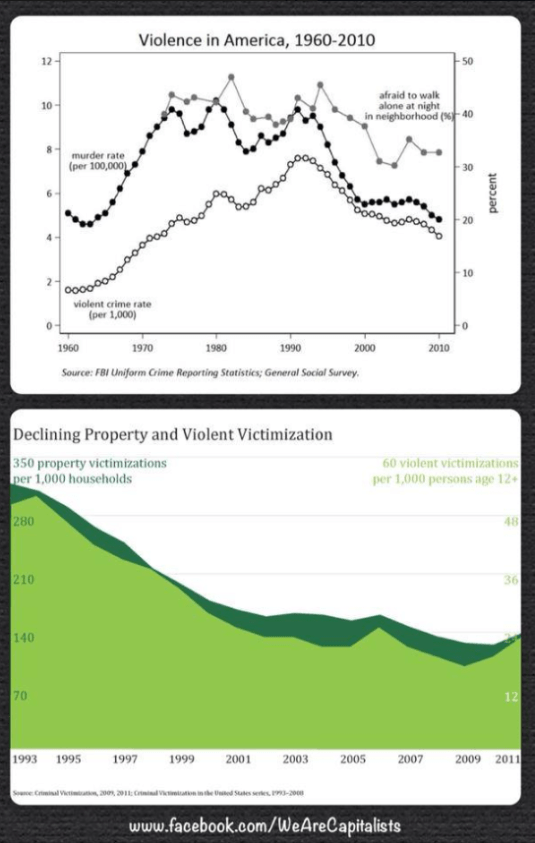
I blame rising inequality
20 Oct 2018 Leave a comment
in economic history, economics of crime, politics - USA, poverty and inequality
The Problem With #MeToo’s Agenda
20 Oct 2018 Leave a comment
in discrimination, economics of crime, gender, law and economics, politics - USA
Why The Polls Keep Getting It Wrong – Cheddar Explains
20 Oct 2018 Leave a comment
in politics - Australia, politics - New Zealand, politics - USA Tags: voter demographics
A New Breed of Political Ad Enters the Midterms
19 Oct 2018 2 Comments
in economics of information, economics of media and culture, politics - USA, Public Choice Tags: economics of advertising
#BDS: The Attempt to Strangle Israel
18 Oct 2018 1 Comment
in defence economics, discrimination, international economics, law and economics, politics - USA, war and peace Tags: Israel
@BillMaher on political correctness hurting Democrats
16 Oct 2018 1 Comment
in politics - USA Tags: political correctness, regressive left
Bern Your Enthusiasm – SNL
15 Oct 2018 Leave a comment
in politics - USA, Public Choice, television Tags: 2016 presidential election
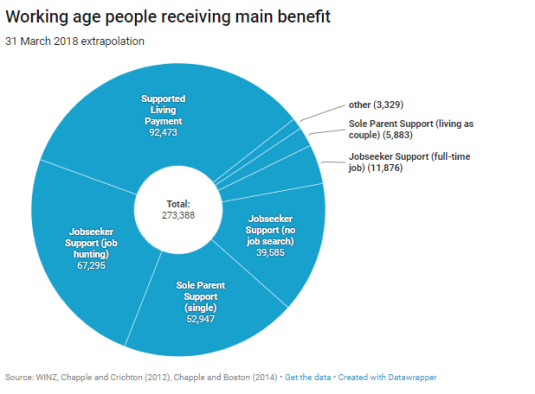
$850m lost in benefit fraud @CarmelSepuloni @_AAAP_ @MaramaDavidson @RMarchNZ @TaxpayersUnion
15 Oct 2018 Leave a comment
in economics of crime, politics - New Zealand, poverty and inequality
The estimates are based on the self-reported benefit fraud in the 2012 Chapple and Crichton paper which must be a minimum bound because you would expect at least some benefit fraudsters to be discreet in their dealings with government and the statistics bureau.
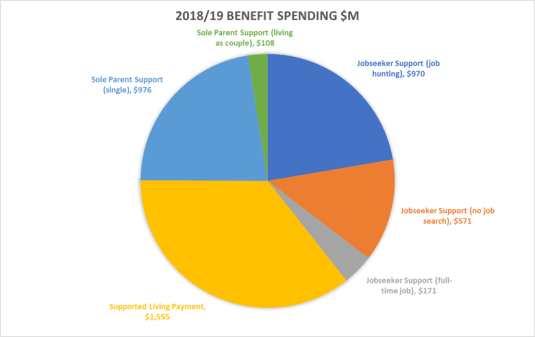
Computed from 2018 Budget papers, WINZ benefit data, Chapple and Crichton (2012), Chapple and Boston (2014). See too https://www.taxpayers.org.nz/benefit_sanctions


Recent Comments