Actively-managed mutual funds cannot earn excess returns over index funds because in aggregate they earn the same as index funds, less the difference in cost. This was proposed by Sharpe in his timeless 1991 article, The Arithmetic of Active Management.
Of course, certain definitions of the key terms are necessary. First a market must be selected — the stocks in the S&P 500, for example, or a set of “small” stocks. Then each investor who holds securities from the market must be classified as either active or passive.
A passive investor always holds every security from the market, with each represented in the same manner as in the market. Thus if security X represents 3 per cent of the value of the securities in the market, a passive investor’s portfolio will have 3 per cent of its value invested in X. Equivalently, a passive manager will hold the same percentage of the total outstanding amount of each security in the market2.
An active investor is one who is not passive. His or her portfolio will differ from that of the passive managers at some or all times. Because active managers usually act on perceptions of mispricing, and because such misperceptions change relatively frequently, such managers tend to trade fairly frequently — hence the term “active.”
… Properly measured, the average actively-managed dollar must underperform the average passively-managed dollar, net of costs. Empirical analyses that appear to refute this principle are guilty of improper measurement.
In 2008, Warren Buffett made a bet of $1 million with Protégé Partners LLC that, including fees, costs and expenses, an S&P 500 index fund would outperform a hand-picked portfolio of hedge funds over the 10 years ending December 31, 2017.
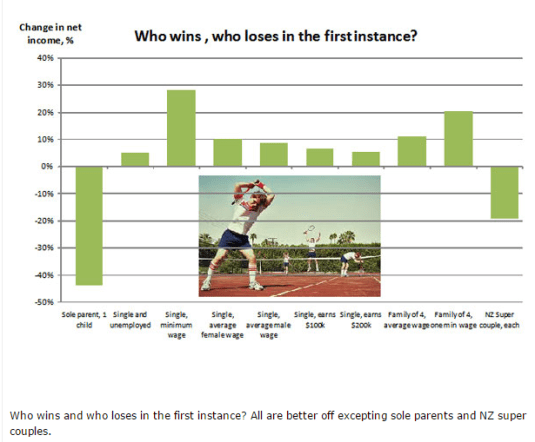
The last Labour Government so hated tax cuts that it would not call its family tax credit a family tax credit. For those on the minimum wage, it could increase your income by 1/3rd. Oddly enough, because of abatement rates of 22.5% after $36,000, two minimum wage earners do not get much at all.
Pre-funding of New Zealand’s old age pension obligations requires contributions to the New Zealand Superannuation Fund now, higher taxes now in return for lower taxes later through the joys of compounding of the returns on the investments. If that is so, when the contributions are not made, the $3 billion in annual taxes should not be collected.
There should be a separate New Zealand superannuation fund contribution levy that should lapse when contributions are suspended, as they were from 2009, and the pay-outs start after 2036? Otherwise, taxpayers will never see the promised lower taxes in the future. Never?
Constitutional political economy matters despite the reluctance of most who specialise in Social Security reform to think about that backend public choice risk. Unless there is iron-clad guarantee of lower taxes in the future, the whole deal about pre-funding superannuation pay-outs is a con.
That politicians can pass a law in 2003 to pre-fund old-age pensions 40 years hence and expect the politicians of 2036 and onwards to honour the deal with tax cuts is politically naive.
When I first heard of this idea to increase exports by 1/3rd, I immediately thought that the balance of payment balances. Any increase in exports will require a matching increase in imports unless we want to start exporting 10% of our GDP, running a trade surplus of 10% of our GDP relative to where it is now.
Countries do not normally embrace the Dutch disease. This is a large appreciation of the currency after an export boom will deindustrialise the import competing sectors and the non-booming export sectors. The exchange rate appreciation brought on by the export boom and heavy demand for New Zealand foreign exchange by foreigners will cause a large switch in consumer spending towards imports.
If exports are to go up by 10% of GDP, imports must too unless there is a change in incentives to invest and save in New Zealand and abroad. As Barro explains
The current-account balance is the difference between a country’s total income and its spending on consumption and investment (and net transfers abroad).
The current account is the difference between national saving — income not spent on consumption — and domestic investment. To think about why the ratio of the current-account deficit to GDP is large, ask why the ratio of investment to GDP is high or why the national saving rate is low.
Current accounts go into surplus or deficit because there is an international trade in savings. We either import the savings of others or export NZ savings. When net exports are positive, we are exporting our savings, when exports are negative, we are importing the savings of others.
The capital account surplus, otherwise known to scaremongering and export fetish types as the current account deficit, is the extent to which foreigners are willing to lend their savings to New Zealanders to buy imports in excess of export receipts.
When the current account is in surplus as it certainly must if we increased exports by 10 percentage points of GDP, New Zealanders would be lending a substantial amount of their savings to the rest of the world. What is the point of an export boom if we do not spend some of it?
It is just pedantic to point out the few countries outside of the European Union export more than 1/3rd of their GDP. That is just raining on Steven Joyce’s parade. Exports are still less than 30% of GDP in 2016 as the graphic below shows.
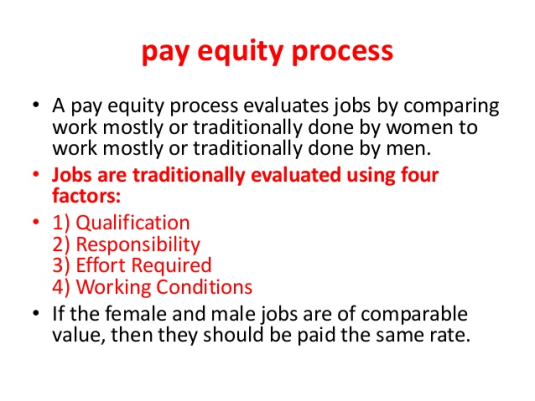
Earlier this week in your capacity as Minister of Women’s Affairs you sponsored research on the causes of the gender wage gap in New Zealand.
That just published research was seriously incomplete. The Ministry of Women’s Affairs advised today that they were aware of the work of Claudia Goldin but did not reference it.
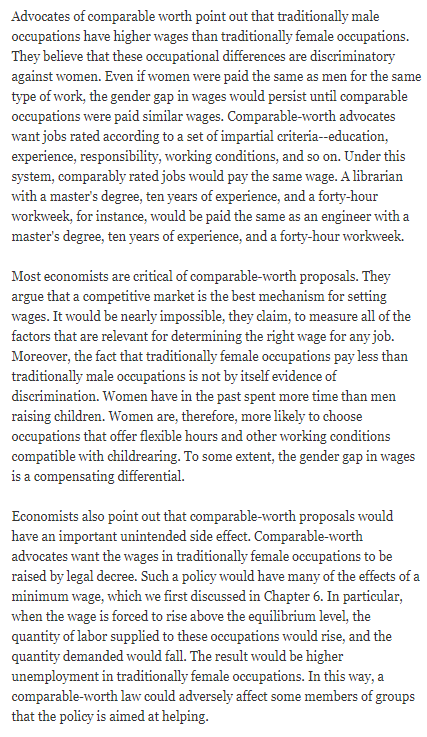
MWA ignored the research of the world’s top female labour economist Claudia Goldin. Her research shows that the causes of the gender wage gap are completely different to what you have suggested in the research you launched earlier this week and calls for novel policy solutions that are in a completely different ballpark to those that you have raised this week.
When education and accumulated job experience faded away as the statistical explanation of the causes of the gender wage gap, which the research you launched confirmed, Goldin explored how the organisation of work drove what remains. She called this the last chapter of the gender wage gap.
She found that jobs where the willingness to work very long hours, very specific hours and/or maintain continuous contact with co-workers or clients are highly prized and disproportionately rewarded was central to explaining the gender wage gap for well-paid workers.
Both her research and that you sponsored this week shows that the gender wage gap is close to zero for the bottom half of the wage distribution but the wage gap is 20% or more for professionals in the top 10% of wage earners.
Rather than hypothesise that employers suddenly develop an unconscious bias against successful career professionals because they are female, Goldin looked deeply into how the organisation of work and design of jobs affected how workers were paid and how women made choices about their careers and what they majored in at university in anticipation of these demanding or rat race jobs.
Goldin referred to pharmacy as the most family friendly occupation in America because pharmacists are completely interchangeable and in America the great majority of them are employed by Walmart and other big companies. Few are self-employed. The only advantage of working long hours in the pharmacy profession is you are very tired at the end of the week.
Goldin contrasted that with law or finance sector jobs which are rat race jobs.
Rat race jobs such as these disproportionately reward people who are willing to work very long hours, work very rigid hours and/or show up whenever the client wants them anywhere in the world. These jobs also severely penalise even the shortest interruption in your career track. You come back reporting to the people you hired 12-24 months ago!
After starting on the same pay, large gender wage gaps in high-powered professional occupations emerge after 5-10 years into a career as successful professionals power up to become partners or highflyers.
Importantly, Goldin found one counterfactual to this large wage gap for high-powered professionals. If your husband earns less, there is no wage gap with your MBA classmates at Harvard but you do work fewer hours per week.
Goldin’s study of the Harvard and Beyond longitudinal study was corroborated by a study she did of the top 100 occupations in the American Community Survey. The gender wage gap is limited to rat race jobs.
Goldin argued that the last chapter of the gender wage gap dependents on changing the way in which we organise work.
That is a profoundly ambitious agenda because much of the way in which high-powered professionals must work long hours and be always on call for clients is from the demands of their clients. For example, you want your lawyer to show up in court on time every time and always be available to you when you are in trouble. The legal system does not work in any other way because of the possibility of urgent applications to court etc.
Women anticipate this because, as an example, female surgeons tend to specialise in areas where they can schedule operations in advance rather than having to rush in to perform emergency surgery.
I suggest to you that you should think more deeply about the quality of advice you have just received from the causes of the gender wage gap in New Zealand.
That advice to you is profoundly at odds with the latest thinking in modern labour economics on what the causes are and what the solutions must now be for the last chapter of the gender wage gap.
A postscript has the key publications of Claudia Goldin to show why she is the world’s leading female labour economist without a doubt. You were not advised of her findings.
Cheers,
Jim Rose
Selected publications of Claudia Goldin on the labour economics of gender
2016 “The Most Egalitarian of All Professions: Pharmacy and the Evolution of a Family Friendly Occupation,” (with L. Katz), Journal of Labor Economics (forthcoming).
2014 “A Grand Gender Convergence: Its Last Chapter,” American Economic Review 104 (April), Presidential Address, pp. 1091-119.
2014 “A Pollution Theory of Discrimination: Male and Female Differences in Occupations and Earnings.” In L. Boustan, C. Frydman, and R. Margo, Human Capital and History: The American Record (Chicago: University of Chicago Press), pp. 313-48.
2011 “The Cost of Workplace Flexibility for High-Powered Professionals” (with L. Katz), The Annals of the American Academy of Political and Social Science, 638 (November), pp. 45-67.
2010 “Dynamics of the Gender Gap among Young Professionals in the Corporate and Financial Sectors” (with M. Bertrand and L. Katz), American Economic Journal: Applied Economics, 2 (July 2010), pp. 228-55.
2008 “Transitions: Career and Family Life Cycles of the Educational Elite,” American Economic Review Papers & Proceedings 98 (May), pp. 363-69.
2006 “The ‘Quiet Revolution’ That Transformed Women’s Employment, Education, and Family,” American Economic Review, Papers and Proceedings, (Ely Lecture), 96 (May), pp. 1-21.
2006 “The Homecoming of American College Women: The Reversal of the Gender Gap in College” (with L. Katz and I. Kuziemko), Journal of Economic Perspectives 20 (Fall), pp. 133-56.
2006 “The Rising (and then Declining) Significance of Gender.” In F. D. Blau, M. C. Brinton, and D. B. Grusky, eds., The Declining Significance of Gender? New York: Russell Sage Foundation, pp. 67-101.
2004 “From the Valley to the Summit: A Brief History of the Quiet Revolution that Transformed Women’s Work,” Regional Review, Q1 vol. 14 (2004), pp. 5-12.
2004 “Making a Name: Surnames of College Women at Marriage and Beyond” (with M. Shim), Journal of Economic Perspectives, 18 (Spring 2004): 143-60.
2002 “The Power of the Pill: Oral Contraceptives and Women’s Career and Marriage Decisions” (with L. Katz), Journal of Political Economy 110 (August): 730-70.
2000 “Orchestrating Impartiality: The Impact of Blind Auditions on the Sex Composition of Orchestras” (with C. Rouse), American Economic Review (September): 715-41.
1997 “Career and Family: College Women Look to the Past.” In F. Blau and R. Ehrenberg, eds., Gender and Family Issues in the Workplace. New York: Russell Sage Press, pp. 20-58.
1995 “The U-Shaped Female Labor Force Function in Economic Development and Economic History.” In T. P. Schultz, ed., Investment in Women’s Human Capital and Economic Development. Chicago, IL: University of Chicago Press, pp. 61-90.
1991 “Marriage Bars: Discrimination Against Married Women Workers from the 1920s to the 1950s.” In Henry Rosovsky, David Landes, and Patrice Higonnet, eds., Favorites of Fortune: Technology, Growth, and Economic Development since the Industrial Revolution. Cambridge, MA: Harvard University Press, pp. 511-36.
Why Evolution is True is a blog written by Jerry Coyne, centered on evolution and biology but also dealing with diverse topics like politics, culture, and cats.
In Hume’s spirit, I will attempt to serve as an ambassador from my world of economics, and help in “finding topics of conversation fit for the entertainment of rational creatures.”
“We do not believe any group of men adequate enough or wise enough to operate without scrutiny or without criticism. We know that the only way to avoid error is to detect it, that the only way to detect it is to be free to inquire. We know that in secrecy error undetected will flourish and subvert”. - J Robert Oppenheimer.
Recent Comments