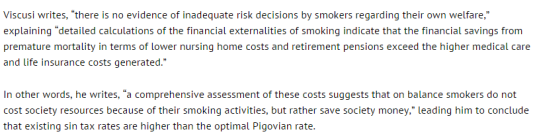
It will be a slow train coming before the Morgan Foundation calls for a cut in the tobacco tax because the optimal Pigovian tax on it is already too high from the perspective of externalities or the burden on the public health budget.
I think smoking is disgusting and unhealthy but that does not give me the right to regulate the disgusting habits of others. Where would I start in regulating risk-taking? I would have to start with swimming, tramping and biking. They are all high-risk activities of the self-righteous? Not everything others do that I do not like causes an externality.
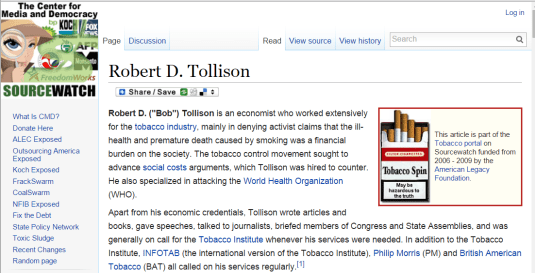
Few economists work on the economics of smoking other from the starting point that it should be reduced. Those that do not share that starting point such as Robert Tollison, Gary Anderson and William Shughart are subject to relentless personal abuse. They are immediately denounced as the paid whores of the tobacco industry.
That was one of the reasons I got interested in the economics of smoking. There must be something in the case made by Robert Tollison and others questioning tobacco taxes if the first line of argument against them is you are saying that because someone paid, you low down dog.
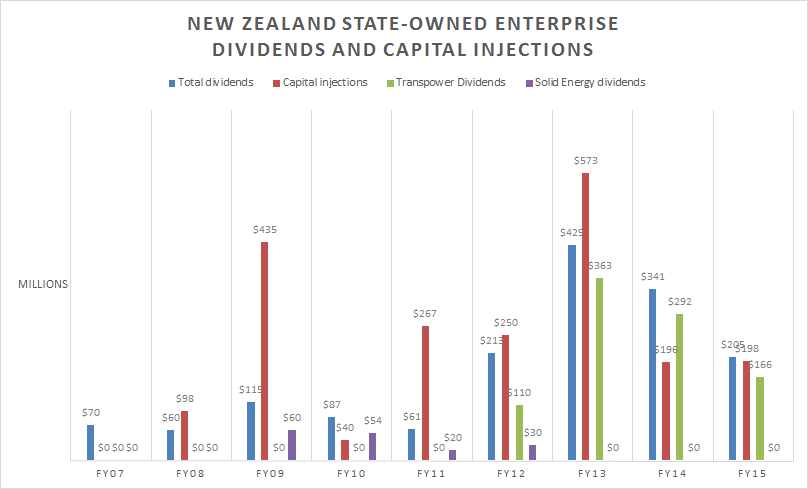
With a straight face, the Labour Party and the Greens claim that state-owned enterprises should not be sold because taxpayers give up the future dividend stream.
Source: New Zealand Treasury – data released under the Official Information Act.
Leaving to one side what the sale price is the net present value of, for as far back as I could obtain data from the Treasury, it is a rare year in which the taxpayers does not pour more money into state-owned enterprises than they get back in dividends.
Transpower is carrying the entire state-owned enterprise portfolio. Earlier on, Solid Energy – a now bankrupt coal mining company– was carrying the portfolio in terms of cash flow to the taxpayer.
The New Zealand Treasury understands neither who pays company taxes when capital is internationally mobile nor why Ireland was relentlessly bullied over its 12.5% company tax rate.
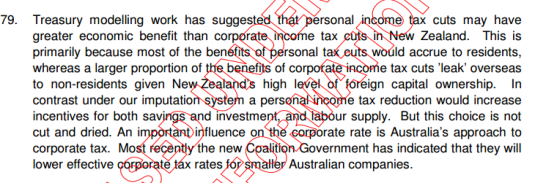
The Treasury makes the surprising claim that the benefits of company tax cuts will leak overseas to non-residents because of the high level of foreign capital ownership.
Now if New Zealand were to substantially cut its company tax rate, hell will freeze over before the Australian Treasurer rings up and say thanks mate. The Australian worry will be the loss of investment and corporate headquarters to New Zealand.
"Corporate inversions"…"Naked Inversion"… @etoder @NPRATC – Is it OK for American companies avoid paying taxes http://t.co/vZub5Kg1V7
— Tax Policy Center (@TaxPolicyCenter) July 18, 2014
Who pays company tax when capital is internationally mobile is one of the easiest questions you can get in an economics quiz. Just trace out how investors will react to a lower company tax in New Zealand.
If company taxes are lower in New Zealand, more investment will flow into New Zealand, increasing the size of the capital stock in New Zealand and with it wages in New Zealand because New Zealand workers have more capital to work with.
When will these international capital inflows stop? It is obvious! When risk-adjusted after-tax returns equalise for internationally mobile investors. They will adjust their portfolios so that after-tax returns equalise across tax jurisdictions.
The after-tax returns are equalised by the competing tax jurisdictions having different before-tax rates of return on capital and therefore costs of capital.
Jurisdictions with high company taxes have to offer larger before-tax returns so that internationally mobile investors receive the same risk-adjusted after-tax return everywhere. High tax jurisdictions boost before tax return by wages being lower in the high tax jurisdiction.
High company taxes are paid for by the workers of the jurisdiction concerned through having to accept lower wages to work with the same amount of capital. They must compensate foreign investors by boosting before-tax returns so that their after-tax rates of return equalise across competing tax jurisdictions.
The New Zealand Treasury missed this most basic point about who pays a company tax in a globalised world. The Australian Treasury is right on top of this basic piece of economics:
The mobility of capital refers to how easily financial capital (debt and equity) flows into and out of a country. Greater capital mobility will shift more of the burden of taxation from capital to labour through larger changes in the domestic capital stock, and hence in domestic labour productivity and wages (Grubert and Mutti 1985; Gravelle 2010).
In this situation, a reduction in the company tax rate will result in large inflows of foreign capital to ensure that there is no material difference between the after tax (risk adjusted) rate of return on investment in Australia and the rate available abroad.
The many attempts at company tax harmonisation by the European Union and G20 are motivated by the fear of large capital flows into the lower tax jurisdictions.
No high-tax country views the low company taxes in Ireland, Singapore and Hong Kong as a windfall where they can raise more tax revenue on the additional dividends repatriated from lower tax jurisdictions.
Very large economies such the USA can get away with a slightly above average rates of company tax because the number of other places to go are fewer.
A small open economy such as New Zealand should safely assume that most to all of burden of the company tax is on New Zealand workers through lower wages.
Capital migrates from high-tax to low-tax locations, reducing capital-to-labour ratios in high-tax countries. The low-tax countries experience higher capital-to-labour ratios, a higher marginal product of labour, and higher wages.
I will be putting in an Official Information Act request seeking to find out whether the work of Arnold Harberger influences their company tax briefings to ministers. I will also add any work they are done on corporate inversions and the company tax rate in Ireland.
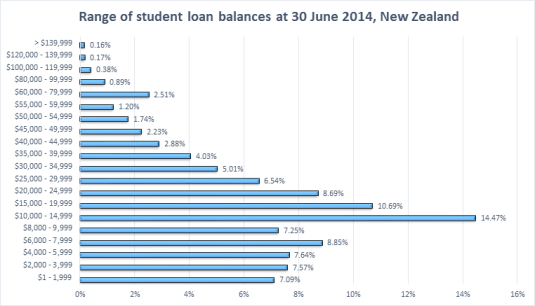
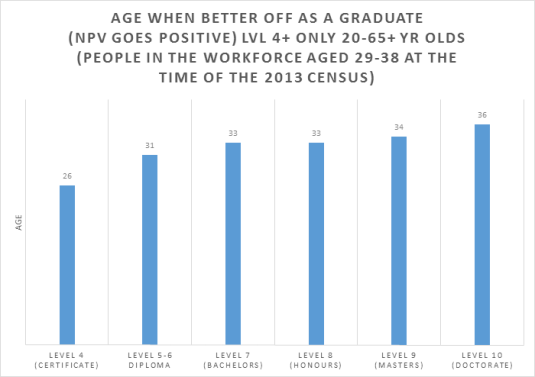
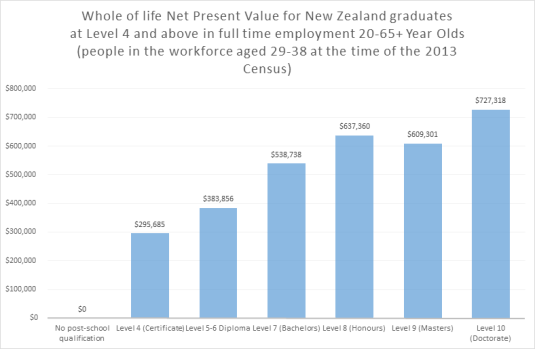
Most students do not owe that much compared to the $1/2 million graduate premium over their life plus marrying someone who is also a graduate. 60% owe less than $20,000 and 80% owe less than $30,000. People not smart enough to go to university or Polytech can manage to save that to buy a car
Self-appointed social justice warriors in the New Zealand Labour Party and New Zealand Greens pander to this middle class greed. They should be ashamed of themselves.
Despite all the passions about the TPPA, the correct starting post for an economist on regional trade agreements is lukewarm opposition. That is the position of Paul Krugman. Paul Krugman summarised the TPPA well recently from a standpoint of a professional economist:
I’ve described myself as a lukewarm opponent of the Trans-Pacific Partnership; although I don’t share the intense dislike of many progressives, I’ve seen it as an agreement not really so much about trade as about strengthening intellectual property monopolies and corporate clout in dispute settlement — both arguably bad things, not good, even from an efficiency standpoint….
What I know so far: pharma is mad because the extension of property rights in biologics is much shorter than it wanted, tobacco is mad because it has been carved out of the dispute settlement deal, and Republicans in general are mad because the labour protection stuff is stronger than expected. All of these are good things from my point of view. I’ll need to do much more homework once the details are clearer.
Krugman then reminded that a trade agreement is most politically viable when it is most socially harmful. This is the point that the opponents of the TPPA miss. They will not want to discuss how some trade agreements are good deals but others are bad. That would admit that trade agreements can be welfare enhancing, and sometimes they are but sometimes not.
The correct economic name for free trade agreements is preferential trading agreements. These agreements give tariff and other preferences to some countries over others.
Tariffs are lower for the members of the agreement, creating more trade, but there is also trade division.
CER offers a neat example of trade diversion. Instead of buying cars from the cheapest source and collecting tariff revenue, the hopelessly inefficient Australian car industry did not have to pay tariffs so it made New Zealand into a major export market until tariffs were abolished in 1998.
Less tariff revenue because of CER but we still paid way over the odds for Australian instead of Japanese cars. We were worse off. Less tariff revenue but car prices pretty much as high as before.
New Zealand tariffs are minimal these days. The TPPA reduces the key tariffs on our exports at an excruciatingly slow pace.
There is no discussion of trade diversion in the National Interest Analysis before this committee. For that reason alone, the National Interests Analysis is inadequate and should be returned to the Ministry for further work. Right now, it would not pass a first semester test in a basic international economics course because that most basic risk from trade agreements is not discussed.
Most of the TPPA is not about tariffs. Many of these other chapters are suspicious add-ons to trade talks.
Developing countries rightly regard trade and environment clauses in any trade agreement as a new form of colonialism.
Unions, the Labour Party and Greens happily demand these intrusions into the regulatory sovereignty of developing countries to protect special interests against import competition.
The sovereignty objections to trade agreements are no different to those that can be made to climate change treaties and International Labour Organisation conventions. It is all in the details – what do we get in return?
Consistency would help too. Trade agreements should not include labour or environmental standards as they, for example, limit our right to deregulate our labour market. Be careful for what you wish for when you oppose international agreements on sovereignty grounds.
The intellectual property chapters of the TPPA are truly suspicious. With each new day, the case for patents and copyrights is weakening in the economic literature. Some have made powerful arguments to abolish patents and copyrights altogether.
There are modest extensions of the term limits of drug patents and much more mischief on copyright terms. These should be watched carefully in future trade talks and one day will be a deal breaker.
Good arguments can be made against investor state dispute settlement provisions even after the carve-outs. These provisions have no place in trade agreements between democracies.
Foreigners can take their chances in democratic politics like the rest of us. They might occasionally get a short deal because of left-wing or right-wing populism but these gusts of xenophobia are mostly an occasional irritant in the rich fabric of Western democracies.
Developing countries sign-up to investor state dispute settlement to signal they are open for business. Foreign investors do not have to put up with their corrupt courts and bureaucracies and hopelessly venial politicians.
The logic of regional trade negotiations is we cut tariffs we should have cut long ago in return for others cutting their tariffs which they too should have cut long ago.
Much is made of the cost-benefit analysis of the TPPA. All the critics are really saying is cost benefit analysis is really hard and often imprecise.
If the econometric estimates were not in doubt in this or any other public policy field, the academics are simply not trying hard enough to win tenure and promotion. Academics make their careers by being contrarian.
For this lukewarm opponent of regional trade agreements, the TPPA is a so-so deal with small net gains. There is no harm in signing it.
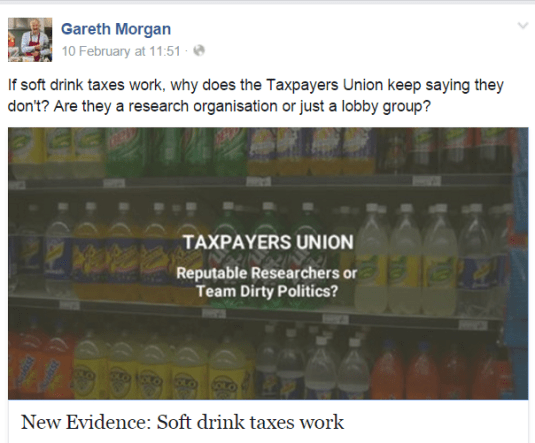
Do-gooding curmudgeon Gareth Morgan takes great pride in his positions on public policy and health and safety such as a sugar tax are evidence-based.
He is quick to suggest that those that disagree with them are ignorant or steeped in moral turpitude, preferably both. His offsider has even suggested that I am too dogmatic to bother arguing with. Me!
It will be a slow train coming before Gareth Morgan takes an evidence-based health and safety approach to bikes and swimming. They are dangerous activities that should be banned if he is to be consistent. Morgan is a keen motorcyclist and recently asked for exclusive access to a seaside batch.
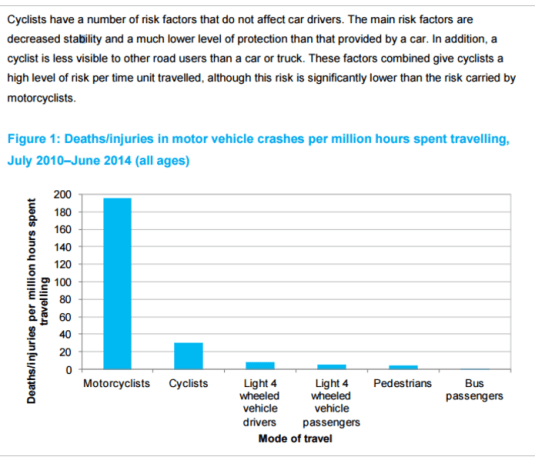
As I have previously argued, all the evidence suggests that riding a bike is dangerous. Both motorcycles and bicycles are way more dangerous than travelling by car.
Riding a motorbike and a bike should both be banned to protect motorcyclists and bicyclists from themselves. Like people who drink sugary drinks, they just do not understand the risks.
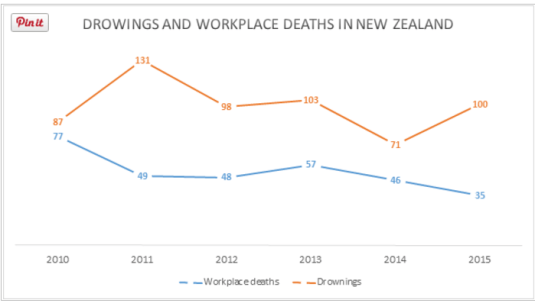
Swimming is an even more dangerous activity with multiple fatalities of a weekend common in summer. Again, people do not understand the risks of swimming both in the city and in rivers. They must be protected from themselves.
The argument that Gareth Morgan and his entourage will make in response to a demand for bans is the exact same one made against the food police.
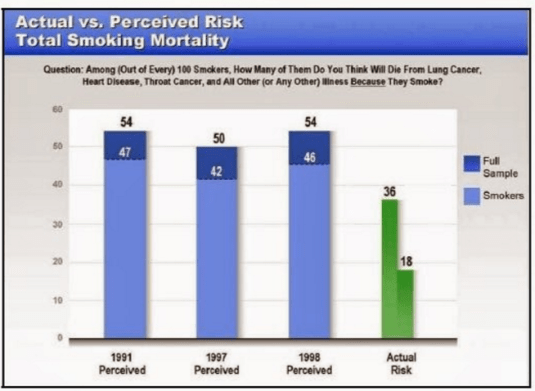
I am sure Morgan will point out that people know that riding a bike or swimming is dangerous. Even those living in a cave also know that drinking sugary drinks and having a smoke is also dangerous. Indeed, the evidence is people overestimate the risks of these socially disapproved activities rather than underestimate them.
The argument that Morgan and his entourage would use against banning bikes, motorbikes and swimming is voluntary assumption of risk.
We live in a free society. If people want to lead a risky life, they are free to do so as long as they do not harm others.
Morgan is quick to point out the cost of the public health system of sugary drinks and other targets of the food police andthe safety Nazis.
Last time I looked, bicycle and motorbike accidents resulting trips to emergency wards and other expenses to the taxpayer.
You cannot have it both ways. Arguing that the fiscal cost of sugary drinks and other roads is a rationale for regulating their consumption. That argument applies just as strongly to the case for – updated banning motorbikes, bicycles and swimming.
Here is a quick doco by @vice on our trip around North Korea – North Korean Motorcycle Diaries http://t.co/R0XPBhK0py
Until Gareth Morgan’s do-gooding extends to calling for the banning of a passion of his life, which is motorcycling, his evidence-based crusades do not have much standing.
You cannot reject voluntary assumption of risk on a selective basis especially when you engage in one of those risky activities yourself.
UPDATE: Morgan has in the past called for the insurance levy on motorbikes to reflect risk better than is the case now.
…research we’ve done at theMotorcycle Safety Advisory Councilindicates that the risk of serious and expensive injury on a motorcycle is around 45 times higher per person-kilometre travelled as it is for occupants of other vehicles.
And we have a lot more bumps, scrapes and bruises per person-kilometre as well.
It gets worse. We also found that up to 31 per cent of our injuries arise from incidents involving no other vehicles. In other words we do this to ourselves because we can’t handle the road conditions.
Now of course we can blame the road as some of us are wont to do, but the reality is in most cases it’s pure incompetence or lack of self-management.
Any charging regime that gives riders an incentive to ride within their level of competence, to self-manage risk by wearing better protective clothing for example, or even lifting competency levels has to be a win-win doesn’t it?
This is not a call for a ban. Moreover, this is just a calm discussion of actuarial risk and the rampant cross-subsidies in the New Zealand universal, no fault accident compensation scheme.
Buried in at all these remarks by Morgan is people have the right to take risks and ride a bike if they want. No similar courtesy to people who like sugary drinks and those who support their right to drink and eat what they please. No similar courtesy to honest disagreement over whether a sugar tax is worth the trouble and strife.
What I must also add is the Morgan Foundation is a famous advocate of sugar taxes but a little-known advocate of actuarially fair insurance levies on motorbike. If the notoriety was the other way around, this debate would have more credibility. That is why I missed it in the first draft of this post.
I am still waiting for Gareth Morgan to call for bans on advertising of motorbikes and bicycles to children and on children’s television because they are impressionable. Why are motorbike and bicycle ads safe for children but cigarette and junk food ads not?
Milton Friedman argued that people agree on most social objectives, but they differ often on the predicted outcomes of different policies and institutions. This leads us to Robert and Zeckhauser’s taxonomy of disagreement
Positive disagreements can be over questions of: 1. Scope: what elements of the world one is trying to understand? 2. Model: what mechanisms explain the behaviour of the world? 3. Estimate: what estimates of the model’s parameters are thought to obtain in particular contexts?
Values disagreements can be over questions of: 1. Standing: who counts? 2. Criteria: what counts? 3. Weights: how much different individuals and criteria count?
Any positive analysis tends to include elements of scope, model, and estimation, though often these elements intertwine; they frequently feature in debates in an implicit or undifferentiated manner. Likewise, normative analysis will also include elements of standing, criteria, and weights, whether or not these distinctions are recognised.
Obesity by Occupation: In US police, firefighters, & security lead the pack. #dataviz
The origin of political disagreement is a broad church in a liberal democracy. Those you disagree with are not evil, they just disagree with you. As Karl Popper observed:
There are many difficulties impeding the rapid spread of reasonableness. One of the main difficulties is that it always takes two to make a discussion reasonable. Each of the parties must be ready to learn from the other.
Feel-good policies attacking sugar in drinks will do nothing but provoke opposition and delay the day when people confront the fact that they are going to the fatter than their parents and their grandparents because they are richer.
I lost 18kg after I was diagnosed with type II diabetes. Giving up sugary drinks and biscuits contributed maybe 2 kg to that weight reduction. Central to that weight production was I was well motivated.
A rise in the price of a sugary drink and the political fight over that turns friends into enemies and is a distraction from the larger cause.
Greg Mankiw was on point when he said that do we really think that meddling at this micro level of sugary drinks serves any purpose and can government be trusted to micromanage our lives with pushes rather than nudges:
To what extent should we use the power of the state to protect us from ourselves? If we go down that route, where do we stop?
Taxing soda may encourage better nutrition and benefit our future selves. But so could taxing candy, ice cream and fried foods. Subsidizing broccoli, gym memberships and dental floss comes next. Taxing mindless television shows and subsidizing serious literature cannot be far behind.
Even as adults, we sometimes wish for parents to be looking over our shoulders and guiding us to the right decisions. The question is, do you trust the government enough to appoint it your guardian?
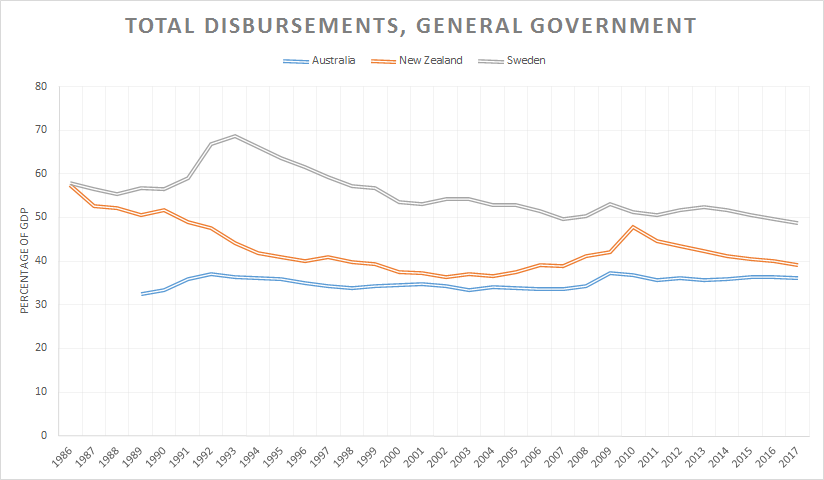
I came across this data showing that New Zealand and Sweden had the same sized public sectors in the mid-1980s some years ago. The data could not be found again for a long time in the OECD statistical databases. One reason was the OECD changed its name to general disbursements.
The size of the public sector in Australia has not changed much for 30 odd years. The public sector has been in a long decline in Sweden and New Zealand since peaks as a percentage of nominal GDP in the late 1980s and early 1990s respectively.
I know of no comments on the large size of the New Zealand public sector as measured by general government expenditure in the late 1980s. Its contribution to the stagnant economic growth of that time is worth exploring.
Why Evolution is True is a blog written by Jerry Coyne, centered on evolution and biology but also dealing with diverse topics like politics, culture, and cats.
In Hume’s spirit, I will attempt to serve as an ambassador from my world of economics, and help in “finding topics of conversation fit for the entertainment of rational creatures.”
“We do not believe any group of men adequate enough or wise enough to operate without scrutiny or without criticism. We know that the only way to avoid error is to detect it, that the only way to detect it is to be free to inquire. We know that in secrecy error undetected will flourish and subvert”. - J Robert Oppenheimer.


 The argument that Morgan and his entourage would use against banning bikes, motorbikes and swimming is voluntary assumption of risk.

 I am still waiting for Gareth Morgan to call for bans on advertising of motorbikes and bicycles to children and on children’s television because they are impressionable. Why are motorbike and bicycle ads safe for children but cigarette and junk food ads not?



Recent Comments