A tale of two parents
30 Mar 2015 Leave a comment
in human capital, labour economics, labour supply, occupational choice, politics - USA, population economics, poverty and inequality, welfare reform Tags: child poverty, family demographics, family structures, single parents
Whitlam’s curse – How higher education drives inequality among the bottom 99%
30 Mar 2015 Leave a comment
in economics of education, human capital, labour economics, labour supply, occupational choice, politics - Australia, politics - USA Tags: David Autor, education premium, Gough Whitlam, top 1%
Gough Whitlam abolished tuition fees at Australian universities in 1972. The idea was to reduce inequality. He entrenched it instead, and gave a flying start to those of already above-average talents.
David Autor in a recent paper has illustrated how the gap between the highly educated and the less educated is growing at a far faster rate than the gap between the top 1% in the bottom 99% in the USA. David Autor argues that
a single minded focus on the top 1% can be counterproductive given that the changes to the other 99% have been more economically significant.

- since the early 1980s, the earnings gap between workers with a high school degree and those with a college education has become four times greater than the shift in income during the same period to the very top from the 99%.
- Between 1979 and 2012, the gap in median annual earnings between households of high-school educated workers and households with college-educated ones expanded from $30,298 to $58,249, or by roughly $28,000.
- If the incomes of the bottom 99% are grown at the same pace as the top 1% their incomes would have increased by $7000 per household.
Autor argues that the growth of skill differentials among the other 99% is more consequential than the rise of the 1% for the welfare of most citizens.

via How Education Drives Inequality Among the 99% – Real Time Economics – WSJ.
To punish the discussion of public affairs through libel judgments is to shut off discussion of the very kind most needed
29 Mar 2015 Leave a comment

Did poverty increase after the 1996 US Federal welfare reforms?
29 Mar 2015 Leave a comment
in discrimination, labour economics, politics - USA, poverty and inequality, welfare reform Tags: 1996 US welfare reforms, child poverty, poverty and inequality

Police Officer Runs into Burning House to Rescue Child
28 Mar 2015 Leave a comment
in politics - USA Tags: police
Poverty and family structure in America
28 Mar 2015 Leave a comment
in economics of love and marriage, gender, labour economics, labour supply, politics - USA, poverty and inequality Tags: child poverty, single parents

The impact of gerrymanders on US congressional elections
27 Mar 2015 Leave a comment
in politics - USA, Public Choice Tags: 2012 congressional elections, gerrymanders
When Americans voted for the House of Representatives in 2012, Democratic candidates won 1.4 million more votes than Republicans. Yet after the dust settled, the GOP ended up with a 234-201 majority in the chamber.

Last year, in contrast, the GOP won a national landslide. But despite winning big victories in these four states, they only picked up one new House seat overall among them (in North Carolina). That’s because Republicans already won nearly all of the competitive seats in 2012 — partly because of gerrymandering…
Several analyses find that simple geography matters more — many Democratic voters are packed closer together in urban areas.
HT: vox.com
The Campaign To Make You Care About Climate Change Is Failing Miserably
27 Mar 2015 Leave a comment
in economic history, economics of media and culture, environmental economics, global warming, politics - USA, Public Choice Tags: climate alarmism, expressive voting, global warming, rational ignorance, rational irrationality

Since 1989, there’s been no significant change in the public’s concern level over global warming. To put this in perspective, note that the most expensive public-relations campaign in history—one that includes most governmental agencies, a long list of welfare-sucking corporations, the public school system, the universities, an infinite parade of celebrities, think tanks, well-funded environmental groups and an entire major political party—has, over the past 25 years or so, increased the number of Democrats who “worry greatly” about global warming by a mere four percentage points.


via The Campaign To Make You Care About Climate Change Is Failing Miserably, Climate Change Not a Top Worry in U.S., In U.S., Concern About Environmental Threats Eases and The number of people worried about climate change hasn’t changed since 1989 – The Washington Post.
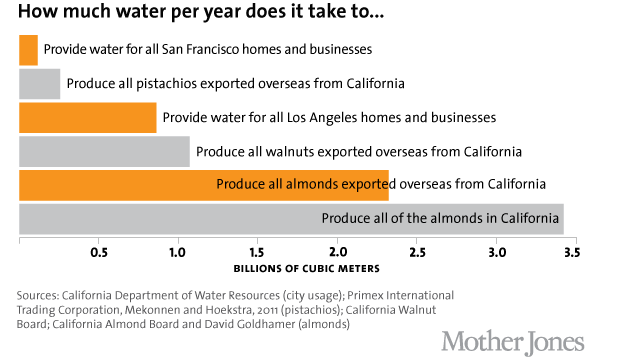
California’s Almonds Suck as Much Water Annually as Los Angeles Uses in Three Years | Mother Jones
27 Mar 2015 Leave a comment
in applied price theory, applied welfare economics, politics - USA Tags: water pricing
Obama’s Plans For Pulling Out Of Afghanistan vs. What Really Happened
26 Mar 2015 Leave a comment
in politics - USA, war and peace Tags: Afghanistan, war against terror


Recent Comments