Richard Epstein: Obamacare’s Collapse, the 2016 Election, & More
27 Jun 2019 Leave a comment
in applied price theory, defence economics, development economics, economic history, economics of crime, economics of information, economics of regulation, energy economics, environmental economics, financial economics, industrial organisation, law and economics, politics - USA, poverty and inequality, Public Choice, Richard Epstein
Richard Epstein: Obamacare’s Collapse, the 2016 Election, & More
25 Jun 2019 Leave a comment
in economics of crime, economics of information, energy economics, environmental economics, financial economics, global warming, health economics, law and economics, politics - USA, Public Choice, public economics, rentseeking, Richard Epstein
Exploring Liberty: Simple Rules for a Complex World
23 Jun 2019 Leave a comment
in applied price theory, comparative institutional analysis, constitutional political economy, economic history, economics of information, economics of regulation, entrepreneurship, financial economics, industrial organisation, law and economics, property rights, Public Choice, Richard Epstein
Richard Epstein presents “The Anti-discrimination Juggernaut” – David C. Baum Lecture, April 2019
21 Jun 2019 Leave a comment
in comparative institutional analysis, discrimination, economics of regulation, economics of religion, entrepreneurship, industrial organisation, law and economics, politics - USA, property rights, Public Choice, Richard Epstein Tags: free speech, Freedom of religion, racial discrimination, sex discrimination
Tullock Lecture: Richard Epstein – regulating wages and hours in the age of Uber
03 Feb 2019 Leave a comment
in applied price theory, economics of regulation, labour economics, law and economics, minimum wage, Richard Epstein, unions Tags: employment law, union power
Tullock Lecture: Richard Epstein
20 Dec 2018 Leave a comment
in applied price theory, applied welfare economics, Austrian economics, economics of regulation, industrial organisation, labour economics, labour supply, law and economics, occupational choice, occupational regulation, politics - USA, poverty and inequality, property rights, Public Choice, rentseeking, Richard Epstein, survivor principle Tags: employment law, employment regulation, Uber
Interesting point by Richard Epstein
02 Jul 2018 Leave a comment
in applied price theory, discrimination, economic history, economics of regulation, gender, labour economics, law and economics, Public Choice, rentseeking, Richard Epstein, transport economics Tags: competition law, creative destruction, racial discrimination
Richard Epstein’s lecture on Piketty
05 Jan 2017 Leave a comment
in applied price theory, economic history, entrepreneurship, industrial organisation, labour economics, poverty and inequality, Richard Epstein
I’m worried! I’m sympathising with organic farmers over a land use conflict!
06 Aug 2015 1 Comment
in applied price theory, applied welfare economics, economics of regulation, industrial organisation, law and economics, politics - New Zealand, property rights, Public Choice, rentseeking, Richard Epstein, survivor principle Tags: common law, economics of agriculture, food snobs, green rent seeking, land use conflicts, land use planning, law of nuisance, noise pollution, nuisance, old common law, organic farming, Richard Epstein, William Blackstone, zoning
Writing this blog of sound mind and sober disposition, I still have considerable sympathy with two organic farmers over a land use conflict they have with the neighbouring gun range.

Local land use regulations allows a gun club to set up 600 m away with competitive shooting days all day for 88 days a year. That is a voluntary self restraint. They could hold shooting competitions every day of the year. The local land use regulations allow the use of guns on rural land. The gun club used this absence of a prohibition on the use of guns in the frequency of use to set up a gun range to fire guns all day long on rural land.

Now here is the rub. There something wrong with the concept of quiet enjoyment of your land if a neighbour can fire off a large amount of noises continuously. The occasional noise, the occasional gunshot yes, but all day? I live near the airport, but I knew it was there when we bought the property and the lands was a little cheaper because of that.
The organic farmers are unusually pristine and prissy about what they want by neighbours to protect the sacredness of their more expensive snob food. I’m not too sure whether they would want to grant their neighbours an equal right to unusual land uses such as opening a gun range. That said, the organic farmers do have a point about a very noisy neighbouring land use that can be heard some distance away.
The organic farmers, of course, could have negotiated with their neighbours for covenants to restrict land use that undermine there are unusually pristine requirements for quiet enjoyment of their land and their neighbours land too. Easy to do when the land is first unused, but once economic activity accumulates, not so easy in terms of transaction costs and hold-outs.


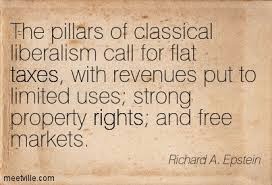
Richard Epstein, classical liberalism and compulsory vaccinations
07 Feb 2015 Leave a comment
in health economics, liberalism, libertarianism, Richard Epstein Tags: anti-vaccination movement, compulsory vaccinations, public health, vaccinations


Richard Epstein, George Soros, and Bruce Caldwell Discuss Hayek’s Constitution of Liberty
22 Dec 2014 Leave a comment
in comparative institutional analysis, constitutional political economy, F.A. Hayek, liberalism, Richard Epstein Tags: Bruce Caldwell, Constitution of Liberty, FA Hayek, Richard Epstein


Recent Comments