What if the Prime Minister insists we help them?

The main cast of Yes (Prime) Minister

Sir Humphrey Appleby: Then we follow the four-stage strategy.

Bernard Woolley: What’s that?

Sir Richard Wharton: Standard Foreign Office response in a time of crisis.

Sir Richard Wharton: In stage one we say nothing is going to happen.

Sir Humphrey Appleby: Stage two, we say something may be about to happen, but we should do nothing about it.

Sir Richard Wharton: In stage three, we say that maybe we should do something about it, but there’s nothing we *can* do.

Sir Humphrey Appleby: Stage four, we say maybe there was something we could have done, but it’s too late now.

I found the best writer on global warming to be Thomas Schelling

Tom Schelling has been involved with the global warming debate since chairing a commission on the subject for President Carter in 1980.

Schelling is an economist who specialises in strategy so he focuses on climate change as a bargaining problem. Schelling drew in his experiences with the negotiation of the Marshall Plan and NATO.

International agreements rarely work if they talk in terms of results. They work better if signatories promise to supply specific inputs – to perform specific actions now.

Individual NATO members did not, for example, promise to slow the Soviet invasion by 90 minutes if it happened after 1962.

NATO members promised to raise and train troops, procure equipment and supplies, and deploy these assets geographically.

All of these actions can be observed, estimated and compared quickly. The NATO treaty was a few pages long.

The Kyoto Protocol commitments were made not about actions but to results that were to be measured after more than a decade and several elections.

Climate treaties should promise to do certain actions now such as invest in R&D and develop carbon taxes that return the revenue as tax cuts. If the carbon tax revenue is fully refunded as tax cuts, less reliable countries, in particular, have an additional incentive to collect the carbon tax properly to keep their budget deficits under control.

Schelling is a genius at problem definition when he asked this

Suppose the kind of climate change expected between now and, say, 2080 had already taken place, since 1900.

Ask a seventy-five-year-old farm couple living on the same farm where they were born: would the change in the climate be among the most dramatic changes in either their farming or their lifestyle?

The answer most likely would be no. Changes from horses to tractors and from kerosene to electricity would be much more important.

Climate change would have made a vastly greater difference to the way people lived and earned their living in 1900 than today.

Today, little of our gross domestic product is produced outdoors, and therefore, little is susceptible to climate. Agriculture and forestry are less than 3 per cent of total output, and little else is much affected.

Even if agricultural productivity declined by a third over the next half-century, the per capita GNP we might have achieved by 2050 we would still achieve in 2051.

Considering that agricultural productivity in most parts of the world continues to improve (and that many crops may benefit directly from enhanced photosynthesis due to increased carbon dioxide), it is not at all certain that the net impact on agriculture will be negative or much noticed in the developed world.

As for the chances of a global treaty, Schelling has said:

The Chinese, Indonesians, or Bangladeshis are not going to divert resources from their own development to reduce the greenhouse effect, which is caused by the presence of carbon-based gases in the earth’s atmosphere.

This is a prediction, but it is also sound advice.

Their best defence against climate change and vulnerability to weather in general is their own development, reducing their reliance on agriculture and other such outdoor livelihoods.

Furthermore, they have immediate environmental problems — air and water pollution, poor sanitation, disease — that demand earlier attention.

History’s most famous weather forecast

via http://pc.blogspot.co.nz/

Reagan’s Normandy Speech Commemorating the 40th Anniversary of D-Day 6/6/84

We’re here to mark that day in history when the Allied armies joined in battle to reclaim this continent to liberty. For 4 long years, much of Europe had been under a terrible shadow. Free nations had fallen, Jews cried out in the camps, millions cried out for liberation. Europe was enslaved, and the world prayed for its rescue.

Here in Normandy the rescue began. Here the Allies stood and fought against tyranny in a giant undertaking unparalleled in human history.

and

There is a profound moral differences between the use of force for liberation and the use of force for conquest


Video

How General Eisenhower planned to take full blame if D-Day FAILED | The Daily Mail

This is the chilling speech Allied supremo General Dwight Eisenhower planned to make had D-Day turned into Doomsday, scribbled down on a note

Our landings in the Cherbourg-Haver area have failed to gain a satisfactory foothold and I have withdrawn the troops.

My decision to attack at this time and place was based upon the best information available.

The troops, the air, and the navy did all that bravery and devotion to duty could do.

If any blame or fault attaches to the attempt, it is mine alone.

Billy Connolly Muslim Suicide Bombers – YouTube

Every time there is a bang, the world is one wanker short

The detention of combatants in wartime

The UK Attorney-General got really worked up after 9/11 about the detention without trial in Gitmo of British terrorists captured in the field of battle by the USA.

The British had internment without trial from 1971 to 1975 in Northern Ireland. The UK Attorney-general accidentally forgot about this when getting prim and proper over the detention of British terrorists abroad:

  • Internment without trial was not new as the Northern Ireland Government had used special powers acts from time to time since 1922; and
  • The 1971 internments were under the Civil Authorities (Special Powers) Act (1922) (Northern Ireland) on August 9, 1971, and then the Detention of Terrorists (Northern Ireland) Order 1972.

Antiterrorist laws in the UK from the 1970s onwards allowed suspects to be held for 7 or 14 days without charge, and now allow for 42 days detention without being charge.

Canada interned 450 Quebec nationalists without trial during the October crisis in 1971 after two kidnappings and a history of bombings and several murders dating from the early 1960s. That left-wing hero Trudeau was the dirty rotten scoundrel behind this human rights abomination. Canada uses a memory hole for the October crisis when it rides its own high horse over Gitmo

Australia and the UK had interment of enemy aliens in World War 1 and 2:

  • During the First World War, 6,890 Germans were interned, of whom 4,500 were Australian residents before 1914. In NSW the principal place of internment was the Holsworthy Military Camp. Shame Labour shame!
  • Australia interned about 7000 residents, including more than 1500 British nationals, during World War II. A further 8000 people were sent to Australia to be interned after being detained overseas by Allies. At its peak in 1942, more than 12,000 people were interned in Australia. Shame Labor shame.

Canada and the USA interned Japanese citizens and aliens by the hundreds of thousands in World War 2.

Lincoln suspended habeas corpus in the civil war. He did not consult Congress.

Roosevelt had several German saboteurs that landed in the USA quickly executed after brief trials before military commissions in 1942.

The detention of captured enemy combatants is incidental to the conduct of a war.

Was this detention without trial wrong? Did these soldiers have a right to a trial? Did they have the right to bail? The right of access to a lawyer?

There would need to have been a lot of lawyers because 11 million German and Japanese soldiers were detained by the Allies by the end of the war in 1945.

The relative contributions of Thomas Schelling and the peace movement to the risks of war

Thomas Schelling (and Robert Aumann) did terrible things such as work out how not to blunder into wars and how to deter wars rather than have to actually fight them.

Schelling’s unique contribution at the Rand Corporation involved viewing strategic situations as bargaining processes.

Focusing on the stand-off between the United States and the Soviet Union, Schelling observed that the two superpowers had both shared and opposing interests.

Their shared interests involved avoiding a nuclear war, while their opposing interests concerned dominating the other. Conflict and cooperation became inseparable.

Iran and Israel are moving down that same path if both have nuclear weapons.

Schelling focused in particular on how the United States and Soviet Union could arrive at and stick to bargains by means of deterrence and compellence.

Deterrence involves dissuading the other from doing something, while compellence referred to persuading the other to do something.

  • Deterrence and compellence are supported by threats and promises.
  • Threats are costly when they fail and successful when they are not carried out.
  • Promises are costly when they succeed and successful when they are carried out. A threat is cheaper than a promise because you do not have to carry it out if your threats work in intimidating others to do what you want.

Since the exploitation of potential force is better than the application of force, it is key to use threats and promises while avoiding having to act upon these.

The challenge is to communicate threats and promises in a credible manner.

The ability to hurt people is conducive to peace, while the ability to destroy weapons increases the risk of war. This is the paradox of deterrence. A country needs a credible second-strike capacity to deter a pre-emptive first strike. A country needs its missiles to survive such an attack.

Populations are better protected by protecting the missiles. By protecting the missiles rather than their cities, each side was offering their populations as a hostage to the other.

With each side holding the other’s cities as hostage, neither has an incentive to strike first. This is much safer than having each side worried about their weapons been destroyed and they therefore use them before they are destroyed in some minor crisis.

That is one of Schelling’s many contributions to peace.

What were the contributions of the peace movements?

Robert Aumann argued well that the way to peace is like bargaining in a medieval bazaar. Never look too keen, and bargain long and hard. Aumann argues that:

If you are ready for war, you will not need to fight. If you cry ‘peace, peace,’ you will end up fighting…

What brings war is that you signal weakness and concessions.

Countries are more likely to cooperate if they have frequent interactions and have a long time horizon. The chances of cooperation increase when it is backed by the threat of punishment.

Disarmament, Aumann argues, “would do exactly the opposite” and increase the chances of war. He gave the example of the Cold War as an example of how their stockpiles of nuclear weapons and fleets of bombers prevented a hot war from starting:

In the long years of the cold war between the US and the Soviet Union, what prevented “hot” war was that bombers carrying nuclear weapons were in the air 24 hours a day, 365 days a year? Disarming would have led to war.

Aumann has quoted the passage from the biblical Book of Isaiah:

Isaiah is saying that the nations can beat their swords into ploughshares when there is a central government – a Lord, recognized by all.

In the absence of that, one can perhaps have peace – no nation lifting up its sword against another.

But the swords must continue to be there – they cannot be beaten into ploughshares – and the nations must continue to learn war, in order not to fight!

The Anti-War Left and the purpose of the International Humanitarian Laws of War

When it comes to the raison d’être of international humanitarian law, a stout ignorance infects the Renegade Left.


The purpose of international humanitarian law is to ensure a strict differentiation between civilians and combatants and provide for the detention and treatment of captured combatants.

The prospect of humane detention until the end of the conflict increases both the incentive to give quarter and to surrender when a military position is hopeless.

The purpose of this wartime detention of combatants is not to punish them, but to prevent return to the battlefield. Some of the detainees who have been released from Gitmo have returned to the battlefield.

The strict requirement under the Geneva conventions for combatants to carry their weapons openly and to dress in a uniform recognisable at a distance is to ensure that combatants are easy to distinguish from afar so that troops do not get trigger happy around civilians and refugee columns.

This is the fundamental purpose of international humanitarian law: saving civilians from the fighting.

In return for many legal protections from being harmed by the hostilities, civilians are strictly forbidden from engaging in hostilities.

If civilians directly engage in hostilities, they are considered unlawful or unprivileged combatants or belligerents. They may be prosecuted under the law of the detaining state. Both lawful and unlawful combatants may be interned for the duration in wartime, and they may be interrogated and also prosecuted for war crimes.

The severest of punishments are allowed for spies, saboteurs, infiltrators, francs-tireurs and guerrillas. Not carrying weapons openly and not dressing in a military uniform that is recognisable from a distance is a self-inflicted death sentence.

In the Battle of the Bulge, the English-speaking Nazi infiltrators dressed in American uniforms lost all interest in their missions once the first few who were captured were court-martialled in the field and immediately shot. This was the standard practice of every army at the time.

The Hostages Trial at Nuremburg dismissed some murder charges against some German commanders because partisan fighters in Europe could not be considered lawful belligerents under Article 1 of the 1907 Hague convention. The Tribunal stated:

We are obliged to hold that such guerrillas were francs tireurs who, upon capture, could be subjected to the death penalty. Consequently, no criminal responsibility attaches to the defendant List because of the execution of captured partisans…

The term combatant denotes the right to participate directly in hostilities. Lawful combatants cannot be prosecuted for lawful acts of war in the course of military operations even if their behaviour would constitute a serious crime in peacetime.

The term unlawful combatant was first used in US law in a 1942 United States Supreme Court decision in the case Ex parte Quirin.

The Supreme Court upheld the jurisdiction of a U.S. military tribunal over the trial of several German saboteurs in the US. This judgment states:

By universal agreement and practice, the law of war draws a distinction between the armed forces and the peaceful populations of belligerent nations and also between those who are lawful and unlawful combatants.

Lawful combatants are subject to capture and detention as prisoners of war by opposing military forces. Unlawful combatants are likewise subject to capture and detention, but in addition they are subject to trial and punishment by military tribunals for acts which render their belligerency unlawful.

The criteria from a just war include "serious prospects of success" and "the use of arms must not produce evils and disorders graver than the evil to be eliminated.

Neither applies to the firing of missiles from the Gaza into Israel after the 2005 disengagement.

When was the last time the Progressive Left denounced Hamas as war criminals for targeting civilians in Israel and intermingling with their own civilians for cover. Both are war crimes

This Google map shows much of the Gaza Strip is rural. There is plenty of rural land that is ideal for Hamas military bases this away from civilian centres as required by the laws of war.

The laws of war do not make it safer to be a combatant.

The laws of war are designed to reduce the chances that civilians are attacked because they are near military targets and of soldiers unlawfully intermingle among them for cover.

Thomas Schelling on the impossibility of nuclear disarmament

Thomas Schelling 1962

We cannot abolish conventional wars for the same reason:

Thomas Schelling 1961

While I have your attention, imagine if all nuclear weapons were abolished:

Thomas Schelling 2009

Compare the sleepy world we have now with one where the first country to reacquire one nuclear weapon would be dominant. Some practice a variation of this with nuclear weapons now.

Because latent capacity to develop nuclear weapons is not prescribed by the Nuclear Non-Proliferation Treaty, as a work-around of the treaty, this is sometimes called the “Japan Option”. Japan is a clear case of a significant advanced country with the complete technical prowess and nuclear materials to develop a nuclear weapon quickly.

A country does not need to test weapons nor declare its latent nuclear potential. Yet just keep the resources for a latent nuclear potential on hand for a crash programme.

What were Truman’s other options before Hiroshima-updated?

A demonstration explosion would have signalled to the Japanese oligarchy that the new president is weak and reluctant to spill blood.

The Japanese leadership had already interpreted the terms of the Potsdam declaration was a sign of weakness. They hoped that by making the invasion of Japan as bloody as possible, they could extract even better terms in light of this sign of weakness at Potsdam.

The willingness of the Japanese oligarchy to waste the blood of their own people and spill the blood of others without limit was central to their strategy of avoiding occupation and the dismantling of the old order.

Japan was governed largely by a consensus among an oligarchy of military and civilian factions. No major decisions of national policy could be reached until such a consensus had been obtained:

Japan’s governmental structure was such that in practice the Emperor merely approved the decisions of his advisers.

A consensus among the oligarchy of ruling factions at the top was required before any major question of national policy could be decided.

These factions, each of which had a different point of view, included the group around the Emperor of whom Marquis Kido, the Lord Keeper of the Privy Seal, was the most important, the ex-premiers constituting the Jushin or body of senior statesmen, and the cabinet.

The Army and Navy named their own cabinet ministers, who, together with the two chiefs of staff, had direct access to the Emperor.

The cabinet could perpetuate itself only so long as it was able to absorb or modify the views of the Army and Navy ministers, who, until the end, were strongly influenced by the fanaticism of the Army officers and many of the younger Navy officers.

The ruling oligarchy considered the opinions of the Japanese people as only one among the many factors to be taken into consideration in determining national policy and in no sense as controlling.

This process inevitably took time and involved complicated struggles of will among those of differing opinions. Assassinations and the threat of the same often greased the wheels.

The Japanese oligarchy felt in the spring of 1944 that Japan was facing certain defeat or at least that the time had come for positive steps to end the war. Prime Minister Tojo was forced to resign to make way for those more skilled at extracting the best possible terms to end the war.

Japan always anticipated a negotiated end of the war in the Pacific.

  • The Japanese elite considered that the weakness of the U.S. as a democracy would make it impossible for her to continue all-out offensive action in the face of the losses imposed by a fanatically resisting Japanese military;
  • The U.S. would compromise and allow Japan to retain a substantial portion of her initial territorial gains; and
  • Civilian and naval groups were familiar with American industrial and technological potential, and its fighting determination when aroused, expressed their doubts about a strategy which promised no conclusion to the war other than negotiation.

While Japan no longer had a realistic prospect of winning the war by the end of 1944 and they knew it, Japan’s leaders believed they could make the cost of conquering Japan too high for the Allies to accept, leading to some sort of armistice rather than total defeat.

The Japanese army fought to the death with 99% plus casualty rates as the Americans moved from island to island to show that any attempt to invade Japan would be too high a price to pay.

This was the Japanese ruling elite’s ace in the hole. The War Department staff in Washington estimated there would be 250,000 to 500,000 American casualties in an invasion of Japan.

500,000 Purple Heart medals were manufactured in anticipation of the casualties resulting from the invasion of Japan.

  • To the present date, all the American military casualties of the sixty years have not exceeded that number.
  • In 2003, there were still 120,000 of these Purple Heart medals in stock!

After the bombings, a public admission of defeat by the responsible Japanese leaders was secured prior to an invasion and while Japan was still possessed of some 2,000,000 troops and over 9,000 planes in the home islands.

There was no need for the Allies to either invade Japan or deal with the million Japanese troops in China who could have held out as a government-in-exile.

What were the chances of a military coup and assassinations and of army mutinies in China if the Japanese leaders capitulated? There were coup and assassination attempts after the figure-head emperor was used to resolve the dead-lock in a face saving way.

The 12-15 August coup plotters failed to persuade the Eastern District Army and the high command of the Imperial Japanese Army to move against the surrender. Importantly, the junior officers leading the coup felt secure enough to approach the Army minister and senior army officers as potential co-conspirators.

The army leadership knew of the coup plans but neither joined the plotters nor arrested them.

The key point is any Japanese government would automatically fall if the navel or army minister resigned. The Army and Navy name their own cabinet ministers. The resignation of Shigetaro Shimada, the Navy Minister, forced out Tojo in 1944.

The Oligarchy had decided in late 1944 that Japan was facing ultimate defeat and unseated the Tojo government in favour of a new cabinet which would bring the war to an end on terms that preserved old military dominated oligarchic order. The army and navy ministers did not resign after the post-atomic bombing peace terms were accepted. They knew the game was up.

A hypothetical:

  • You are Truman’s chief defence counsel at his 1946 impeachment hearings where he is charged with not using the atomic bomb as soon as possible to force the Japanese to accept terms of surrender.
  • Truman could have chosen to abjure from using the 2 bombs at his disposal and let the fire bombings burn down most Japanese cities and towns from new air bases for B26s from Okinawa, let 100,000 Chinese be slaughtered on average every month at the hands of the occupying Japanese army, and invade in December and call forth a slaughter of a million or two more.
  • The second bombing discredited the important faction within the Japanese ruling oligarchy that argued that the USA had only one bomb to use.

Truman’s secretary of state put this hypothetical to Truman when he was wavering on using the bomb.

I always wonder when people engage in handwringing over the horrors of war, will any of their suggestions about the good guys staying their hands ever shorten these wars.

Would World War 2 have finished even one day earlier if the handwringers had their way on how wars should be fought by the good guys? Who would have won?

First they came…

Dad’s Army

Don’t Tell Him Pike is the single funniest clip from the funniest BBC comedy of all time.

More on Dad’s Army is at the Dad’s Army Appreciation Society.

All of Dad’s Army is on YouTube including Deadly Attachment from which the above clip is from.

On 14 May 1940 the Secretary of State for War, Anthony Eden, gave a radio broadcast announcing the formation of the Local Defence Volunteers (later renamed the Home Guard).

Eden called on men between the ages of 17 and 65 who were not in military service but who wished to defend their country against an invasion to enrol at their local police station.

250,000 volunteers attempting to sign up in the first seven days; by July this number increased to 1.5 million wanting to defend their freedom.

Underneath all the satire of Dad’s Army, that courage and patriotic commitment is plain.

Video

The Crusader State versus the Foreign Policy of the Old Right

The foreign policy of the Old Right of the Republican Party is undergoing a revival through the now retired Congressmen Ron Paul and now his son, Senator Rand Paul. They are the joint heirs of the Old Right of the Republican Party and Senator Robert A. Taft.

TIME Magazine Cover: Robert A. Taft -- June 2, 1952

In The Republican Road Not Taken: The Foreign-Policy Vision of Robert A. Taft Michael T. Hayes argues that Taft was isolationist, which is opposition to binding commitments by the U.S. that would create new, or expand existing, obligations to foreign nations. Like many Americans of his era – the 1940s and early 1950s – Taft gladly would have:

let the rest of the world go its own way if it would only go without bothering the United States

Taft advocated what he called the policy of the free hand, whereby the United States would avoid entangling alliances and interferences in foreign disputes:

  • This policy permitted government leaders the freedom of action to decide in particular cases whether a vital U.S. interest warranted involvement.
  • Taft correctly pointed to features of the United Nations that would prevent its serving as a real force for peace and equality under the law.
  • He challenged the Truman administration’s assessment of the Soviet military threat against Western Europe.
  • He anticipated correctly that a steady rise in defence outlays could lead to a “garrison state” and the erosion of civil liberties.
  • Taft was prescient in warning that even well-meaning internationalism would degenerate over time into a form of imperialism that would breed resentment against the United States around the globe, eventually endangering U.S. national security.

In Putting “Defense” Back into U.S. Defense Policy, Ivan Eland argues for an urgent rethinking of America’s national interests:

  • America’s natural geo-strategic position places it at a natural advantage, rendering unnecessary a forward defence posture.
  • A non-interventionist foreign policy would mean lower defence budgets.
  • An America less willing to get involved in complex overseas disputes unrelated to its vital interests would also be less likely to make enemies around the world.

Further to the Libertarian Right, in Where the Left goes wrong on Foreign Policy the late Murray Rothbard asked whether:

  • The Left is prepared to accept a foreign policy in which the United States government allies itself with no one and retires from the world scene, leaving all international encounters to the private realm of free trade, travel, and cultural and social exchange.
  • That is what a policy of genuine non-interventionism and anti-imperialism would mean: a world in which the US government no longer tries to push other people around, on behalf of any cause, anywhere.

One area of agreement between classical liberals and the new left used to be opposition to foreign aid. Foreign aid was a system to subsidise US exports and prop up client states.

Rothbard used a revisionist perspective on foreign policy to argue that:

  • Taking the twentieth century as a whole, the single most warlike, most interventionist, most imperialist government has been the United States;
  • The main thrust of Soviet foreign policy was to preserve what it already has at home and abroad, not to jeopardise it;
  • A conservative Soviet government is capable of dangerous militaristic actions, but these are acts of imperial protectionism, not revolutionary or aggrandisement;
  • National communist movements were not monolithic but independent-minded – the wars between china, the USSR and China and Vietnam are examples; and
  • There vast differences between the various communist regimes throughout the globe spell the difference between life and death for a large part of their subject populations.

History did not perhaps hold up well on Soviet intentions for Rothbard, and Thomas Schelling and Robert Aumann are better writers on how if you want peace, you must prepare for war, but the Old Right did have a point about the crusader state.

In The Empire Has No Clothes U.S. Foreign Policy Exposed, Eland argued that:

In a post–Cold War world, taking into account only the security of American citizens, their property, and U.S. territory, the benefits of an interventionist foreign policy have declined, and the costs have escalated dramatically.

Americans continue to pay excessive taxes to defend countries that are rich enough to defend themselves or to occupy conquered countries in the world’s backwaters (e.g., Iraq and Afghanistan)…

Their sons and daughters are killed on remote foreign battlefields for reasons even remoter from U.S. vital interests.

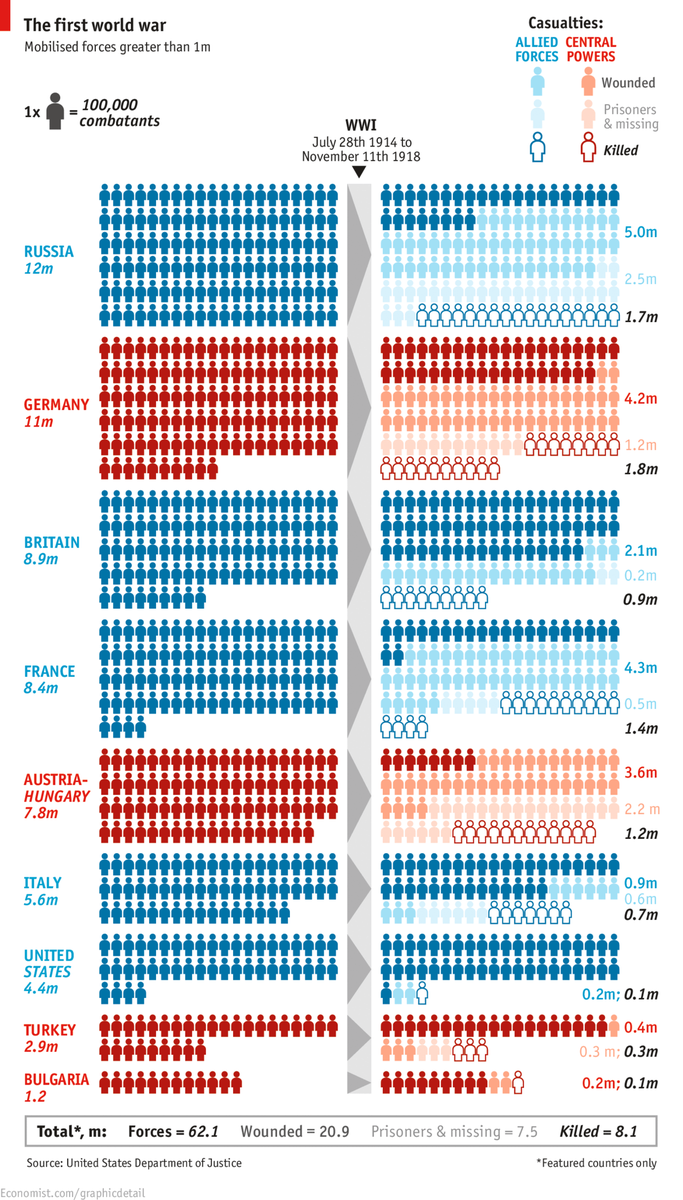
Crusader states can stumble into wars that they had no intention of fighting both in terms of scale and length. Remember World War 1 where everyone thought they would be home by Christmas after a negotiated settlement.

Tom Schelling looked at going to war as an emergent process. He argues that what a country does today in a crisis affects what one can be expected to do tomorrow. To quote Schelling:

A government never knows just how committed it is to action until the occasion when its commitment is challenged.

Nations, like people, are continually engaged in demonstrations of resolve, tests of nerve, and explorations for understandings and misunderstandings….

This is why there is a genuine risk of major war not from ‘accidents’ in the military machine but through a diplomatic process of commitment that is itself unpredictable.

Schelling goes on to argue wars to save face are, nonetheless, rational:

It is often argued that ‘face’ is a frivolous asset to preserve, and that it is a sign of immaturity that a government can’t swallow its pride and lose face.

But there is also the more serious kind of ‘face’, the kind that modern jargon is known as a country’s ‘image’, consisting of other countries’ beliefs (their leaders’ beliefs, that is) about how the country can be expected to behave.

It relates not to a country’s ‘worth’ or ‘status’ or even ‘honor’, but to its reputation for action.

If the question is raised whether this kind of ‘face’ is worth fighting over, the answer is that this kind of face is one of few things worth fighting over.

Robert Aumann argues well that the way to peace is like bargaining in a medieval bazaar. Never look too keen, and bargain long and hard. Aumann argues that:

If you are ready for war, you will not need to fight. If you cry ‘peace, peace,’ you will end up fighting… What brings war is that you signal weakness and concessions.

Peace feelers in World War 1

There were no meaningful peace proposals by the belligerent governments until 1916.

In late 1916 a series of peace proposals were suddenly put forward, all of them without exception advocating compromises. They contained no demands for unconditional surrender or a dictated peace.

There was Reichstag peace resolution on 19 July 1917. The resolution called for no annexations, no indemnities, freedom of the seas, and international arbitration. It was ignored by the German High Command and by the Allied Powers.

Pope Benedict XV tried to mediate with his Peace Note of August 1917 calling for a return to the pre-war borders.

On November 14, 1917, Lord Landsdowne, a minister in the Asquith cabinet, put forward a letter to the Daily Telegraph on the need for peace negotiations.


The Landsdowne memorandum titled "Coordination of Allies’ War Aims" recommended a serious investigation of the possibility of a peace and advocated that a statement be made by the British government indicating that the destruction of the German Empire was not her goal. Landsdowne said:

We are not going to lose this war, but its prolongation will spell ruin for the civilised world, and an infinite addition to the load of human suffering which already weighs upon it…

We do not desire the annihilation of Germany as a great power …

We do not seek to impose upon her people any form of government other than that of their own choice…

We have no desire to deny Germany her place among the great commercial communities of the world.

Landsdowne favoured a peace on the basis of pre-war status quo. The fall of the Asquith government and the installation of the Lloyd George Cabinet on December 16 put an end to Landsdowne’s activities.

The problem with the negotiation of the end of a war is the securing of credible assurances that the peace is lasting rather than just a chance for the other side to rebuild and come back to attack from a stronger position.

  • When on the advance, the peace feelers of the advancing powers were on basis of keeping conquered territories.
  • When in retreat, the peace proposals of the retreating powers were on the basis of returning to the pre-war borders.

One side will think that the other’s promise not to re-start a war is credible only if the other state would be better off by keeping its promise not to re-start a war than by breaking its promise.

France fortified its border with Germany in the 1920s because of a lack of trust that the peace would endure. Germany was disarmed after 1918 so that the day which it would be a threat again was well into the future.

Previous Older Entries Next Newer Entries

Bassett, Brash & Hide

Celebrating humanity's flourishing through the spread of capitalism and the rule of law

Truth on the Market

Scholarly commentary on law, economics, and more

The Undercover Historian

Beatrice Cherrier's blog

Matua Kahurangi

Celebrating humanity's flourishing through the spread of capitalism and the rule of law

Temple of Sociology

Celebrating humanity's flourishing through the spread of capitalism and the rule of law

Velvet Glove, Iron Fist

Celebrating humanity's flourishing through the spread of capitalism and the rule of law

Why Evolution Is True

Why Evolution is True is a blog written by Jerry Coyne, centered on evolution and biology but also dealing with diverse topics like politics, culture, and cats.

Down to Earth Kiwi

Celebrating humanity's flourishing through the spread of capitalism and the rule of law

NoTricksZone

Celebrating humanity's flourishing through the spread of capitalism and the rule of law

Homepaddock

A rural perspective with a blue tint by Ele Ludemann

Kiwiblog

DPF's Kiwiblog - Fomenting Happy Mischief since 2003

The Dangerous Economist

Celebrating humanity's flourishing through the spread of capitalism and the rule of law

Watts Up With That?

The world's most viewed site on global warming and climate change

The Logical Place

Tim Harding's writings on rationality, informal logic and skepticism

Doc's Books

A window into Doc Freiberger's library

The Risk-Monger

Let's examine hard decisions!

Uneasy Money

Commentary on monetary policy in the spirit of R. G. Hawtrey

Barrie Saunders

Thoughts on public policy and the media

Liberty Scott

Celebrating humanity's flourishing through the spread of capitalism and the rule of law

Point of Order

Politics and the economy

James Bowden's Blog

A blog (primarily) on Canadian and Commonwealth political history and institutions

Science Matters

Reading between the lines, and underneath the hype.

Peter Winsley

Economics, and such stuff as dreams are made on

A Venerable Puzzle

"The British constitution has always been puzzling, and always will be." --Queen Elizabeth II

The Antiplanner

Celebrating humanity's flourishing through the spread of capitalism and the rule of law

Bet On It

Celebrating humanity's flourishing through the spread of capitalism and the rule of law

History of Sorts

WORLD WAR II, MUSIC, HISTORY, HOLOCAUST

Roger Pielke Jr.

Undisciplined scholar, recovering academic

Offsetting Behaviour

Celebrating humanity's flourishing through the spread of capitalism and the rule of law

JONATHAN TURLEY

Res ipsa loquitur - The thing itself speaks

Conversable Economist

In Hume’s spirit, I will attempt to serve as an ambassador from my world of economics, and help in “finding topics of conversation fit for the entertainment of rational creatures.”

The Victorian Commons

Researching the House of Commons, 1832-1868

The History of Parliament

Articles and research from the History of Parliament Trust

Books & Boots

Reflections on books and art

Legal History Miscellany

Posts on the History of Law, Crime, and Justice

Sex, Drugs and Economics

Celebrating humanity's flourishing through the spread of capitalism and the rule of law

European Royal History

Exploring the Monarchs of Europe

Tallbloke's Talkshop

Cutting edge science you can dice with

Marginal REVOLUTION

Small Steps Toward A Much Better World

NOT A LOT OF PEOPLE KNOW THAT

“We do not believe any group of men adequate enough or wise enough to operate without scrutiny or without criticism. We know that the only way to avoid error is to detect it, that the only way to detect it is to be free to inquire. We know that in secrecy error undetected will flourish and subvert”. - J Robert Oppenheimer.

STOP THESE THINGS

The truth about the great wind power fraud - we're not here to debate the wind industry, we're here to destroy it.

Lindsay Mitchell

Celebrating humanity's flourishing through the spread of capitalism and the rule of law

Alt-M

Celebrating humanity's flourishing through the spread of capitalism and the rule of law

croaking cassandra

Economics, public policy, monetary policy, financial regulation, with a New Zealand perspective

The Grumpy Economist

Celebrating humanity's flourishing through the spread of capitalism and the rule of law

International Liberty

Restraining Government in America and Around the World