Biosphere 2: The Martian Colony We Made on Earth… And How it Went Wrong
06 Jun 2020 Leave a comment
in economics of media and culture
Ancient Rome’s Sanitation System: Centuries Ahead of It’s Time
06 Jun 2020 Leave a comment
in economic history, health economics Tags: Roman empire
Review of “Andrew Carnegie” by David Nasaw
05 Jun 2020 Leave a comment


Andrew Carnegie
by David Nasaw
878 pages
Penguin Books
Published: October 2006
“Andrew Carnegie” by Davis Nasaw was published in 2006 and was a finalist for the 2007 Pulitzer Prize for Biography. Nasaw is the Arthur M. Schlesinger, Jr. Professor of History at City University of New York. Among his most widely-read books are biographies of Joseph P.Kennedy (which I read and reviewed last year) and William Randolph Hearst.
The ideal biography requires several crucial ingredients. Among them are an intriguing biographical subject, a skilled writer, a robust supply of primary source material and an author capable of diligent and determined research. This scholarly and often gripping biography of Andrew Carnegie provides each of these items in abundance.
Using sources not available to earlier biographers, Nasaw skillfully stitches together a seamless and comprehensive narrative which explores his subject’s entire life. In these 801 pages of text, Nasaw…
View original post 337 more words
Sex matters in health policy
05 Jun 2020 Leave a comment
in discrimination, health economics, law and economics, politics - New Zealand

Aboriginal deaths in custody are falling and are below the average for other prisoners
05 Jun 2020 Leave a comment
in economics of crime, law and economics, politics - Australia Tags: law and order, racial discrimination

James Heckman’s travels in the old South
05 Jun 2020 Leave a comment
in discrimination, economic history, labour economics, law and economics, politics - USA

Pinker gets flak for tweeting about the “malignant delusion of the afterlife”, deletes tweet but defends himself here
05 Jun 2020 Leave a comment

I don’t really follow Twitter, but sometimes it makes news when a prominent person deletes a tweet, as when Nikole Hannah-Jones of the New York Times’s 1619 project deleted several tweets, including one drawing a distinction between being “politically black” and “racially black.” That made news, as did the tweet below issued about two weeks ago by Steve Pinker and then deleted. This puzzled me as I didn’t really see anything wrong with the tweet itself, though I didn’t read the linked Washington Post article.

I found out about the deleted tweet from reader Ginger K., who sent me this article from the respectable-sounding American Council on Science and Health (click on screenshot to read), which says it’s a nonprofit advocacy group but, according to sources cited in its Wikipedia article, is heavily funded by corporations, and takes some bizarre stands that align with corporate sponsorship.

At any rate, the…
View original post 2,056 more words
The Danish Conquest of England (980–1016)
05 Jun 2020 Leave a comment

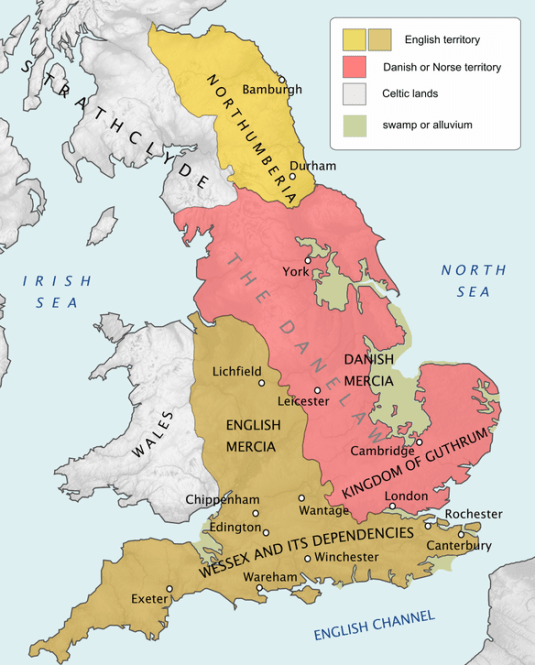
England, 878
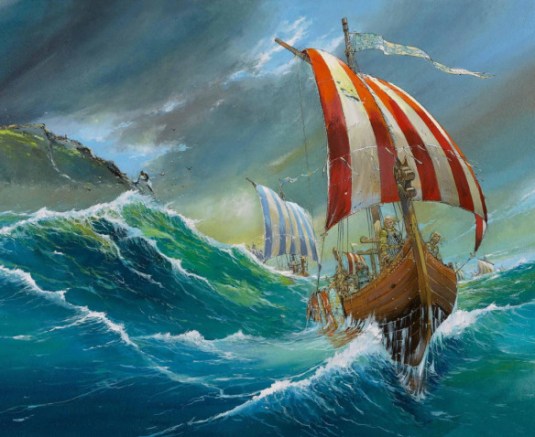
The final chapter in the Viking saga unfolded as a decades-long competition among kings for control of England amidst a royal rivalry for the north. Though most of the key players were of Scandinavian descent, sea power played only a supporting role. Perhaps because the Northmen still dominated the northern seas, the only naval battles of any significance were fought between Scandinavian adversaries in Scandinavian waters.
The battle for England began with the mysterious murder of King Edward at Corfe Castle in March 978, because this event brought to the throne Æthelred the Unready (or more correctly ‘the ill-advised’). Alfred’s strong line of successors had dissipated and Æthelred, barely twelve at the time of his accession, was ill-equipped to deal with the renewed Viking assault from the sea. Raids on the south and west coasts of England, taking advantage of the perceived weakness, began coming as early as…
View original post 2,621 more words
The Welfare State Penalizes the Poor with High Marginal Tax Rates
05 Jun 2020 Leave a comment

Back in 2016, I shared an image that showed how the welfare state punishes both the poor and rich.
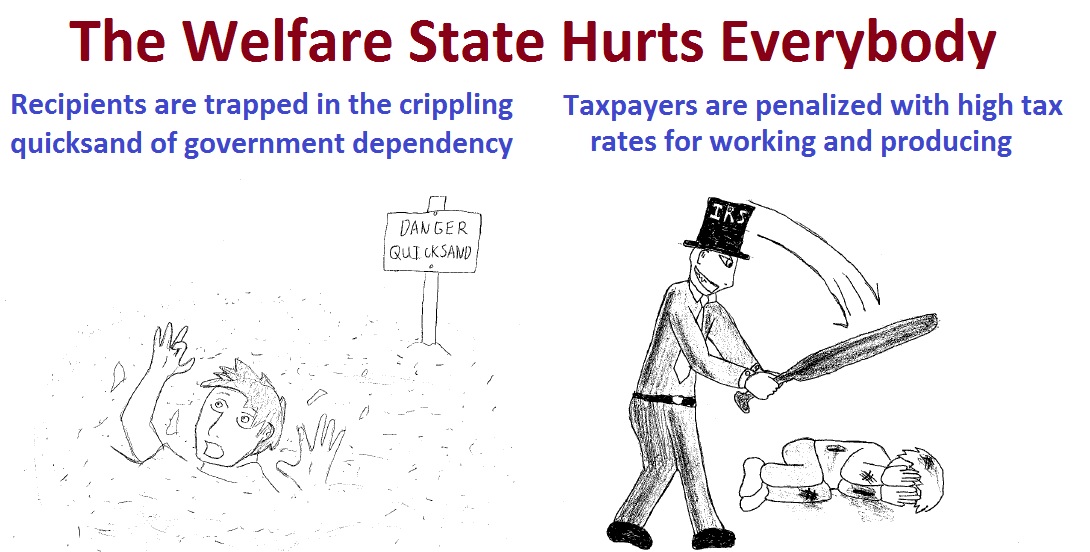 Rich people are hurt for the obvious reason. They get hit with the highest statutory tax rates, and also bear the brunt of the double taxation (the extra layers of tax on saving and investment resulting from capital gains taxes, double taxes on dividends, death taxes, etc).
But I also pointed out that the poor are penalized because they get trapped in dependency.
In large part, this is because they face bad incentives when they work and try to become self sufficient. Not only do they get hit by federal and state taxes, but they also can lose access to various redistribution programs. And the combination of those two factors can produce very high implicit marginal tax rates.
 I cited an astounding example of this phenomenon in 2012…
View original post 714 more words
Here Are The Personality Traits Most Strongly Associated With Being Environmentally Conscious
05 Jun 2020 Leave a comment
In the Aftermath of Hastings
05 Jun 2020 Leave a comment
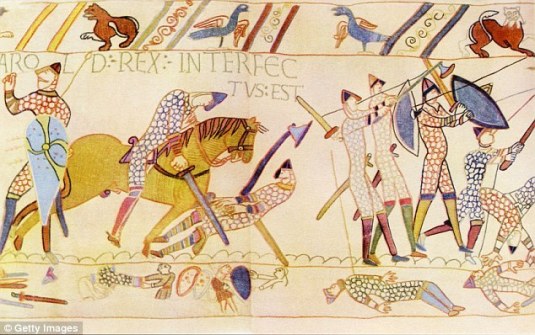
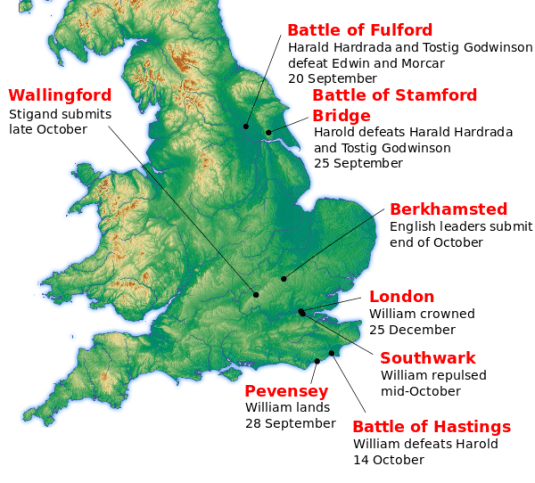
Late in his life, Napoleon summed up how wars are won and lost. It was, he said, three parts moral. One part physical. Throughout his campaign for the English throne, William had relentlessly maintained the moral high ground, from his manipulation of Harold’s oath, through his dealings with the Vatican, to (according to William of Poitiers) his careful arrangement around his neck on the morning of the battle of the bones of the saints on which he maintained Harold had sworn. It has frequently been asserted that in the final analysis he had outgeneralled his opponent, but it was on the moral high ground that he most conspicuously did so. It was a considerable achievement for a man whose conquest lacked any moral or legal justification.
He lost no time in exploiting…
View original post 5,115 more words
June 4, 1738: Birth of King George III of the United Kingdom of Great Britain and Ireland.
05 Jun 2020 Leave a comment

George III (George William Frederick; June 4, 1738 – January 29, 1820) was King of Great Britain and King of Ireland from his accession on October 25, 1760 until the union of the two countries on January 1, 1801, after which he was King of the United Kingdom of Great Britain and Ireland until his death in 1820. He was concurrently Duke and Prince-Elector of Brunswick-Lüneburg (“Hanover”) in the Holy Roman Empire before becoming King of Hanover on October 12, 1814. He was a monarch of the House of Hanover, but unlike his two predecessors, he was born in Great Britain, spoke English as his first language, and never visited Hanover.
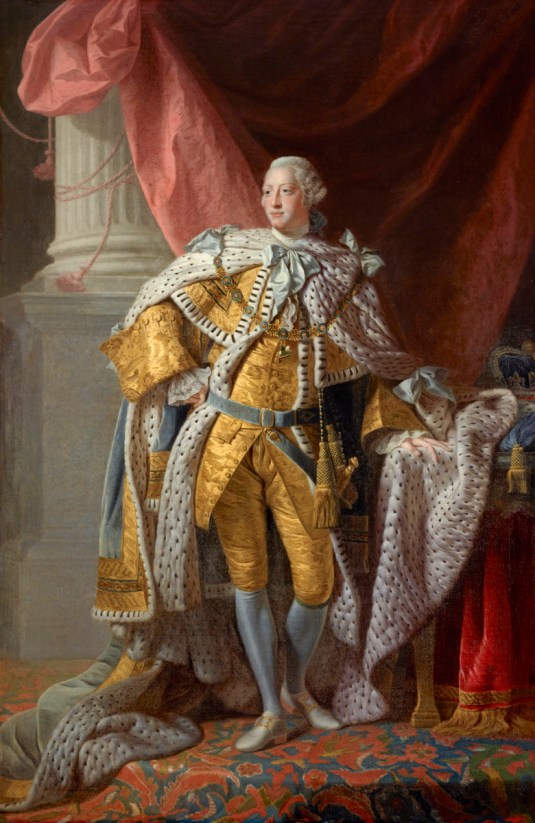
George III, King of the United King of Great Britain and Ireland. King of Hanover
Family
George was born in London at Norfolk House in St James’s Square. As he was born two months prematurely and thought unlikely to…
View original post 1,285 more words
Thomas Sowell: Discrimination and Disparities
05 Jun 2020 Leave a comment

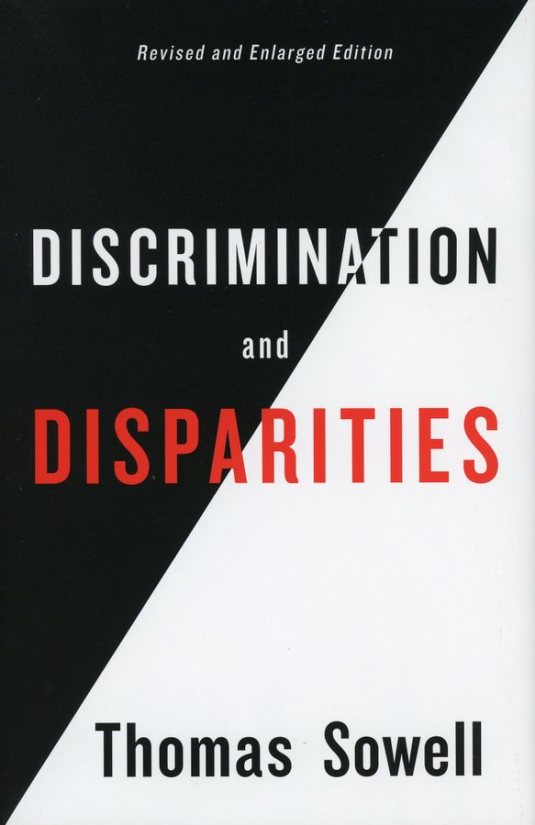
A revised and enlarged edition of Thomas Sowell’s Discrimination and Disparities, first published last year, has been published. This is not a full review. My review of that first edition see “Poisoned by Welfare”, The Salisbury Review, vol. 37 no. 1, pp. 49-51, Autumn 2018. The main changes are the addition of two new chapters (nos. five and seven), though there are other changes throughout. This edition of 308pp compares to the 179pp of the first edition, although the second edition has marginally larger font. We should recap Sowell’s arguments.
Sowell describes how discrimination can be interpreted two ways. The first is the exercise of general prejudice; the other is as informed judgment. Sowell’s point is that these are variations of the same function: discerning differences. The question is merely the accuracy and detail of these assessments. He sorts discrimination into judgment at an individual level and at…
View original post 1,064 more words


Recent Comments