A History of Time Zones
04 Jun 2020 Leave a comment
in economic history, economics of media and culture
Violent Protests in 1968 Helped Elect Richard Nixon. Will Today’s Protests Help Trump?
03 Jun 2020 Leave a comment
in economics of crime, law and economics, politics - USA Tags: 2020 presidential election, law and order
Hide & Seek: Media Keep Burying Mike Moore’s Planet of the Humans & Bloggers Keeps Digging It Up
03 Jun 2020 Leave a comment


Mike Moore’s Planet of the Humans has incensed renewable energy rent seekers, climate cultists and the mainstream media, alike. Its narrative – that subsidised renewable energy is just a playground for crony capitalists and the greatest economic and environmental fraud of all time – doesn’t sit well with the tribe who would have us believe we’re all on the brink of an ‘inevitable transition’ to running on nothing but sunshine and breezes.
However, if you haven’t already taken the opportunity to see it, trying to do so is like a perpetual game of hide and seek.
STT first covered it here: Blood & Gore: Mike Moore’s ‘Planet of The Humans’ Unmasks The Power & Money Behind Renewables Scam
The film had its debut on YouTube about six weeks ago, and while available on that platform clocked up over 8 million views.
Thereafter – As JoNova details below – those with skin…
View original post 1,123 more words
How JP Morgan’s history is connected to epidemic/pandemic..
03 Jun 2020 Leave a comment

Museum of American Finance runs a superb publication named Financial History. It is published three times an year.
The recent issue (Spring 2020) focuses on what else but pandemics. It has an article by Maura Ferguson and Sarah Poole titled Dirty Water. The article tracks a long winding history of epidemics in NY with JP Morgan Chase Bank.
The story narrates the history of this firm named Manhattan Company which was established to clean water of NY City.
View original post 844 more words
#COVID19 and the wages of sin; how is the Vice Fund going?
03 Jun 2020 Leave a comment
in defence economics, economics of regulation, financial economics, health economics

From https://www.bloomberg.com/quote/VICEX:US
USA Mutuals Vitium Global Fund seeks long-term growth of capital by investing in equity securities of companies that derive a significant portion of their revenues from a group of vice industries that includes the alcoholic beverages, defense/aerospace, gaming and tobacco industries. The Fund will concentrate at least 25% of its net assets in this group of four vice industries.
No foul play in aboriginal deaths in custody says Royal Commission
03 Jun 2020 Leave a comment
in discrimination, law and economics, politics - Australia Tags: law and order, racial discrimination, The fatal conceit

Social distancing rules are for the little people not @JacindaArdern
03 Jun 2020 Leave a comment
in health economics, politics - New Zealand Tags: economics of pandemics

The Pearl Harbor attack was imperfect
03 Jun 2020 Leave a comment

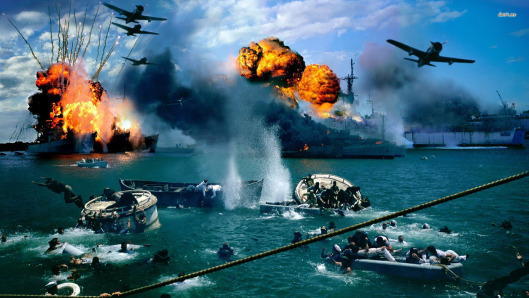
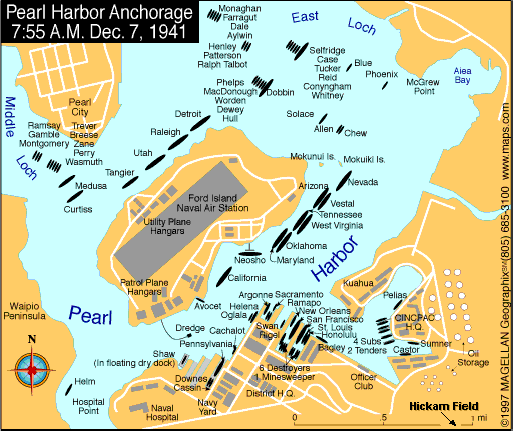
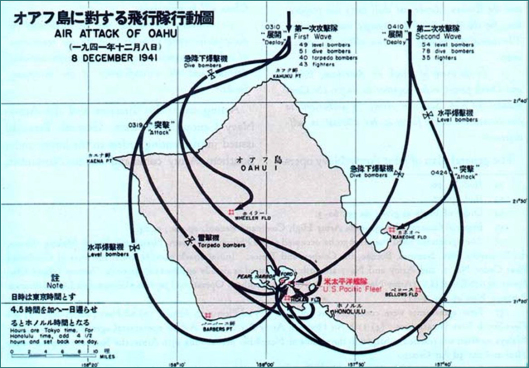
During the pre-war years, the Japanese Navy had painstakingly prepared its fleet for one particular strategy: a “decisive battle” to be held in its home waters, after the US fleet had been whittled down by aircraft and submarines during its long transit from Pearl Harbor into Japanese waters. The fleet was designed for this task, where fuel endurance and habitability and (in some cases) ships’ stability was sacrificed for speed and firepower. Logistics ships, tenders, repair ships, and developed forward support bases were unneeded in this strategy. Bases were to receive only minimal development, enough to support long-range reconnaissance and bombing aircraft and a sacrificial garrison. They were only speed bumps in the path of the American fleet and likely to be lost to the Americans’ advance. Fleet auxiliaries were not needed, because the most intense combat was expected to occur near the Japanese homeland in one cataclysmic decisive battle.
View original post 1,860 more words
No, WaPo, Nixon never ‘touted a secret plan to end war in Vietnam’
03 Jun 2020 Leave a comment

The hoarymedia myth about Richard Nixon’s “secret plan” to end the war in Vietnam is circulating anew, and being presented as if genuine.
The tale was invoked yesterday in a Washington Postessay that argued societal rifts and recent civil disorders in contemporary America don’t match those of 1968. “America is polarized today — but not like in 1968,” the essay said. “Today’s polarization is tidy by comparison.”
Maybe. But it’s not a far-fetched assessment. The essay stumbles, though, in claiming without attribution or qualification that Nixon’s “secret plan” was a “tantalizing” pledge that figured significantly in his run for the White House 52 years ago.
The Post presented the claim in this convoluted manner:
 Won without a ‘secret plan’
“Besides law and order, he touted a secret plan to end the war in Vietnam. Later, we learned that the plan was secret because it didn’t…
View original post 844 more words
The trebuchet
03 Jun 2020 Leave a comment


Recent reconstructions and computer simulations reveal the operating principles of the most powerful weapon of its time.
by Paul E. Chevedden, Les Eigenbrod, Vernard Foley and Werner Soedel
Centuries before the development of effective cannons, huge artillery pieces were demolishing castle walls with projectiles the weight of an upright piano. The trebuchet, invented in China between the fifth and third centuries B.C.E., reached the Mediterranean by the sixth century C.E. It displaced other forms of artillery and held its own until well after the coming of gunpowder. The trebuchet was instrumental in the rapid expansion of both the Islamic and the Mongol empires. It also played a part in the transmission of the Black Death, the epidemic of plague that swept Eurasia and North Africa during the 14th century. Along the way it seems to have influenced both the development of clockwork and theoretical analyses of motion.
The trebuchet succeeded…
View original post 2,242 more words
Rule of law
03 Jun 2020 Leave a comment
in economics of bureaucracy, economics of regulation, international economics, law and economics, politics - USA, property rights, Public Choice Tags: offsetting behaviour, regulatory takings, unintended consequences

The Hong Kong Flu Killed 100,000 Americans, But the Economy Didn’t Shut Down | Larry Elder
03 Jun 2020 Leave a comment
in health economics Tags: economics of pandemics


Recent Comments