Roland Fryer: Racial Inequality in the 21st Century: The Declining Significance of Discrimination
03 Jun 2020 Leave a comment
in comparative institutional analysis, discrimination, econometerics, economic history, economics of education, economics of information, human capital, labour economics, labour supply, law and economics, politics - USA, poverty and inequality Tags: racial discrimination
History Repeats: Taxpayers Fork Out Another $Billion on Another Giant Solar White Elephant
02 Jun 2020 Leave a comment

 One giant white elephant deserves another…
When Crescent Dunes, the world’s biggest solar-thermal power plant went bankrupt, US taxpayers were left to pick up the tab, with their liability running into hundreds of $millions.
South Australians (victims of their government’s obsession with chaotically intermittent wind and solar) can count themselves lucky that they didn’t end up with a carbon copy of the Crescent Dunes debacle.
Back in August 2017, STT reported on efforts by the Weatherill Labor government to build a solar-thermal plant at Port Augusta with the ‘help’ of the characters behind Crescent Dunes. It was designed with a trivial 150 MW (notional) capacity, but came with an absolutely staggering $1.2bn pricetag: South Australia: Sublime One Day, Ridiculous the Next – Premier Set to Squander $1.2bn on Solar-Thermal Boondoggle
Fortunately for South Australians that big, shiny white elephant never did get off the ground and Jay Weatherill’s Labor government…
View original post 654 more words
Tom Hickey: The weakening of parliamentary immunity by the Irish Supreme Court
02 Jun 2020 Leave a comment

 In 2019, the Irish Supreme Court decided two cases concerning speech in parliament. The same seven judges sat in each case. The seven agreed in each case: Frank Clarke, the chief justice, wrote a single judgment for the Court each time.
The applicant won in the first case, decided in late February. The Supreme Court granted a declaration of unlawfulness sought by Angela Kerins against a parliamentary committee on foot of that committee’s unfair interrogation of her on matters relating to her leadership of a publicly-funded charity. In ruling as it did, the Supreme Court overturned a Divisional High Court ruling that Kerins’ claims were non-justiciable. The Divisional Court had interpreted the Article 15 provisions in light of the early modern English laws to which they owe their provenance. “For upwards of four centuries,” Kelly P said, “it has been recognised in common law jurisdictions throughout the world that the…
View original post 2,921 more words
The COVID-19 pandemic is causing a crisis in the UK universities (UK univs resemble leveraged and overexposed banks!)
02 Jun 2020 Leave a comment

Prof Peter Dolton of Sussex University says UK universities have relied increasingly on Chinese students. This model has broken down now.
In a way the UK universities have become like some banks/FIs who have concentrated their balance sheet to one kind of asset:
In this column, I suggest that the present financial problems of universities are rooted in their growing reliance of UK universities on the huge growth in overseas students coming to the UK for higher education. This growth has been more or less exclusively from China. Figure 1 shows how the numbers of new students arriving in the UK over the years 2006 to 2019 has changed. The numbers coming from nearly all countries other than China has remained approximately constant. But the numbers coming from China have risen from 25,000 in 2006 to approaching 90,000 by 2019. This over-reliance on recruiting Chinese students has meant that the UK HE…
View original post 598 more words
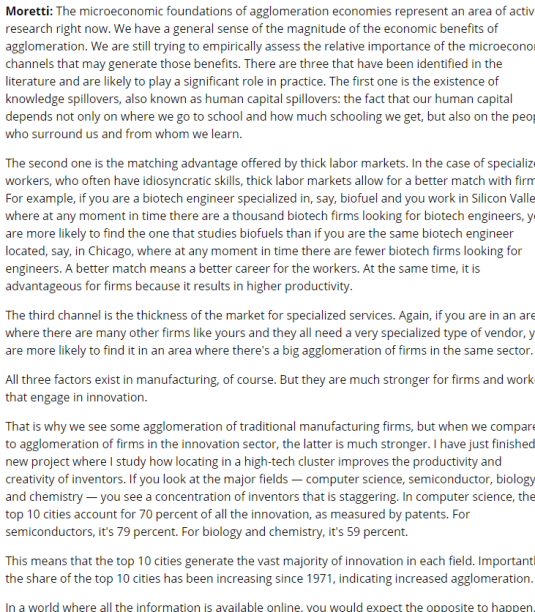
Alfred Marshall wrote on agglomeration economies as long ago as 1890
02 Jun 2020 Leave a comment
in Alfred Marshall, economics of education, history of economic thought, human capital, industrial organisation, labour economics, labour supply, urban economics
From
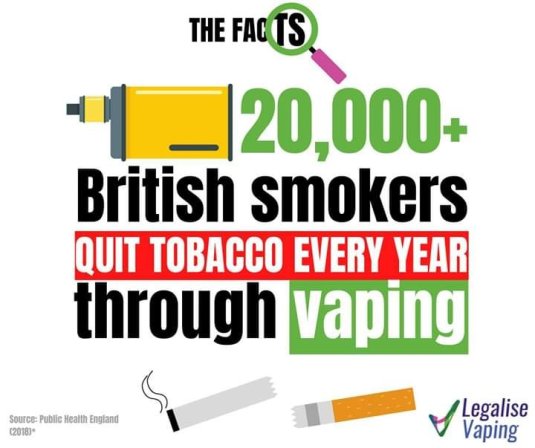
Lost on @WHO @Greens @NZGreens nanny state
02 Jun 2020 Leave a comment
in economics of regulation, health economics, politics - Australia, politics - New Zealand, politics - USA Tags: economics of smoking, nanny state
Der Bismarck: Doomed to Fail? – WW2 Biography special
02 Jun 2020 Leave a comment
in defence economics, war and peace Tags: World War II
If We Want Better Policing, Eliminate Qualified Immunity
02 Jun 2020 Leave a comment

Yesterday’s column focused on how police unions protect the bad apples who misbehave and therefore cause some people to resent law enforcement, especially in the minority community.
Curtailing the role of those unions would be an important step to create better bonds between the police and the citizenry.
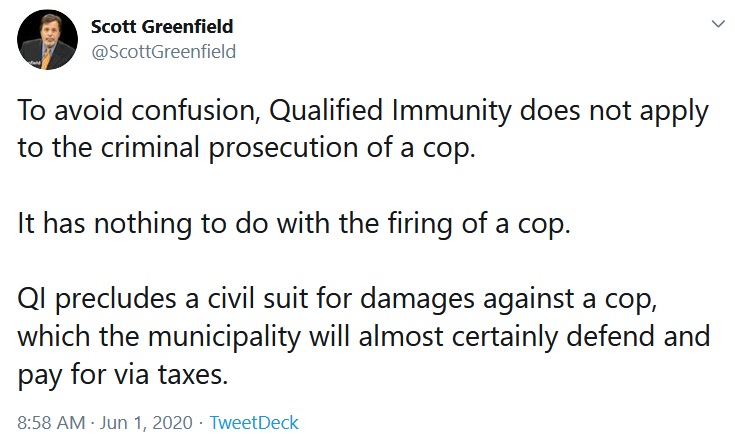
Today’s column will explain the need to repeal or substantially curtail the doctrine of “qualified immunity,” which was created by courts to protect cops who trample on people’s rights.
It’s not a complete answer, just as fixing the union problem isn’t a complete answer. But getting rid of the doctrine at least will give citizens the opportunity to bring lawsuits when cops disregard their civil liberties. This tweet is a good summary for those who don’t have time to dig into the topic.
But hopefully you do have time to investigate this issue.
Here are excerpts from four articles about problems with…
View original post 1,000 more words
COVID19 update, June 1, 2020: Sweden’s “road alone” and elderly care; avoiding lockdowns in a new flare-up; not even Stanford immune from cuts and layoffs
02 Jun 2020 Leave a comment

(1) Sweden’s Sonderweg (“special road”, idiomatically, “going its own way”) is the subject of heated debate pro and con.
At first sight, per capita mortality is an order of magnitude higher than in adjacent countries with similar ethnic profile, climate, and sociology. (Sweden does, however, have a higher percentage of 1st-generation immigrants than Norway, Denmark, and Finland — see below.)
At second sight, however, it turned out that Swedish morbidity and especially mortality is disproportionately concentrated in two populations: elderly in care homes (over 70%) and 1st-generation immigrants. Mortality among native Swedes from young to independent elderly, is actually not that elevated compared to the neighbors.
On the gripping hand, while the Swedes may have avoided the economic ruination of a full lockdown and may be closer to herd immunity now should a second wave arrive, there are costs to this epidemic for everyone (the travel…
View original post 1,316 more words
Fall of Saigon
02 Jun 2020 Leave a comment

WESTERN OUTSKIRTS OF SAIGON
“WHAT IS THIS?” Nguyen Sinh Tuan said, raising his Leica M3 camera and focusing on Nguyen Duc Cui as he sat on the ground, massaging the leather of the brown oxford shoes that he had carried in his pack since the day he had made the blood-bound promise to his dying friend.
“I thought you had no film,” Cui said, smiling as Tuan released the shutter.
“I had no more film for photographs of darkness,” the photographer said. “They wanted pictures of that battle, and all that my lens could see was blackness and streaks of light. I had no film for that. However, I do have this roll of film to photograph today, Liberation Day!”
“It has not yet ended,” Cui said. “We still have ARVN entrenched here at Hoc Mon.”
“In a few hours,” Tuan said and snapped another photograph, “their President Minh will…
View original post 1,580 more words
When to Rob a Bank, with Freakonomics’ Stephen J. Dubner; a how to spot corporate fraud too
02 Jun 2020 Leave a comment
in economics of crime, labour economics, law and economics, occupational choice Tags: crime and punishment, criminal deterrence, law and order
Are equity markets underestimating climate risks?
02 Jun 2020 Leave a comment
The analysis would have a bit more credibility if it included an announcement that the staff pension fund was shorting the market, the entire hundred percent of their retirement savings was back in their judgement
IMF in Global Financial Stability Report (Apr-2020) has a chapter on equity markets underestimating climate change risks:
The projected increase in the frequency and severity of disasters due to climate change is a potential threat to financial stability. Equity markets are a key segment of the global financial system, provide a data-rich environment, and are sensitive to long-term risks, making them fertile ground for investigating how projected future physical risk affects financial markets and institutions.
Looking back over the past 50 years shows a generally modest impact of large disasters on equity markets, bank stocks, and non–life insurance stocks, although country characteristics matter. Higher insurance penetration and greater sovereign financial strength have helped dampen the adverse effects of large disasters on equity markets and financial institutions.
While projections of climatic variables and their economic impact are subject to a high degree of uncertainty, aggregate equity valuations as of 2019 do…
View original post 288 more words
Aleardo Zaghellini
02 Jun 2020 2 Comments
Equality Act Was unusual in that it wrote down in detail all the single sex exceptions. Laws written in earlier times just took it as read that males couldn’t get into female spaces especially for girls

Aleardo Zanghellini is a Professor of Law and Social Theory at Reading University. He recently published an article in the Sage Open Journal on Philosophical Problems With the Gender-Critical Feminist Argument Against Trans Inclusion.
He does not define what he means by “trans inclusion”. But over the course of the article it becomes clear he does not mean general inclusion in employment, housing, healthcare, or in public life. Specifically he means inclusion of people who identify as trans in single sex services provided for members of the opposite sex: ““[t]oilets, changing rooms, girls’ youth organisations, hostels, and prisons” and so on.
The article is largely an extended diatribe targeting the public philosophy of Professor Kathleen Stock. Zanghelli also criticises ‘gender critical’ thinkers in general for publishing primarily on sites such as The Conversation and Medium. These platforms he says “offer us both the opportunity and the temptation to…
View original post 660 more words


Recent Comments