
Evolutionary Psychology: An Introduction – Dr Diana Fleischman
19 May 2020 Leave a comment
in economics of education, gender Tags: evolutionary psychology
Why build Colossus?
19 May 2020 Leave a comment
in defence economics, war and peace Tags: World War II
Pandemic funerals: inside a mortuary during coronavirus
18 May 2020 Leave a comment
in health economics Tags: economics of pandemics
Profiting From Power: Subsidised Renewable Energy Nothing More Than State Sponsored Theft
18 May 2020 Leave a comment

The real delight of Michael Moore’s Planet of the Humans is watching the climate cult squirm, as those on the left sink the boots in. Of course, those who have been pointing out that heavily subsidised and hopelessly unreliable wind and solar offer no solution to our purported planetary perils are relishing the opportunity to sink the boots in, too.
As we have been reporting for a couple weeks now, Michael Moore’s withering attack on the power and money behind the renewable energy scam (see above) has incensed weather-worriers, as well as those who profit from the greatest economic and environmental fraud of all time.
The film – produced by Moore and made by Jeff Gibbs – has been uploaded to YouTube to allow all and sundry to get the message: renewable energy is the greatest economic and environmental fraud of all time. STT first covered it here: Blood &…
View original post 2,035 more words
#COVID19 @jeremycorbyn @uklabour
18 May 2020 Leave a comment
in Marxist economics, Public Choice Tags: British politics

Male/female disparity in starting pay
18 May 2020 Leave a comment

From Becker E, Lindsay CM. Male/female disparity in starting pay. Southern Economic Journal. 1995;61(3):628
The Medieval Siege
18 May 2020 Leave a comment


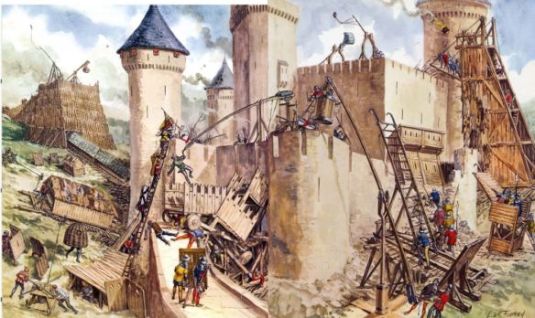
In ancient times, cities often had strong walls around them, and warfare against these cities had always involved the basic tasks of breaking the walls, going over or under the walls, or starving the defenders into surrender. In the Middle Ages, Europe’s decentralized political structure put a new twist on the siege by planting heavily fortified castles all over the landscape. Constantinople’s thick city walls were similar to the fortresses of Roman, Greek, and more ancient times. Northern Europe, on the other hand, had several hundred small fortresses that were designed to hold off disproportionately larger attackers. In order to capture a region, an invader would need to besiege more than one fortress.
After the period of the First Crusade, knights returned with much grander ideas of defensive fortification. They had seen Byzantine fortress designs and had participated in attacks on Antioch, Acre, Jerusalem, and Tyre. Crusaders had built their…
View original post 4,313 more words
Robert Barro on the fiscal theory of inflation
18 May 2020 Leave a comment
in budget deficits, business cycles, econometerics, economic history, financial economics, fiscal policy, inflation targeting, macroeconomics, monetarism, monetary economics Tags: monetary policy, new classical macroeconomics

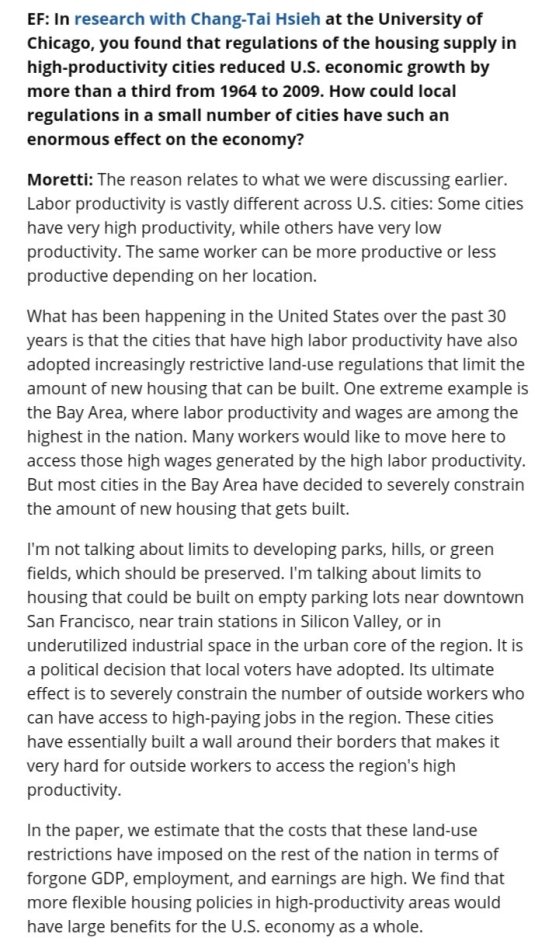
The staggering cost of NIMBYISM
18 May 2020 Leave a comment
in applied price theory, applied welfare economics, economic growth, economic history, economics of regulation, human capital, income redistribution, labour economics, labour supply, law and economics, macroeconomics, politics - USA, property rights, Public Choice, public economics, rentseeking, urban economics Tags: land supply, zoning
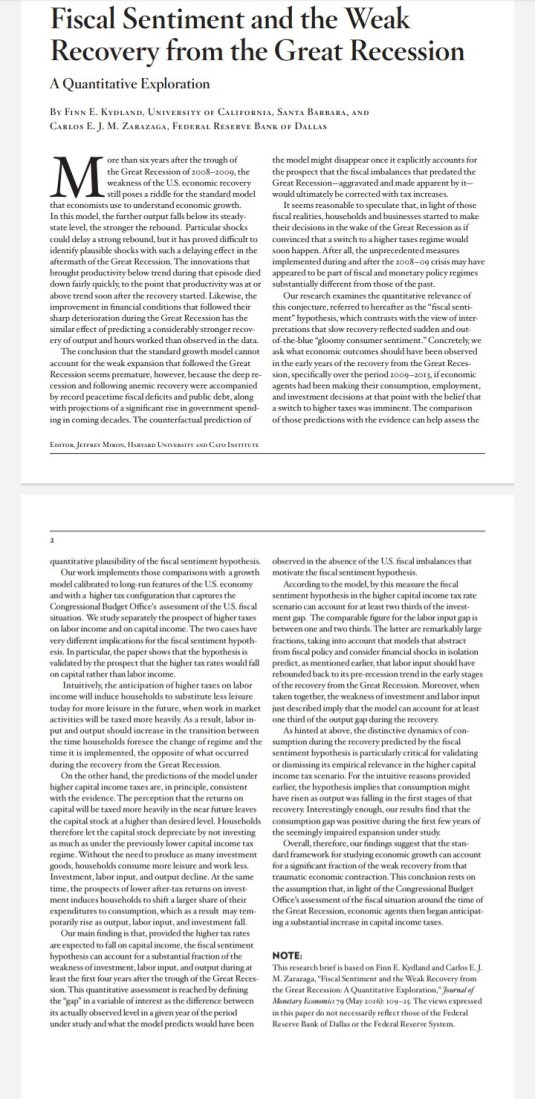
Will taxes stall the #COVID19 recovery?
18 May 2020 Leave a comment
in applied price theory, budget deficits, business cycles, econometerics, economic growth, economic history, fiscal policy, global financial crisis (GFC), great recession, labour economics, labour supply, macroeconomics, Public Choice, public economics Tags: real business cycle theory, taxation and investment
Gordon Tullock explains the Korean economic miricle
18 May 2020 Leave a comment
in comparative institutional analysis, constitutional political economy, defence economics, development economics, economic history, economics of bureaucracy, Gordon Tullock, growth miracles, Public Choice, public economics, rentseeking Tags: South Korea


Doing Bad by Doing Good by Chris Coyne
18 May 2020 Leave a comment
in applied price theory, applied welfare economics, Austrian economics, comparative institutional analysis, constitutional political economy, economics of bureaucracy, economics of information, economics of natural disasters, economics of regulation, entrepreneurship, F.A. Hayek, health economics, history of economic thought, industrial organisation, international economics, labour economics, law and economics, property rights, Public Choice, public economics Tags: offsetting behaviour, The fatal conceit, unintended consequences


Recent Comments