Anarchy and the Efficient Law, Part 1 | David Friedman
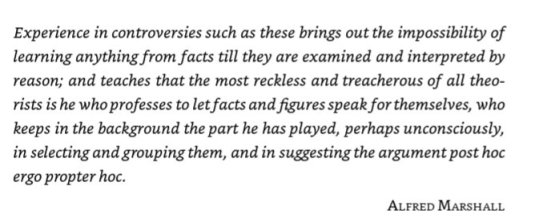
28 Apr 2020 Leave a comment
in comparative institutional analysis, constitutional political economy, David Friedman, economic history, economics of crime, law and economics, property rights, Public Choice Tags: economics of anarchy
Review of “Alexander Hamilton” by Ron Chernow
28 Apr 2020 Leave a comment


Alexander Hamilton
by Ron Chernow
818 pages
The Penguin Press
Published: April 2004
Ron Chernow’s “Alexander Hamilton” was published in 2004 and remains one of the most popular biographies of all time. It was a New York Times best-seller and served as the inspiration behind Lin-Manuel Miranda’s award-winning musical “Hamilton.” Chernow is the author of the Pulitzer Prize-winning “Washington: A Life.” His most recent biography “Grant” was published in 2017.
Few books come with higher expectations than this biography of America’s most brash, self-assured and hyperkinetic Founding Father. But not only does Chernow’s narrative of this intriguing Revolutionary-era figure surpass lofty expectations, it may well set the standard for the nearly perfect biography.
Meticulously researched and brilliantly composed, this biography contains 731 pages of text and covers Hamilton’s entire life: from his tantalizingly chaotic early years to his untimely death at the age of…
View original post 449 more words
Review of “Walt Disney: The Triumph of the American Imagination” by Neal Gabler
28 Apr 2020 Leave a comment

Walt Disney: The Triumph of the American Imagination
by Neal Gabler
851 pages
Vintage (Random House)
Published: October 2006
“Walt Disney: The Triumph of the American Imagination” by Neal Gabler was published in 2006 and won the Los Angeles Times Book Prize for Biography. Gabler is an author, journalist and former film critic whose previous books include a biography of Barbra Streisand and a behind-the-scenes look at Hollywood. He is currently working on a biography of Edward Kennedy.
This biography of Walt Disney is one of two recent, compelling works reviewing the life of a man whose lasting impression on American culture is indisputable (the other being Michael Barrier’s 2007 “The Animated Man.”) Biography aficionados will quickly discover that Gabler’s hefty book – with 633 pages of text and about 200 pages of notes and bibliography – provides much to enjoy.
To suggest this book is…
View original post 309 more words
Now forgotten #climateemergency #globalwarming @GreenpeaceAP @Greens @NZGreens
28 Apr 2020 Leave a comment
in energy economics, environmental economics, global warming Tags: climate alarmists, pessimism bias

What happens if your local WINZ stops monitoring job search?
28 Apr 2020 Leave a comment
in economics of bureaucracy, economics of crime, labour economics, labour supply, law and economics, unemployment, welfare reform

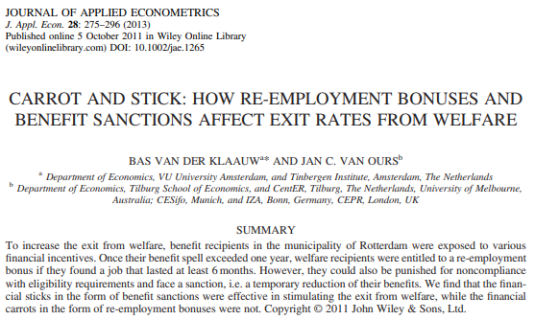
Do benefit sanctions increase reemployment rates?
28 Apr 2020 Leave a comment
in job search and matching, labour economics, labour supply, unemployment, welfare reform
Golden fetters and paper chains
28 Apr 2020 Leave a comment

In various posts over the years I’ve mentioned how countries finally got out of the Great Depression. Generally that involved breaking the link between their respective currencies and gold and then being able to adopt more-expansionary macroeconomic policies. That was relatively easy to do as a purely technical matter, but it took a long time for countries to get there (a handful of significant countries not until 1936). I’ve worried aloud that given how low the starting point for nominal interest rates was going to be that in the next serious downturn the refusal of central banks – and it is simply a refusal – to take policy rates deeply negative would end up as much the same sort of fetter as gold once was.
The definitive book-length of this angle on the Great Depression is Berkeley professor Barry Eichengreen’s Golden Fetters. It was published in 1992 – decades…
View original post 2,335 more words


Where Is Kim Jong-un? How Experts Track North Korea’s Leader | NYT News
28 Apr 2020 Leave a comment
in defence economics, war and peace Tags: North Korea
Life of Edward II, King of England and Lord of Ireland. Part III
28 Apr 2020 Leave a comment

Ordinances of 1311
Following his return, Gaveston’s relationship with the major barons became increasingly difficult. He was considered arrogant, and he took to referring to the earls by offensive names, including calling one of their more powerful members the “dog of Warwick”. Henry, 3rd Earl of Leicester and Lancaster and Gaveston’s enemies refused to attend parliament in 1310 because Gaveston would be present. Edward was facing increasing financial problems, owing £22,000 to his Frescobaldi Italian bankers, and facing protests about how he was using his right of prises to acquire supplies for the war in Scotland. His attempts to raise an army for Scotland collapsed and the earls suspended the collection of the new taxes.
The king and parliament met again in February 1310, and the proposed discussions of Scottish policy were replaced by debate of domestic problems. Edward was petitioned to abandon Gaveston as his counsellor and instead adopt…
View original post 634 more words


Recent Comments