
#COVID19 seen and unseen
27 Apr 2020 1 Comment
in applied welfare economics, health economics, politics - Australia, politics - New Zealand, politics - USA Tags: economics of pandemics, offsetting behaviour, pessimism bias, political correctness, regressive left, The fatal conceit, unintended consequences

Dads Army – #14 – S03E02 – Battle School
27 Apr 2020 Leave a comment

The platoon is selected to attend a weekend camp run by a tough Spanish captain.
Dad’s Army is a BBC sitcom about the British militia called the Home Guard during the Second World War. It was written by Jimmy Perry and David Croft, and broadcast on the BBC from 1968 to 1977. The sitcom ran for nine series and 80 episodes in total; there was also a radio version based on the television scripts, a feature film and a stage show. The series regularly gained audiences of 18 million viewers, and is still repeated worldwide.
The Home Guard consisted of local volunteers otherwise ineligible for military service, either because of age (hence the title Dad’s Army) or by being in professions exempt from conscription. Dad’s Army deals almost exclusively with men over military age, and featured older British actors, including Arthur Lowe, John Le Mesurier, Arnold Ridley…
View original post 124 more words
Equality Act 2010 – Schedule 3, Paragraph 27 (6)
27 Apr 2020 Leave a comment
in discrimination, economics of crime, gender, law and economics

Andrew Geddis and Claudia Geiringer: Is New Zealand’s COVID-19 lockdown lawful?
27 Apr 2020 Leave a comment
It is ironic that the lockdown is most likely unlawful. The Prime Minister has an Henry VIII clause style power to modify any law to assist in fighting the pandemic. She could have easily added to the powers of the Director General of Public Health to quarantining everyone and place except those he chose not to.


 The New Zealand Government’s “go hard, go early” response to the COVID-19 pandemic has garnered widespread praise – both in New Zealand and internationally. On March 25, less than four weeks after New Zealand’s first COVID case was diagnosed, the country was put into a state of “Level 4 Lockdown”, reducing social and economic life to a bare minimum. Everyone was instructed to stay at home, except for limited “essential” purposes (in short, supermarket shopping, essential medical treatment, and brief localised exercise such as a walk or a run). All businesses were closed, except for those providing “essential” services. Physical proximity to those not in a person’s residential “bubble” was prohibited.
These measures undoubtedly have been effective, with the country now on a path to eliminate the virus. For that reason, it is perhaps not surprising that discussion of their legal status has been muted. Nevertheless, questions surrounding…
View original post 1,849 more words
The ‘Unreliables’: Europe’s Power Grid Under Threat from Chaotic Wind & Solar
27 Apr 2020 Leave a comment

 Wind & solar ‘transition’ one giant snow job.
Germany may have led the charge, but other European states merrily followed its suicidal attempt to run on sunshine and breezes. The results have been an unmitigated disaster.
Renewable energy zealots keep telling us that wind and solar are free and getting cheaper all the time. Germany puts paid to that lie: Renewable Energy Transition: Wind & Solar Obsession Leaves Germans Suffering the World’s Highest Power Prices
And, with a looming capacity crunch, Germans will be lucky to have power at all, at any price.
Adding insult to injury, German power prices continue to surge (again) and Germans can expect more blackouts and load shedding as their grid groans under the burden of its suicidal attempt to run on chaotically intermittent wind and solar.
And the symptoms of Germany’s obsession with wind and solar are clearly contagious, as the disease spreads and leaves…
View original post 2,332 more words
#COVID19
27 Apr 2020 Leave a comment
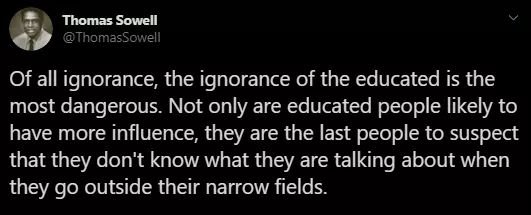
in health economics, Thomas Sowell Tags: economics of pandemics, pretence to knowledge
The data is in — stop the panic and end the total isolation
27 Apr 2020 Leave a comment

From thehill.com
The tragedy of the COVID-19 pandemic appears to be entering the containment phase. Tens of thousands of Americans have died, and Americans are now desperate for sensible policymakers who have the courage to ignore the panic and rely on facts. Leaders must examine accumulated data to see what has actually happened, rather than keep emphasizing hypothetical projections; combine that empirical evidence with fundamental principles of biology established for decades; and then thoughtfully restore the country to function.
Five key facts are being ignored by those calling for continuing the near-total lockdown.
Fact 1: The overwhelming majority of people do not have any significant risk of dying from COVID-19.
The recent Stanford University antibody study now estimates that the fatality rate if infected is likely 0.1 to 0.2 percent, a risk far lower than previous World Health Organization estimates that were 20 to 30 times higher and that motivated isolation policies.
View original post 75 more words
Friedman (1966) channels Alchian and Allen on how inflation might return
27 Apr 2020 Leave a comment
in history of economic thought, macroeconomics, Milton Friedman, monetarism, monetary economics
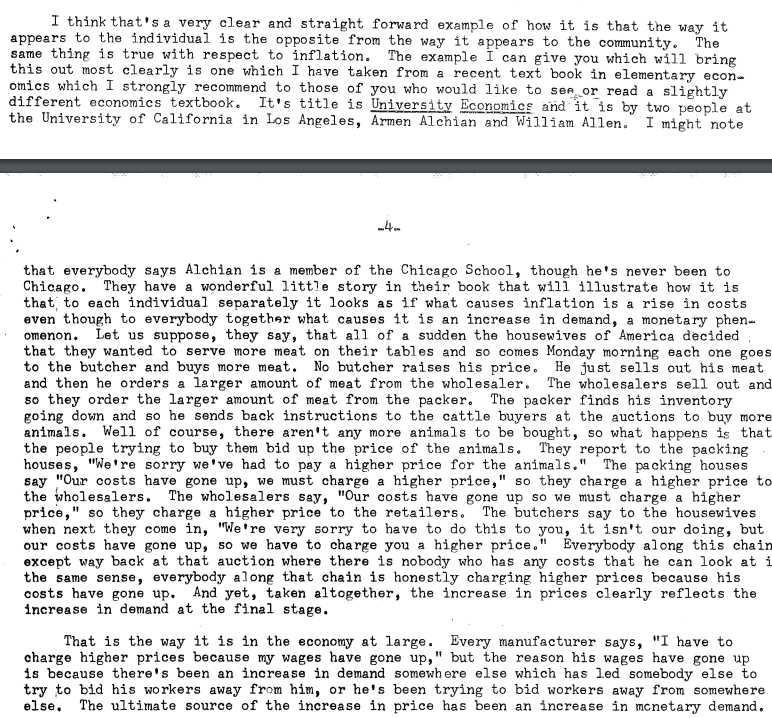
From https://www.richmondfed.us/-/media/richmondfedorg/publications/research/econ_focus/2005/summer/pdf/friedman_inflation_speech.pdf via https://www.richmondfed.org/publications/research/econ_focus/2005/summer/~/media/06AE15D96C75465B97C4E981664E31A2.ashx
#COVID19 which is Lombardy? Which is Wellington, NZ?
27 Apr 2020 Leave a comment
in health economics, politics - New Zealand


The Vice Fund and the wages of sin under #COVID19
27 Apr 2020 Leave a comment
in defence economics, economics of regulation, financial economics, health economics

From https://www.bloomberg.com/quote/VICEX:US
USA Mutuals Vitium Global Fund seeks long-term growth of capital by investing in equity securities of companies that derive a significant portion of their revenues from a group of vice industries that includes the alcoholic beverages, defense/aerospace, gaming and tobacco industries. The Fund will concentrate at least 25% of its net assets in this group of four vice industries.
Even in a pandemic, media myths play on
27 Apr 2020 Leave a comment

The U.S. news media have scarcely distinguished themselves in reporting the coronavirus pandemic that has killed more than 54,000 Americans since spreading from Wuhan, China, early this year. Criticism abounds about the substance and tone of the media’s reporting.
Not surprisingly, a Gallup poll late last month ranked the media last among American leaders and institutions in their response to the coronavirus.
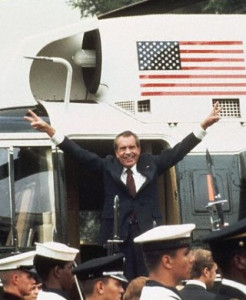 Watergate myth will never die
Even amid a pandemic, peddling media myths — those prominent stories about and/or by the media that are widely believed and often retold but which, under scrutiny, dissolve as apocryphal — has proven irresistible to some news outlets.
Familiar media myths about the presumptive “Cronkite Moment” of 1968, the exaggerated influence of the “Napalm Girl” photograph of 1972, and the hero-journalist trope of the Watergate scandal all have circulated in recent weeks.
Their appearance signals not only…
View original post 1,224 more words
Dividing the Rulers: How Majority Cycling Saves Democracy
27 Apr 2020 Leave a comment

The following is a guest planting by Dr. Yuhui Li. I suggested Dr. Li draft something for this blog about his recently published book. (Note: I was the Ph.D. committee chair for Huey at UC Davis.)
You can buy the book by clicking here, and taking advantage of a discount! You can get 30% off by entering the code, UMCYCLING (for a limited time).

I’m grateful that Matthew offers to post this introduction of my book Dividing the Rulers: How Majority Cycling Saves Democracy. I hope it may interest some fellow political scientists.
The initial thought about the project originated from a debate I had years ago on Chinese social media regarding the choice of political systems. It appeared to me that many people were skeptical about the idea of democracy out of the fear that the majority, at least in theory, could be as tyrannical as individual dictators…
View original post 637 more words
William R. Allen on economic education
27 Apr 2020 Leave a comment
in applied price theory, economics of education, history of economic thought


Recent Comments