

Celebrating humanity's flourishing through the spread of capitalism and the rule of law
17 Apr 2020 Leave a comment
The coronavirus pandemic is, of course, first and foremost a social crisis. It is testing the limits of the NHS, bringing out the best in our doctors, nurses and carers, and many others on whom we all rely. But it is also a huge challenge for policymakers who are trying to protect businesses, jobs and incomes, so that the economy can quickly reboot once the lockdown is lifted. And while the saving of lives is rightly the priority, the extent and duration of the economic disruption could also have significant impacts on our health.
Fortunately, history does provide a few pointers. Perhaps the least surprising conclusion is that vicious diseases cannot be allowed to run unchecked. One particularly grim study of the longer-term economic consequences of 15 pandemics, all the way back to the Black Death in the 14th century, found that the fallout persisted for as long as 40…
View original post 513 more words
17 Apr 2020 Leave a comment
in applied welfare economics, comparative institutional analysis, economics of information, health economics Tags: economics of pandemics
17 Apr 2020 Leave a comment

With orbit periods ranging from only 2-12 days, this must be one of the most compact multi-planet systems found so far.
Almost visible to the naked eye in the Draco constellation, the star HD 158259 has been observed for the last seven years by astronomers using the SOPHIE spectrograph, reports Phys.org.
This instrument, installed at the Haute-Provence Observatory in the South of France, acquired 300 measurements of the star.
The analysis of the data which was done by an international team led by researchers from the University of Geneva (UNIGE), has resulted in the discovery that HD 158259 has six planetary companions: a “super-Earth” and five “mini-Neptunes.”
These planets display an exceptionally regular spacing, which hints at how the system may have formed.
View original post 566 more words
17 Apr 2020 Leave a comment
in business cycles, development economics, discrimination, econometerics, economic growth, economics of love and marriage, fiscal policy, gender, human capital, labour economics, labour supply, macroeconomics, occupational choice, poverty and inequality Tags: female labour force participation, female labour supply, gender wage gap, marital division of labour, marital labour supply
17 Apr 2020 Leave a comment
in energy economics, environmental economics, global warming Tags: climate alarmists
17 Apr 2020 Leave a comment
in applied price theory, behavioural economics, comparative institutional analysis, defence economics, economics of crime, economics of education, economics of information, labour economics, law and economics, property rights, Public Choice Tags: game theory, Thomas Schelling
17 Apr 2020 Leave a comment
in defence economics Tags: Cold War
17 Apr 2020 Leave a comment
by Gavin Wright (Stanford University)
This research was presented as the Tawney Lecture at the EHS Annual Conference in 2019.
It will also appear in the Economic History Review later this year.
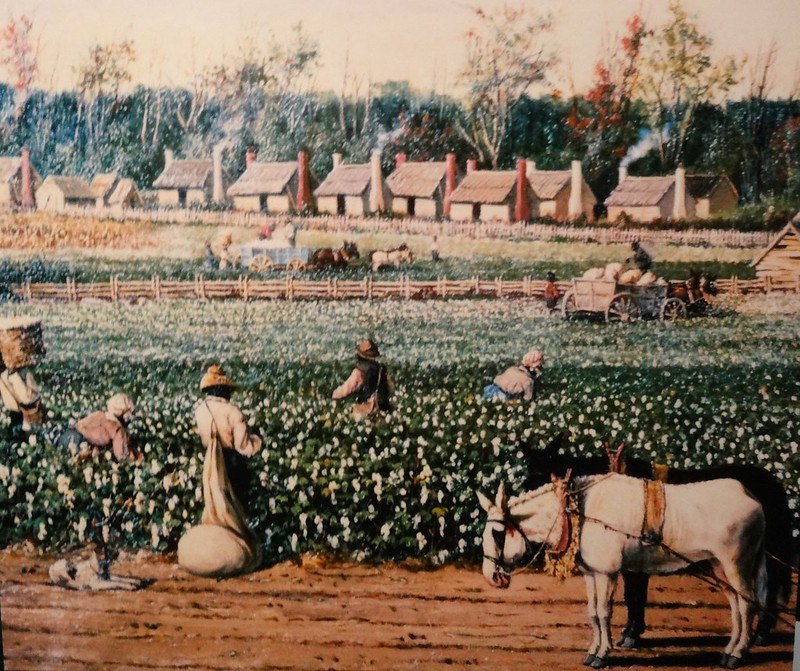 Coloured lithograph of slaves picking cotton. Fort Sumter Museum Charleston. Available at Flickr.
My Tawney lecture reassessed the relationship between slavery and industrial capitalism in both Britain and the United States. The thesis expounded by Eric Williams held that slavery and the slave trade were vital for the expansion of British industry and commerce during the 18th century but were no longer needed by the 19th. My lecture confirmed both parts of the Williams thesis: the 18th-century Atlantic economy was dominated by sugar, which required slave labor; but after 1815, British manufactured goods found diverse new international markets that did not need captive colonial buyers, naval protection, or slavery. Long-distance trade became…
View original post 727 more words
17 Apr 2020 Leave a comment
by Jane Whittle (University of Exeter) and Mark Hailwood (University of Bristol)
This article is published by The Economic History Review, and it is available on the EHS website.
Here are ten reasons to know more about women’s work and read our article on ‘The gender division of labour in early modern England’. We have collected evidence about work tasks in order to quantify the differences between women’s and men’s work in the period from 1500-1700. This research allows us to dispel some common misconceptions.
View original post 669 more words
17 Apr 2020 Leave a comment
in Alfred Marshall, applied price theory, comparative institutional analysis, economics of bureaucracy, history of economic thought, industrial organisation, law and economics, managerial economics, market efficiency, organisational economics, personnel economics, privatisation, property rights, Public Choice, public economics, survivor principle Tags: offsetting behaviour, state ownership, The fatal conceit, unintended consequences

17 Apr 2020 Leave a comment
by Victoria Baranov (University of Melbourne), Ralph De Haas (EBRD, CEPR, and Tilburg University) and Pauline Grosjean (University of New South Wales). More information on the authors below.
The content of this article was originally published on VOX and has been published here with the authors’ consent.
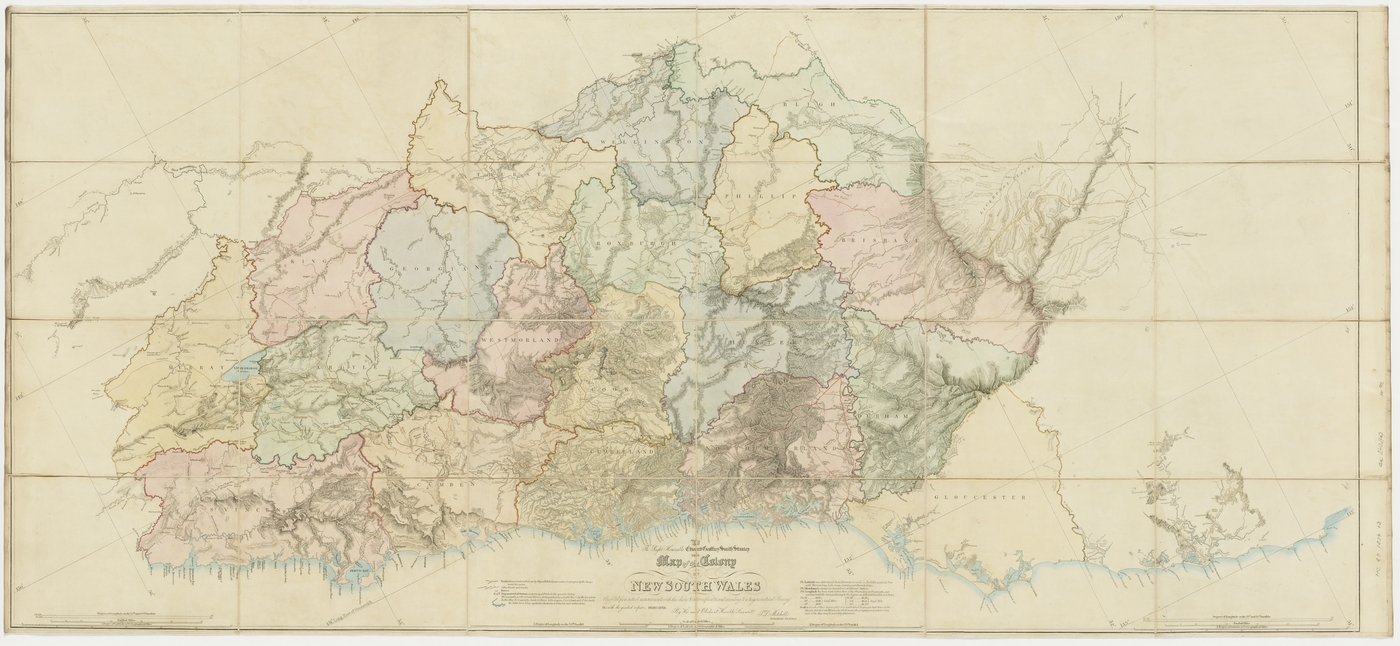 Mitchell, T 1834, To the Right Honorable Edward Geoffrey Smith Stanley this map of the Colony of New South Wales, ca. 1:540 000, National Library of Australia. Available here.
Why are men three times as likely than women to die from suicide? And why do many unemployed men refuse to apply for jobs that are typically done by women? This column argues that a better understanding of masculinity norms – the rules and standards that guide and constrain men’s behavior in society – can help answer important questions like these. We present evidence from Australia on how historical circumstances have instilled strong…
View original post 1,905 more words
16 Apr 2020 Leave a comment
UK age discrimination laws prohibit age-based policies, including mandatory retirement ages, unless the treatment supports a ‘legitimate aim’ and is a ‘proportionate means’ of achieving that aim. Rather than risk facing legal action, most employers have abandoned mandatory retirement ages and sought other ways of planning the departure of staff. However, Oxford University continue to operate a mandatory retirement age for its academics. The has led to two Employment Tribunal (‘ET’) judgments: Pitcher v University of Oxford, which held that the policy was proportionate and therefore lawful age-based treatment; and Ewart v University of Oxford, which held that the policy was unjustified and therefore unlawful age discrimination. At the time the applicants in these cases were forced to retire, the mandatory retirement age was 67 but since 2017 the mandatory retirement age has increased to 68. Oxford University have indicated they will appeal the Ewart decision, and, in…
View original post 2,698 more words
16 Apr 2020 Leave a comment

 The Health Protection (Coronavirus, Restrictions) (England) Regulations 2020 and the counterpart regulations in Wales, Northern Ireland and Scotland, impose the most drastic restrictions on liberty ever seen in the United Kingdom. On 16 April 2020 they reach their first review point and it is a clear that they will be continued, probably initially for a further period of three weeks and thereafter quite likely for a much longer period either in their current form or in modified form.
There can be no doubt that the core measures imposed remain justified. It is therefore imperative, especially given the length of time that they are likely to govern life in this country, that the measures meet certain minimum standards. It is helpful to identify three such standards. First, it is vital that the measures are clear so that people know what the law requires of them and so that enforcement…
View original post 2,496 more words
Celebrating humanity's flourishing through the spread of capitalism and the rule of law
Celebrating humanity's flourishing through the spread of capitalism and the rule of law
Celebrating humanity's flourishing through the spread of capitalism and the rule of law
Celebrating humanity's flourishing through the spread of capitalism and the rule of law
Celebrating humanity's flourishing through the spread of capitalism and the rule of law
Celebrating humanity's flourishing through the spread of capitalism and the rule of law
Celebrating humanity's flourishing through the spread of capitalism and the rule of law
Celebrating humanity's flourishing through the spread of capitalism and the rule of law
A History of the Alt-Right
Econ Prof at George Mason University, Economic Historian, Québécois
Celebrating humanity's flourishing through the spread of capitalism and the rule of law
Scholarly commentary on law, economics, and more
Beatrice Cherrier's blog
Celebrating humanity's flourishing through the spread of capitalism and the rule of law
Celebrating humanity's flourishing through the spread of capitalism and the rule of law
Celebrating humanity's flourishing through the spread of capitalism and the rule of law
Why Evolution is True is a blog written by Jerry Coyne, centered on evolution and biology but also dealing with diverse topics like politics, culture, and cats.
Celebrating humanity's flourishing through the spread of capitalism and the rule of law
A rural perspective with a blue tint by Ele Ludemann
DPF's Kiwiblog - Fomenting Happy Mischief since 2003
Celebrating humanity's flourishing through the spread of capitalism and the rule of law
The world's most viewed site on global warming and climate change
Tim Harding's writings on rationality, informal logic and skepticism
A window into Doc Freiberger's library
Let's examine hard decisions!
Commentary on monetary policy in the spirit of R. G. Hawtrey
Thoughts on public policy and the media
Celebrating humanity's flourishing through the spread of capitalism and the rule of law
Politics and the economy
A blog (primarily) on Canadian and Commonwealth political history and institutions
Reading between the lines, and underneath the hype.
Economics, and such stuff as dreams are made on
"The British constitution has always been puzzling, and always will be." --Queen Elizabeth II
Celebrating humanity's flourishing through the spread of capitalism and the rule of law
Celebrating humanity's flourishing through the spread of capitalism and the rule of law
WORLD WAR II, MUSIC, HISTORY, HOLOCAUST
Undisciplined scholar, recovering academic
Celebrating humanity's flourishing through the spread of capitalism and the rule of law
Res ipsa loquitur - The thing itself speaks
In Hume’s spirit, I will attempt to serve as an ambassador from my world of economics, and help in “finding topics of conversation fit for the entertainment of rational creatures.”
Researching the House of Commons, 1832-1868
Reflections on books and art
Posts on the History of Law, Crime, and Justice
Celebrating humanity's flourishing through the spread of capitalism and the rule of law
Exploring the Monarchs of Europe
Cutting edge science you can dice with




Recent Comments