
Will the pandemic trigger John Cochrane’s fiscal theory of inflation?
14 Apr 2020 Leave a comment
in budget deficits, economic history, financial economics, macroeconomics, monetary economics, public economics Tags: economics of pandemics, monetary policy
How Harsh was the Treaty of Versailles Really?
14 Apr 2020 2 Comments
in defence economics, economic history, international economics, International law, war and peace

6 Advanced Sci-fi Civilisations Too Stupid To Really Exist (Part 2)
14 Apr 2020 Leave a comment
in movies, television

10 Cool Facts About The Lewis & Clark Expedition
14 Apr 2020 Leave a comment
in economic history Tags: Age of exploration
Hydroxychloroquine and COVID-19: What We Know Right Now | @SciShow News
14 Apr 2020 Leave a comment
in health economics Tags: economics of pandemics
McKitrick: What the Hockey Stick Debate is About?
13 Apr 2020 Leave a comment

Ross McKitrick has an engaging presentation of the Hockey Stick Debate presented on April 4, 2005. Here is the abstract:
The hockey stick debate is about two things. At a technical level it concerns a well-known study that characterized the state of the Earth’s climate over the past thousand years and seemed to prove a recent and unprecedented global warming. I will explain how the study got the results it did, examine some key flaws in the methodology and explain why the conclusions are unsupported by the data. At the political level the emerging debate is about whether the enormous international trust that has been placed in the IPCC was betrayed. The hockey stick story reveals that the IPCC allowed a deeply flawed study to dominate the Third Assessment Report, which suggests the possibility of bias in the Report-writing process. In view of the massive global influence of IPCC Reports…
View original post 43 more words
Ayaan Hirsi Ali: The Market for Victimhood
13 Apr 2020 Leave a comment
in development economics, discrimination, economic history, economics of religion, gender, liberalism Tags: free speech, Freedom of religion, political correctness, regressive left
the Great Surge (2015)
13 Apr 2020 Leave a comment

The Great Surge, Steven Radelet, 2015

The proportion of countries living in extreme poverty has fallen from 42% in 1993 to juts 17% in 2011. The opening of China accounts for a large share of the change, but the fall also affects dozens of countries in every region of the world (sample of 109 developing countries with population greater than 1 million is considered)
People in developing countries have incomes today that are nearly double those of their parents 2 decades ago.
People born in developing countries live 1/3 longer than they did 20 years ago.
In 1980, only half of the girls enrolled and completed primary education. Today 4 out 5 are.
In 1983, 17 countries had democracies. By 2013 the number had tripled to 56.Violence decline sharply. Since 1980, incidence of civil war in developing countries has been cut by half. Battle deaths in war have…
View original post 1,654 more words
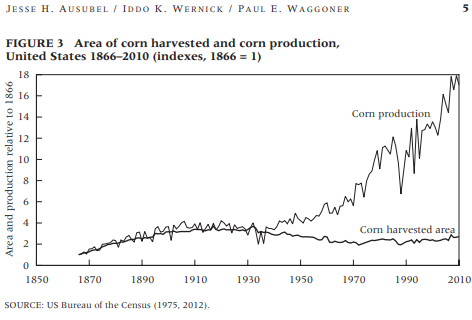
Peak farmland wasn’t predicted by Malthus nor @Greens @NZGreens @oxfam @greenpeaceAU
13 Apr 2020 Leave a comment
in development economics, entrepreneurship, environmentalism




Recent Comments