Temperature matters! Warm and cold chicken!What does the cat like to eat?
08 Apr 2020 Leave a comment
in cats
On the Acquittal of Cardinal Pell
08 Apr 2020 Leave a comment

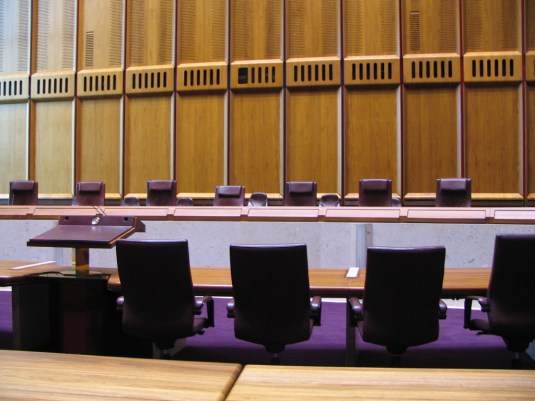
The High Court of Australia, in a unanimous verdict of a 7-member bench, has acquitted Cardinal George Pell of the charges of child sexual abuse for which he has been serving time in prison: see Pell v The Queen[2020] HCA 12 (7 April 2020). He was immediately released.
View original post 841 more words
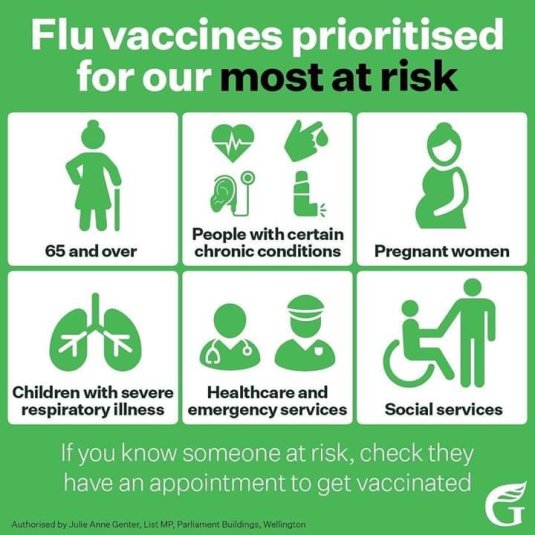
But Australian @Greens want flu vaccines free for everyone now because more free stuff is their only solution to most anything
07 Apr 2020 Leave a comment
in health economics, politics - Australia, politics - New Zealand Tags: economics of pandemics, The fatal conceit, vaccines regressive left
#COVID19
07 Apr 2020 Leave a comment
in health economics Tags: economics of addiction, economics of pandemics

Rationing in WWII (British Homefront)
07 Apr 2020 Leave a comment
in defence economics, war and peace Tags: World War II
The Sewel convention and Brexit
07 Apr 2020 Leave a comment

 In March, the Constitution Unit co-published a new report, Parliament and Brexit, in which some of the UK’s leading academics examine how parliament has managed Brexit to date, and how it might seek to handle the issue in future. Here, Nicola McEwen discusses how the Sewel convention, which regulates the relationship between the UK Parliament and its devolved counterparts, was put under strain by Brexit.
There are four legislatures in the UK, but only one of these is sovereign. The sovereignty of the Westminster parliament remains one of the most important principles of the UK constitution. Each of the devolution statutes made clear that conferral of law-making powers on the devolved institutions ‘does not affect the power of the Parliament of the United Kingdom to make laws’ for Scotland, Northern Ireland and Wales – including in areas of devolved competence. But Westminster’s parliamentary sovereignty is offset by the constitutional convention…
View original post 1,167 more words
Why bans on ‘short selling’ are a bad idea
07 Apr 2020 Leave a comment

It is understandable that people are on the lookout for villains to blame in this time of national crisis – and who better than City ‘fat cats’ who are ‘profiting from the misery of others’? Usually it only takes a moment of serious thought to realise that these attacks are ludicrous. As Tom Bailey explains here, and I discussed here, it is plain daft to criticise investment managers for taking advantage of lower prices to buy shares. But when funds are engaged in ‘short selling’ it may take a little more effort to see the bigger picture.
Short selling is essentially a bet that the price of a financial asset will fall. It traditionally involves the short seller borrowing a parcel of shares or bonds from another investor and then selling them on. The original holder will charge a fee for this, which can be substantial.
At…
View original post 653 more words
#plasticbagfascism leads to garbage bag shortage @EugenieSage Rationed to one bag because recycling bags aren’t used anymore #COVID19
07 Apr 2020 Leave a comment
in economics of regulation, environmental economics, health economics Tags: recycling

Are Anarcho-Capitalists Insane? Medieval Icelandic Living Standards in Comparative Perspective
07 Apr 2020 Leave a comment

Along with Peter Leeson, I have a new working paper. In this paper, we empirically revisit the 1979 seminal paper of David Friedman in the Journal of Legal Studies regarding the law and economics of Iceland between 900 and 1262. The case is important because Iceland constitutes the first example in the literature on the economics of anarchy of how governance is a good that can privately be produced and with competition between providers. For nearly three centuries, Iceland was without a formal state (with a monopoly on violence) even though it was home to nearly one hundred thousands individuals. However, sustained private provision does not mean that the outcomes are superior than under formal governance. We decided to see whether Icelanders enjoyed living standards above the rest of Medieval Europe. The paper is available here on my website and the abstract is below:
Medieval Iceland was governed privately. Other…
View original post 88 more words
THE CHURCHILL FACTOR: HOW ONE MAN MADE HISTORY by Boris Johnson
07 Apr 2020 Leave a comment


(English Prime Minister Winston Churchill, August 27, 1941)
If you are looking for a personal, breezy hagiography of Winston Churchill then Boris Johnson’s THE CHURCHILL FACTOR: HOW ONE MAN MADE HISTORY will be of interest. Johnson’s effort is not a traditional biography of the former occupant of 10 Downing Street, but a manifesto imploring the reader to consider the genius and greatness of Churchill. Johnson is concerned that as time has passed fewer and fewer of the non-World War II generation have forgotten or are not aware of Churchill’s accomplishments as he states at the outset “we are losing those who can remember the sound of his voice, and I worry that we are in danger….of forgetting the scale of what he did.” For the author, World War II would have been lost, if not for Churchill, and he further argues that the resident of Chartwell House and Blenheim Palace…
View original post 1,314 more words


Recent Comments