

2020 oil crisis | IN 60 SECONDS
17 Mar 2020 Leave a comment
in development economics, energy economics, growth miracles, health economics Tags: Oil prices
Lindzen at House of Commons 2012
17 Mar 2020 Leave a comment
in economics of natural disasters, energy economics, environmental economics, global warming Tags: climate alarmists
Lindzen’s Seminar at the House of Commons
17 Mar 2020 Leave a comment

by Judith Curry
Lindzen’s seminar last week that was presented at the House of Commons may be the most effective seminar he has given on Global Warming.
View original post 2,047 more words
How can we use wind power when there’s no wind? @GreenpeaceUK on importing and big batteries
16 Mar 2020 2 Comments
in energy economics, environmental economics, global warming Tags: Big Wind, wind power
What is a regulatory taking?
16 Mar 2020 Leave a comment
in comparative institutional analysis, constitutional political economy, economics of bureaucracy, economics of regulation, income redistribution, law and economics, politics - USA, property rights, Public Choice, public economics, rentseeking Tags: constitutional law, regulatory taking
A Harold for all seasons
16 Mar 2020 Leave a comment

I cracked the spine of my copy of Ben Pimlott’s Harold Wilson (HarperCollins; 1992) in the somewhat incongruous setting of the Villa Magna hotel in Madrid on a lovely sunny day in 1993. A treat in itself, the Pimlott opus also marked, or coincided with at any rate, something of a revival in the former prime minister’s reputation.
Not, in truth, that there was any way but up for Baron Rievaulx. In the years since his 1976 resignation, his name was mud, and not the friendly brown mud of an English autumn but the oozing black swamp mud familiar from films of the Indiana Jones variety. From all sides, the four-time election winner was pelted with dirt. The fact that the various groups of detractors disagreed as to why they despised him in no way lessened the impact of their attacks.
On the left, he was, quite simply, a traitor…
View original post 1,158 more words
What causes an ice age to end?
16 Mar 2020 Leave a comment

 Greenland ice sheet (east coast) [image credit: Hannes Grobe @ Wikipedia]
Of course the other question about the start of an ice age still remains.
New University of Melbourne research has revealed that ice ages over the last million years ended when the tilt angle of the Earth’s axis was approaching higher values, reports Phys.org.
During these times, longer and stronger summers melted the large Northern Hemisphere ice sheets, propelling the Earth’s climate into a warm ‘interglacial’ state, like the one we’ve experienced over the last 11,000 years.
The study by Ph.D. candidate, Petra Bajo, and colleagues also showed that summer energy levels at the time these ‘ice-age terminations’ were triggered controlled how long it took for the ice sheets to collapse, with higher energy levels producing fast collapse.
Researchers are still trying to understand how often these periods happen and how soon we can expect another one.
View original post 235 more words
March 15, 1917: Abdication of Emperor Nicholas II of Russia.
16 Mar 2020 Leave a comment

Nicholas II (May 18, 1868 – July 17, 1918), known in the Russian Orthodox Church as Saint Nicholas the Passion-Bearer, was the last Emperor of Russia, ruling from November 1, 1894 until his forced abdication on March 15, 1917. His reign saw the fall of the Russian Empire from one of the foremost great powers of the world to economic and military collapse.
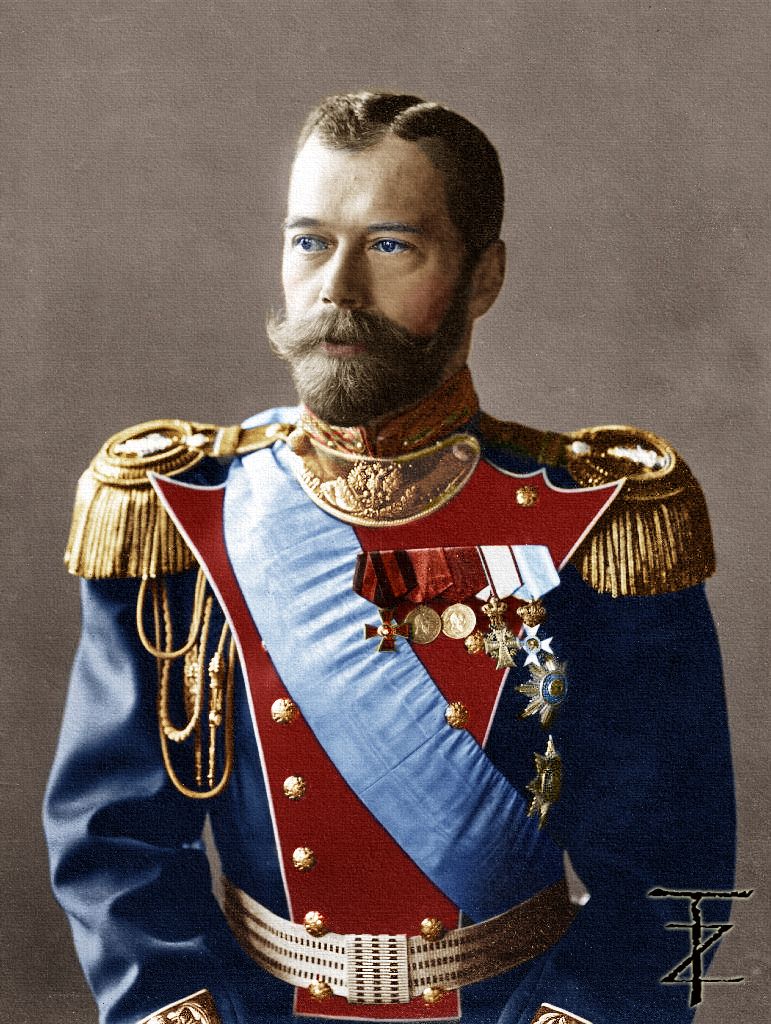
By early 1917, Russia was on the verge of total collapse of morale. An estimated 1.7 million Russian soldiers were killed in World War I. The sense of failure and imminent disaster was everywhere. The army had taken 15 million men from the farms and food prices had soared. An egg cost four times what it had in 1914, butter five times as much. The severe winter dealt the railways, overburdened by emergency shipments of coal and supplies, a crippling blow.
Ideologically the Emperor’s greatest support came…
View original post 697 more words
Californian company – a front-runner in race to find anti-viral drug – awaits results from Wuhan trial
16 Mar 2020 Leave a comment

As the global Covid-19 toll mounts, with 6494 deaths so far, how close are new drugs to treat the disease?
Point of Order has been searching international media for news of the work of much-criticised Big Pharma and found at least 11 companies engaged in developing anti-viral drugs to be used in treatment against the disease.
The most advanced of these appears to be California-based Gilead Sciences, which for the past few years has been developing Remdesivir, an anti-viral with promising results in lab and animal studies against SARS, MERS, Ebola and other infectious diseases, including Covid-19.
Remdesivir is already being tested in Wuhan, the centre of the epidemic, and the US National Institute of Health has indicated the drug would also be studied in some of the patients who contracted the illness overseas and are now being treated in the US.
View original post 1,311 more words
The Great Wind Delusion: Why Wind Power Is Worse Than Useless
16 Mar 2020 Leave a comment
The fabled Elon Musk battery is connected to one wind farm and will maintain a flow of power from that facility for some 20 minutes in the absence of wind. That translates into enough power to sustain the entire state for a pitiful three or four minutes.


The notion that a nation can run on sunshine and breezes is worse than delusional, it’s flat out dangerous. Once resilient and reliable electricity generation and delivery systems designed around the certitude of coal, gas and hydro have been replaced by pure and utter, weather driven chaos.
Rapid and reactionary load shedding (“demand management”) and widespread blackouts (“demand mismanagement”) are now the order of the day, thanks to an obsession with the occasional, unreliable and unpredictable delivery of wind and solar.
In a world where hyperbole and hysteria have kidnapped, bound and gagged our good friends, logic and reason, it’s understandable that people might fall for the idea that we can merrily run on sunshine and breezes, alone; albeit with a few trillion dollars worth of mythical mega-batteries providing backup for a few minutes, when the sun sets and the wind stops blowing.
The mob panic and overreaction in response…
View original post 1,166 more words


Recent Comments