SHAPIRO: Bloomberg SLAMMED @BernieSanders In Democratic Debate
23 Feb 2020 Leave a comment
in politics - USA Tags: 2020 presidential election
Weekend long read
23 Feb 2020 Leave a comment

1) The Times of Israel’s Raphael Ahren explains ‘Why the Palestinian case at The Hague took a big hit this past week’.
“The notion that “Palestine” is a full-fledged state that can grant jurisdiction to the International Criminal Court was dealt a serious blow over the past week, as seven countries and many scholars of international law argued that the issue was not as simple as the Palestinians and their supporters would like to make it seem.
Even some countries that have formally recognized the “State of Palestine” along the pre-1967 lines argued that Palestine cannot necessarily be considered to have validly granted the ICC jurisdiction to probe war crimes allegedly committed on its territory.
Germany, Australia, Austria, Brazil, the Czech Republic, Hungary and Uganda last week submitted written documents to The Hague, each asking to become an amicus curiae — a “friend of the court” that is…
View original post 533 more words
#climateemergency #globalwarming @GreenpeaceAP @Greens @NZGreens
23 Feb 2020 Leave a comment
in energy economics, environmental economics, global warming Tags: atomic energy, nuclear energy

‘A disciplined comrade’ – Richard Burgon
22 Feb 2020 Leave a comment

forty quotes from and about
Richard Burgon
born 1980
Labour MP for Leeds East 2015–
shadow city minister 2015–16
shadow justice secretary 2016–
‘Richard Burgon broke convention by calling for the end to the Monarchy before affirming an oath of allegiance. “As someone that believes that the head of state should be elected I make this oath in order to serve my constituents,” he said.’ – Daily Mirror (2015) [i]
‘No-one was more surprised than me that my swearing in as an MP made the news last week.’ – Richard Burgon (2015) [ii]
‘New SNP MP Patricia Gibson flinched in disgust after one of her colleagues broke wind in the Commons. Shocked Patricia was caught on camera recoiling in horror when Labour rival Richard Burgon let off during a debate. She could be seen on telly covering her mouth and trying to waft away the nauseating stench as Mr Burgon ignored…
View original post 1,439 more words
Politician of the Decade (living)
22 Feb 2020 Leave a comment
In the ever-lengthening list of UKIP leaders, Baron Pearson of Rannoch was far from the worst. Nor, however, was he much good. He spent just ten months in the job, during which time he oversaw the disappointing general election result of 2010, when the average vote for a UKIP candidate fell below that for the BNP. Perhaps, though, he’d already made his contribution to the party, even before joining, by providing it with a mission statement.
He’d originally been a Conservative – he got his peerage from Margaret Thatcher – but had felt frustrated by its mealy-mouthed espousal of Euroscepticism. He was still a Tory when, during the 2004 campaign for the European Parliament elections, he called for people to vote UKIP. ‘The only party which might save our democracy, our right to govern ourselves, from the corrupt octopus in Brussels is the Conservatives,’ he said. ‘But the only people…
View original post 1,434 more words
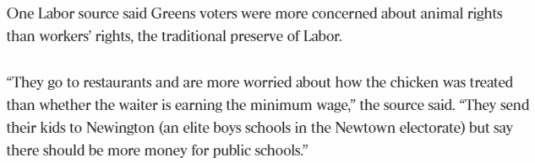
.@Greens @NZGreens to a tee
22 Feb 2020 Leave a comment
in environmentalism, politics - Australia, politics - New Zealand
When scrap metal thieving ceases to be a nice little earner @sst_nz @NZJusticeIdeas
22 Feb 2020 Leave a comment

From http://ftp.iza.org/dp11490.pdf Prices, Policing and Policy: The Dynamics of Crime Booms and Busts APRIL 2018 Tom Kirchmaier, Stephen Machin, Matteo Sandi and Robert Witt
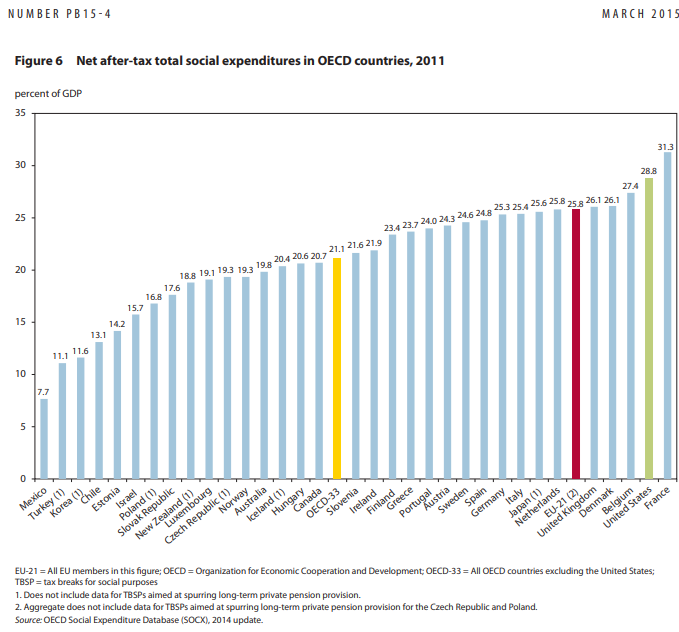
Are @BernieSanders @AOC already in Denmark?
22 Feb 2020 Leave a comment
in politics - USA, public economics
When does the pause matter?
22 Feb 2020 Leave a comment
in applied welfare economics, econometerics, energy economics, environmental economics, global financial crisis (GFC)
See https://www.friendsofscience.org/assets/documents/McKitrick2014_ThePause.pdf and https://www.rossmckitrick.com/uploads/4/8/0/8/4808045/model_obs_comp_nov_2019.pdf
The fact that CO2 emissions lead to changes in the atmospheric carbon concentration is not controversial. Nor is the fact that CO2 and other greenhouse gases (GHGs) absorb infrared energy in the atmosphere and contribute to the overall greenhouse effect. Increases in CO2 levels are therefore expected to lead to atmospheric warming, and this is the basis for the current push to enact policies to reduce GHG emissions.
For more than 25 years, climate models have reported a wide span of estimates of the sensitivity of the climate to CO2 emissions, ranging from relatively benign to potentially catastrophic. These continuing uncertainties have direct policy implications. Economic models for analyzing climate policy are calibrated using climate models, not climate data. In a low-sensitivity model, GHG emissions lead only to minor changes in temperature, so the socioeconomic costs associated with the emissions are minimal. In a high-sensitivity model, large temperature changes would occur, so marginal economic damages of CO2 emissions are larger.
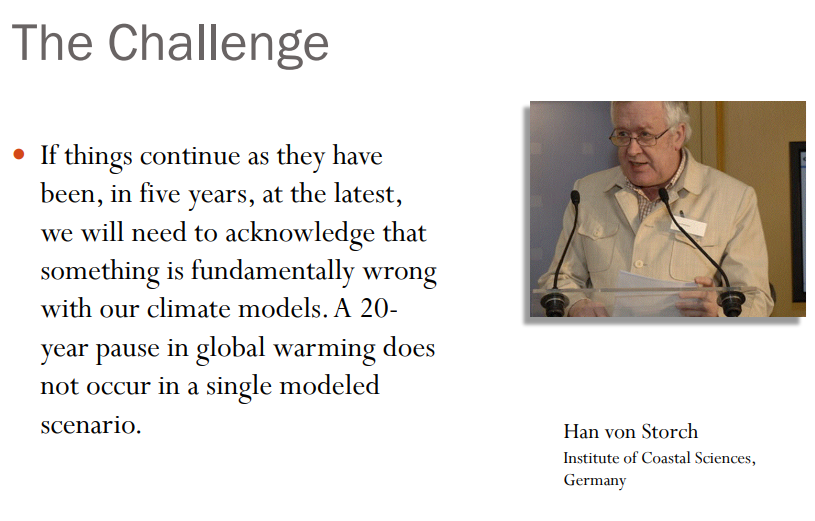
The data show that, over the past two decades, warming has actually slowed down to a pace well below most model projections. Depending on the data set used, there has been no statistically significant temperature change for the past 15 to 20 years. Yet atmospheric GHG levels have increased rapidly over this interval, and there is now a widening discrepancy between most climate model projections and observed temperatures.
Since economic models are trained to match climate models, if climate models overstate the effect of CO2 emissions, economic models will overstate the social damages associated with them. Consequently, there is good reason to suppose that economic models too may be subject to revision over the next few years. Hence, it is essential to build into the policy framework clear feedback mechanisms that connect new data about climate sensitivity to the stringency of the emissions control policy. And since important new information about climate sensitivity is expected within a few years, there is value to waiting for this information before making any irreversible climate policy commitments, in order to avoid making costly decisions that are revealed a short time later to have been unnecessary.


Recent Comments