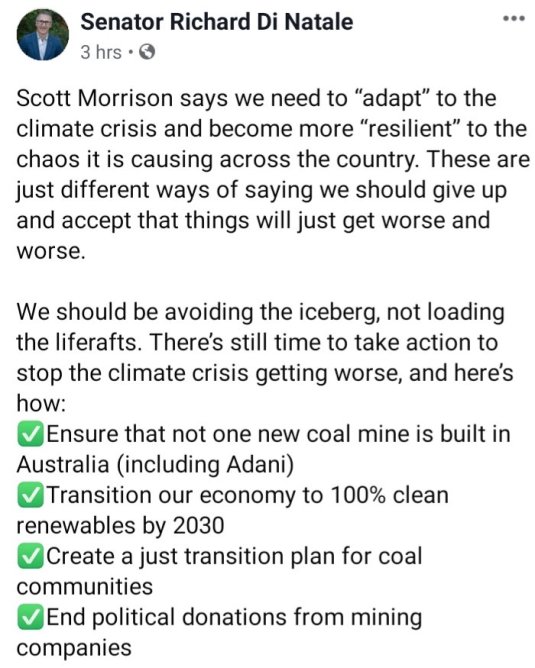
If @Greens proposals were implemented 30 years ago, would the bushfire risk be less? #globalwarming #climateemergency @GreenpeaceAP
15 Jan 2020 Leave a comment
in economics of natural disasters, energy economics, environmental economics, global warming, politics - Australia Tags: Australia, climate alarmism, pessimism bias
David Hicks got off lightly
15 Jan 2020 Leave a comment
in defence economics, economics of crime, International law, law and economics, laws of war, politics - Australia, politics - USA, war and peace Tags: war against terror

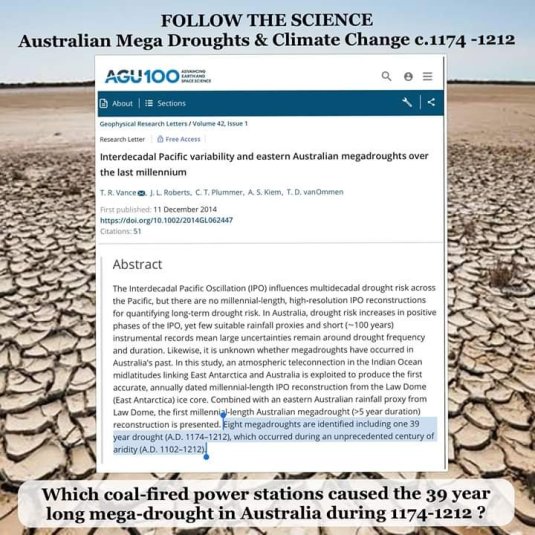
The land of droughts and flooding rains
15 Jan 2020 1 Comment
in economics of education, economics of natural disasters, energy economics, environmental economics, global warming, politics - Australia Tags: Australia, climate alarmists, pessimism bias
All gone by the year 2020: rewriting history?
15 Jan 2020 Leave a comment

This is part 3 in the series on the prediction that glaciers in Glacier National Park will be gone by 2020. You might want to see to part 1 and part2 if you haven’t already

During my research on the “All gone by the year 2020” prediction, I also encountered the Wikipedia page about the Glacier National Park (U.S.). My attention was immediately drawn to the sequence of the predicted estimates when glaciers would be gone according to a Wikipedia contributor (my emphasis):
Based on the warming trend of the early 2000s, scientists had estimated that the park’s remaining glaciers would melt by 2020;[52] however, a later estimate stated that the glaciers may be gone by 2030.[5]
As it is stated, it is seems that the “glaciers would melt by 2020” prediction came first and was followed by the later “gone by 2030” prediction…
View original post 1,820 more words
Study finds three barriers to consumer adoption of EVs: cost, range, charging sites
15 Jan 2020 Leave a comment


So what’s new? Nothing really, but these issues show few if any signs of being resolved in the near future. Governments intending to pressure or force people to buy EVs are going to be unpopular with millions of car users, it would seem. Woolly climate propaganda isn’t impressing many buyers.
Ipsos, the global research and insights organization, says it has uncovered the thoughts of consumers regarding BEVs, Green Car Congress reports.
These new findings are released in the second module of the Ipsos Global Mobility Navigator Syndicated Study, in which 20,000 consumers worldwide shared their opinions on alternative engines and what it would take to get them to consider one.
View original post 164 more words
3. Social Costs of Carbon Sound Precise
15 Jan 2020 Leave a comment
in applied welfare economics, energy economics, environmental economics, global warming
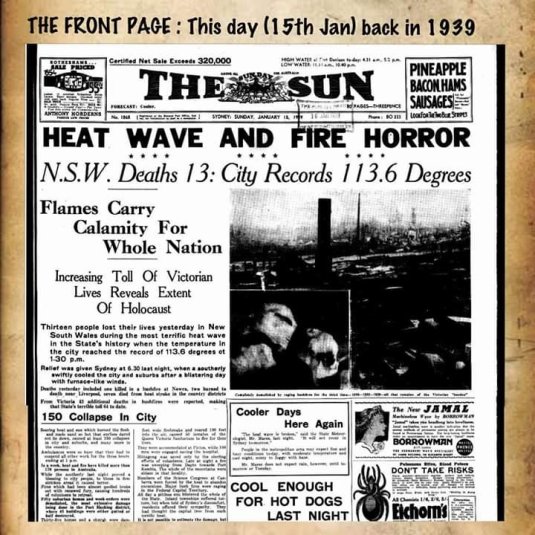
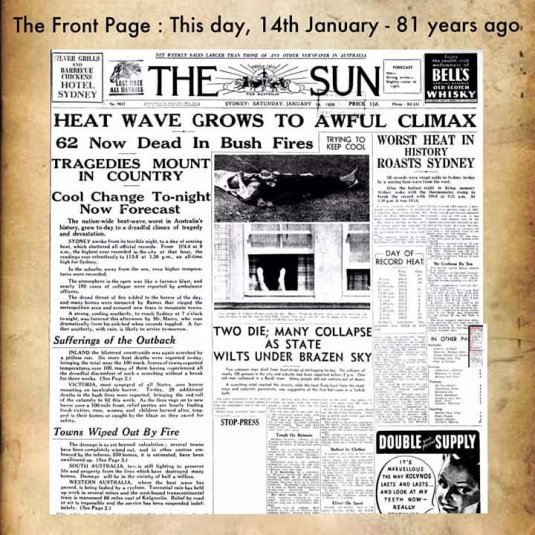
#OTD 1939 #globalwarming #climateemergency @GreenpeaceAP @Greens
15 Jan 2020 Leave a comment
in economic history, economics of information, economics of natural disasters, energy economics, environmental economics, global warming, politics - Australia, politics - USA Tags: climate alarmists, pessimism bias, regressive left
Prescott, Ohanian and Co on land use regulation and slower economic growth
15 Jan 2020 Leave a comment


World’s First City Discovered by U.S. Spy Satellite
15 Jan 2020 Leave a comment
in economic history, economics of education, economics of media and culture
Theodore Konstadinides and Riccardo Sallustio: Clause 26 of the European Union (Withdrawal Agreement) Bill 2019-20: An Exercise of Constitutional Impropriety?
14 Jan 2020 Leave a comment


The European Union (Withdrawal Agreement) Bill 2019-20 will pave the way for the UK to ratify the UK-EU Withdrawal Agreement and thus depart from the European Union (EU) soon thereafter, having received its third reading in the House of Commons just last week. This contribution examines certain major consequences deriving from the Bill becoming law and, in particular, the controversial, but little discussed Clause 26 which (as Lord Pannick remarked in a recent article in the Times) requires particularly careful scrutiny.
Clause 26 introduces in Section 6 of the EU (Withdrawal) Act 2018 new subsections (5A) through (5D) that allow Ministers of the Crown to issue regulations to any “relevant court or tribunal” on how to interpret and even to disapply EU retained case law as well as domestic case law which relates to EU retained case law. The word ‘relevant’ seems to refer only to those courts that…
View original post 2,013 more words
Game Changer: US Start-up’s Small Nuclear Plants to Make Big Difference to World’s Energy Future
14 Jan 2020 Leave a comment

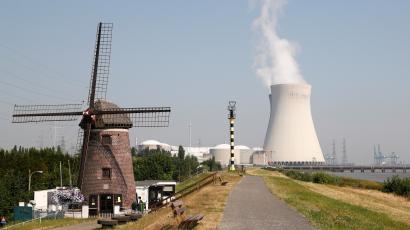
Anyone banging on about carbon dioxide gas and climate change, and not promoting nuclear power, can’t be taken seriously.
Nuclear power is the only stand-alone power generation source that does not emit carbon dioxide gas during the generation process. And, unlike chaotically intermittent wind and solar, it’s available 24 x 365.
That the world’s third largest uranium exporter has never had a nuclear power plant (and banned them) astonishes all and sundry.
Australia also holds the world’s largest uranium reserves.
And yet, in 1998 its Federal government passed amendments to the Environment Protection and Biodiversity Conservation Act and enacted the Australian Radiation Protection and Nuclear Safety Act, specifically prohibiting nuclear fuel fabrication, power, enrichment or reprocessing facilities.
Uranium extracted from BHP’s Olympic Dam mine in South Australia is clearly good enough for the French, South Koreans, Americans, Canadians, Japanese and Chinese, being just a few of the 30 countries…
View original post 890 more words


Recent Comments