
The evolutionary psychology of morality
07 Jan 2020 Leave a comment
in economics of crime, economics of education, human capital, law and economics, property rights Tags: evolutionary psychology
THE Great Global Warming “Pause”
07 Jan 2020 2 Comments


BETWEEN the start of 1997 and the end of 2014, average global surface temperature stalled. This 18-year period is known as the global warming “pause” or “hiatus” and has been the subject of much research and debate in peer-reviewed scientific journals.
THE rise in global temperatures that alarmed climate campaigners in the 1990’s had slowed so much that the trend was no longer statistically significant. This despite one-third of Man’s entire influence on climate since the Industrial Revolution occurring since February 1997.
THE pause took a pause during the 2015/16 super El Niño which was the strongest such event in recorded history and helped to make 2015 and 2016 the warmest years in the modern warm period. However, 2017 witnessed the biggest drop in global temps in recorded history, seen across most data sets, bringing temps back inline with 1997-2014 averages, rendering “the pause” alive and well, to date.
THERE…
View original post 3,088 more words
#climateemergency #globalwarming voters are even tighter with their money than #crazybernie voters
07 Jan 2020 Leave a comment

Do these Black Friday Royal commission recommendations have the @VictorianGreens unqualified support?
07 Jan 2020 Leave a comment
in economics of natural disasters, environmental economics, environmentalism, global warming, politics - Australia

Lies, Damned Lies, and Statistics
07 Jan 2020 Leave a comment

By Cassie Watson; posted 11 December 2019.
As the current election campaign draws to a close amid increasingly shrill claims and counterclaims, I am reminded of a saying that, while common today, appears to have originated around the time of a much earlier election campaign.[1] In early July 1892 remarks made by “Mr Balfour” — presumably Arthur Balfour MP (1848–1930), then Leader of the House of Commons — were cited by fellow Tories in relation to the three categories of untruths alleged to be inherent in Gladstonian speeches about Irish Home Rule: “lies, damned lies, and statistics.”[2] While the possibility of (another) minority government is one route to pursue regarding this observation,[3] I am more interested in the statistics part of Balfour’s quotation, as the collection, analysis and interpretation of historical data are among the main methodologies utilised by criminal justice historians. The saying itself is now…
View original post 1,859 more words
This date in history: January 6,1540. Marriage of Anne of Cleves and King Henry VIII of England.
07 Jan 2020 Leave a comment

Anne of Cleves (1515 – 16 July 1557) was queen consort of England from January 6 to July 9, 1540 as the fourth wife of King Henry VIII.
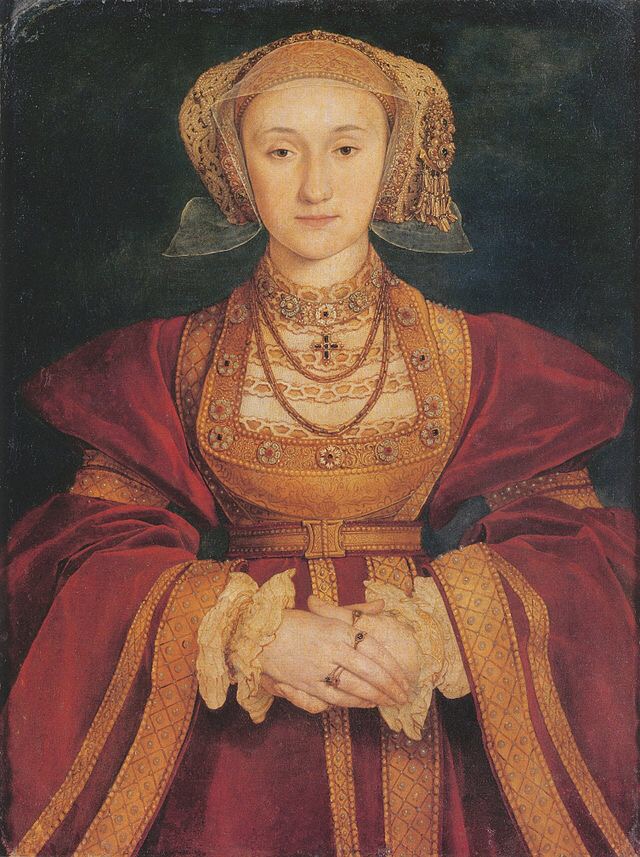
Anne was born in 1515, on either September 22, or more probably June 28. She was born in Düsseldorf, the second daughter of Johann III of the House of La Marck, Duke of Jüliich-Cleves, and Berg. Johann III was also Count of Mark, and Ravensberg. Johann held the titles Duke of Jüliich, Berg and Count of Ravensberg jure uxoris which means by right of his wife Maria, Duchess of Julich-Berg (1491–1543).
Anne’s mother Maria of Jülich-Berg (August 3, 1491 – August 29, 1543) was born in Jülich, the daughter of Wilhelm IV, Duke of Jülich-Berg and Sibylle of Brandenburg, a daughter of Elector Albrecht III Achilles of Brandenburg (1414–1486) from his second marriage to Anna (1436–1512), daughter of the Elector Friedrich II…
View original post 1,346 more words
How did life survive in the Snowball Earth? Scientists might have cracked the mystery
07 Jan 2020 Leave a comment


The researchers do admit that ‘Snowball Earth is just a hypothesis’, but that period seems to have been an era of the most extreme long-term cold spell(s) ever detected on Earth.
There is very little life in Arctic tundras and glaciers. However that was the situation in a big portion of the world during Ice Ages, says Technology.org.
How did life survive these difficult periods? How didn’t everything just die, being cut off from any kind of sources of nutrition and oxygen?
Scientists examined the chemistry of the iron formations in Australia, Namibia, and California to get a window into the environmental conditions during the ice age. They selected rocks left there by the ice age, because they are representative of the conditions during that difficult period for life.
By analysing these rocks scientists from the McGill University were able to estimate the amount of oxygen in the…
View original post 219 more words
Genetic diversity and economic development
07 Jan 2020 Leave a comment
in development economics, economic history, economics of crime, economics of love and marriage, growth disasters, growth miracles, health economics, human capital, labour economics, law and economics, property rights Tags: endogenous growth theory, evolutionary psychology

Behind on my vaccine blogging
07 Jan 2020 Leave a comment
in health economics Tags: anti-vaccination movement, The Great Escape, vaccines


Nobel symposium Financial intermediaries and liquidity creation Douglas Diamond
07 Jan 2020 Leave a comment
in business cycles, economic history, economics of information, economics of regulation, financial economics, global financial crisis (GFC), great recession, macroeconomics, monetary economics


Recent Comments