
Where do I short the market before the hedge funds spot this 9% drop in British GDP after #Brexit?
13 Dec 2019 Leave a comment
in applied welfare economics, econometerics, international economic law, international economics, International law Tags: Brexit
Public libertarian intellectuals
13 Dec 2019 Leave a comment

Consider the post-Hayek/Rothbard/Friedman era of libertarianism.
Who has stepped up to fill their shoes? It’s hard to say, but 4 academics who stand out are Tyler Cowen, Mike Munger, Robert Higgs, and Bryan Caplan. Their scholarly output is comparable to our own Jacques Delacroix, and their influence within the libertarian quadrant is – or was at some point in time – much greater than Jacques’.
All four of these scholars cut their teeth blogging. The blog is how they teach. The blog is how they vent. The blog is how they share news and knowledge. The blog is how they went from well-respected to essential. All four write opinion pieces for professional outlets, but that’s not how they became essential to libertarians across the globe. Sharing their day-to-day thoughts about the world, to the world (and not just their walled-off social media accounts), is how they…
View original post 108 more words
Fact Check: Why Intermittent Wind & Solar Will Never Replace Fossil Fuels
13 Dec 2019 1 Comment


The wind and solar ‘industries’ were built on lies and run on subsidies. As to the former, for more than 20 years a phalanx of propagandists has worked overtime to literally turn night into day.
Lines like the ‘wind is always blowing somewhere’, ‘sunset’s not a problem’, this ‘wind farm will power XXX hundred thousand homes’ and (in answer to perpetual problem of their chaotic intermittency) ‘mega-batteries will fix it’, sit comfortably with old chestnuts like ‘I’ll pay you next week’ and ‘the cheque’s in the mail’.
As Norman Rogers details below, the propagandists may have become more sophisticated – and now include some clever little darlings from Deloitte, but their message is just as vacuous as ever.
Green Energy Studies: Consulting, or Advertising?
American Thinker
Norman Rogers
27 November 2019
Wind and solar aren’t remotely competitive with traditional fossil fuels and cannot replace them. They would scarcely exist if…
View original post 1,201 more words
Champ and Freeman on foreign exchange rate indeterminacy
13 Dec 2019 Leave a comment
in financial economics, international economics, macroeconomics, monetary economics Tags: exchange rate dynamics, monetary policy

The Development of Aggression, ADHD and Antisocial Personality.
13 Dec 2019 Leave a comment
in economics of crime, economics of education, economics of love and marriage, health economics, law and economics Tags: child psychology
Abdication: Two Days that shook the British Monarchy. Addendum December 12, 1936.
13 Dec 2019 Leave a comment

On December 12, 1936, at the accession meeting of the Privy Council of the United Kingdom, the new king, George VI, announced he was to create his brother the “Duke of Windsor” with the style of Royal Highness. He wanted this to be the first act of his reign, although the formal documents were not signed until March 8, 1937 that following year. During the interim, Edward was universally known as the Duke of Windsor. George VI’s decision to create Edward a royal duke ensured that he could neither stand for election to the House of Commons nor speak on political subjects in the House of Lords.
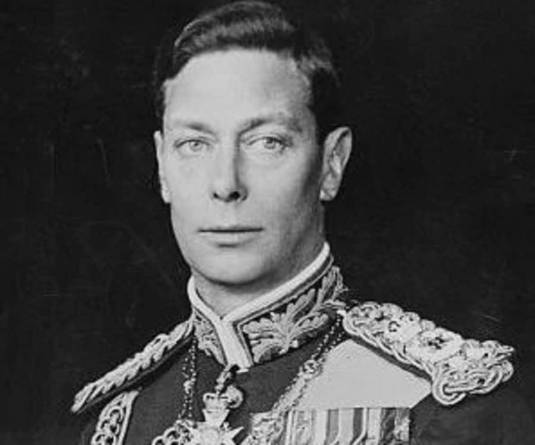
King George VI of the United Kingdom of Great Britain and Northern Ireland, Emperor of India.
Letters Patent dated May 27, 1937 re-conferred the “title, style, or attribute of Royal Highness” upon the Duke of Windsor, but specifically stated that “his wife and…
View original post 347 more words

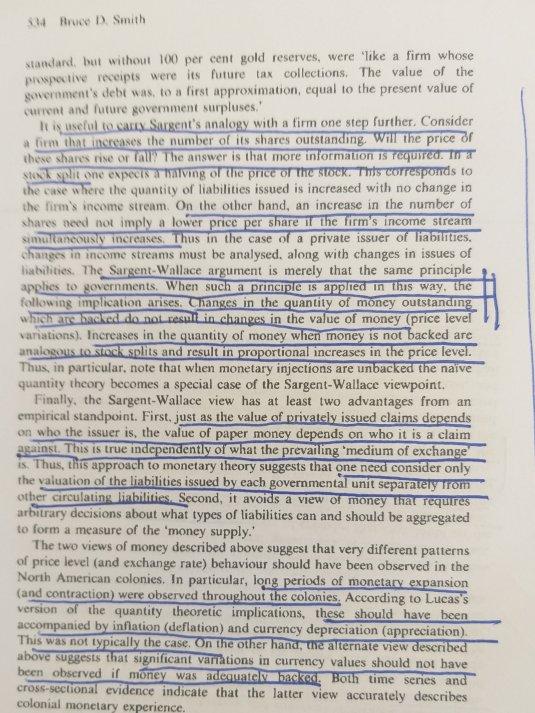
How monetary arithmetic undermines the quantity theory of money
13 Dec 2019 Leave a comment
in applied price theory, budget deficits, econometerics, economic history, economics of education, fiscal policy, macroeconomics, Milton Friedman, monetarism, monetary economics, Robert E. Lucas Tags: monetary policy
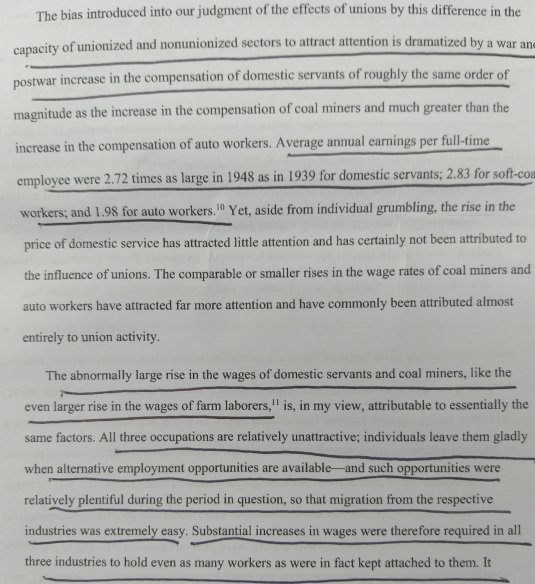
Milton Friedman (1951) on union power is over-rated
13 Dec 2019 Leave a comment
in applied price theory, economic history, labour economics, labour supply, Milton Friedman, unions Tags: union power, union wage premium

Getting a new parliament up and running: what happens after the election?
12 Dec 2019 Leave a comment


 We may not yet know the result of the election, but we do know that we will have a new parliament. David Natzler and David Beamish explain what will happen when the new parliament commences next week. No matter the outcome of today’s vote, certain processes will need to be followed: parliament will need to be officially opened, MPs will need to be sworn in, and committees will need to be re-established — and their members and chairs must be elected.
The dates
The first days of a new parliament follow a well-trodden path, and the surest guide to what will happen is usually to look up what happened last time, in June 2017. However, much depends on the political context. And we will not know that context until the early hours of Friday 13 December at the earliest. All we know for sure is that the new parliament will…
View original post 2,114 more words


Recent Comments