The Hungarian Romanian War & The Downfall of the Hungarian Soviet Republic I THE GREAT WAR 1919
10 Dec 2019 Leave a comment
in defence economics, economic history, Marxist economics, war and peace Tags: World War I
Another gender gap that dare not speak its name
10 Dec 2019 Leave a comment
in health economics Tags: economics of addiction, gender gap

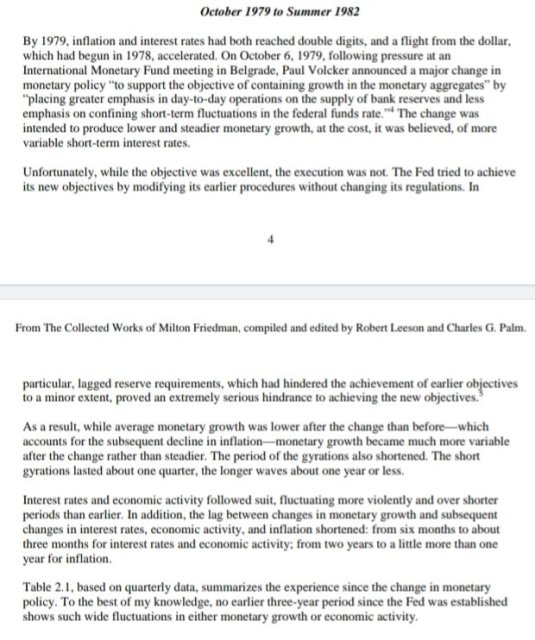
Friedman (1984) on the Volcker experiment
10 Dec 2019 Leave a comment
in business cycles, economic history, macroeconomics, Milton Friedman, monetarism, monetary economics Tags: monetary policy

Profile of urban economist Edward Glesar
10 Dec 2019 Leave a comment

IMF F&D (Dec-2019 edition) profiles Ed Glaesar of Harvard Univ:
Growing up in New York City in the 1970s, Edward Glaeser saw a great metropolis in decline. Crime was soaring. Garbage piled up on sidewalks as striking sanitation workers walked off the job. The city teetered on the edge of bankruptcy.
By the mid-1980s, it was clear that New York would bounce back. But it could still be a scary place; there was a triple homicide across the street from his school on the Upper West Side of Manhattan. Glaeser was nevertheless captivated by New York’s bustling street life and spent hours roaming its neighborhoods.
“It was both wonderful and terrifying, and it was hard not to be obsessed by it,” Glaeser recalls in an interview at his office at Harvard University.
Today, that sense of wonder still permeates Glaeser’s work as an urban economist. He deploys the economist’s…
View original post 42 more words


The Narrow Corridor: States, Societies, and the Fate of Liberty
10 Dec 2019 Leave a comment
in comparative institutional analysis, constitutional political economy, defence economics, development economics, economic history, economics of bureaucracy, economics of crime, economics of regulation, growth disasters, growth miracles, income redistribution, law and economics, property rights, Public Choice, rentseeking Tags: The Great Enrichment
The Teenager who Faked being a Pilot, a Doctor and a Lawyer
09 Dec 2019 Leave a comment
in economics of crime, law and economics, movies
Coase (1972) on market concentration
09 Dec 2019 Leave a comment
in applied price theory, industrial organisation, law and economics, survivor principle Tags: competition law

Texan Turmoil: True & Staggering Cost of Wind & Solar Kept Hidden From Power Consumers
09 Dec 2019 Leave a comment


The hidden cost of attempting to rely upon sunshine and breezes is truly staggering, ask a German, Dane or South Australian about the power prices they suffer. They’re the world’s highest, by the way. And all three of them compete for bragging rights about which of them has the greatest proportion of renewables in the grid. In short, if you want rocketing power prices just add wind and solar to your grid (see above the Australian experience, so far).
From the get go, renewable energy rent seekers have attempted to conceal a raft of costs associated with the inherent unreliability and chaotic intermittency of wind and solar.
In an address to Indiana’s 21st Century Energy Task Force, Mike Nasi (an electricity markets expert and regulatory attorney) lifts the lid on what the wind and solar ‘industries’ would rather care to avoid.
True costs of renewables – the Texas lesson
YouTube
View original post 2,135 more words
The limits to growth
09 Dec 2019 Leave a comment

Different decades have been obsessed with different doomsdays. From the 1940s to the early 1960s, people worried especially about nuclear war. From the late 1960s on, fears of overpopulation and ecological doom came to the fore. John Brunner’s Stand on Zanzibar (1968) is still one of the best science fictional imaginings of a planet cracking apart under the stress of overpopulation, a richly detailed piece of world-building. Like all visions of the future, it reflects the time it was conceived in, carrying a sense that the cultural revolutions of the 60s were spinning out of control.
For non-fiction there was The Limits to Growth (1972). Here is Scenario 1 from the book, generated by a computer model of the interaction of population, resources, industry, food, and pollution. Fiddling with the model suggested that it would be very hard to avoid a massive collapse in one form or other. If…
View original post 135 more words
Where does the claim that we only have ten years left come from?
09 Dec 2019 Leave a comment

“We have about ten years before we get into a irreversible situation”, said Nic Balthazar (see previous post). Just as in an earlier interview at the end of December 2018, he based his claim on the IPCC SR15 report that was “clearer than ever”. But then, I read the SR15 report before and I didn’t find anything that suggests that there would be tipping points at a 1.5 C temperature increase.
As far as I know, the SR15 report was commissioned at the 2015 Paris conference and the question back then was: which are the effects of the threshold of 1.5 C (proposed at the conference) compared to the 2 C threshold that was valid until that conference?
That is what I also see in the SR15 report: how do the two thresholds compare. So how on earth does he come to the conclusion that the SR15 report shows that…
View original post 1,804 more words



Recent Comments