Blind audition study: Truth or myth? | FACTUAL FEMINIST
22 Oct 2019 Leave a comment
in applied price theory, discrimination, economics of information, gender, human capital, industrial organisation, labour economics, labour supply, law and economics, occupational choice, personnel economics, survivor principle Tags: gender wage gap
Rod Stewart – I Don’t Want To Talk About It with the Royal Philharmonic Orchestra
22 Oct 2019 Leave a comment
in Music
Worst case scenario is 1 metre sea level rise. But is 800 years notice enough to adapt?
22 Oct 2019 Leave a comment

What Hygiene Was Like For Medieval Peasants @NoahOpinion
22 Oct 2019 Leave a comment
in economic history, health economics Tags: The Great Escape
Attention anti-science left @NZGreens (but not @Greens, who praised vaccines as the greatest public health intervention ever)
21 Oct 2019 Leave a comment
in economics of information, health economics, politics - New Zealand, politics - USA Tags: anti-vaccination movement, vaccines

So @mfe-news hasn’t got a jot of in-house information on the climate treaty risks of leading by example
21 Oct 2019 Leave a comment
in economics of bureaucracy, energy economics, environmental economics, global warming, politics - New Zealand, Public Choice

Impartially weighing up all the evidence or post hoc rationalisations?
21 Oct 2019 Leave a comment

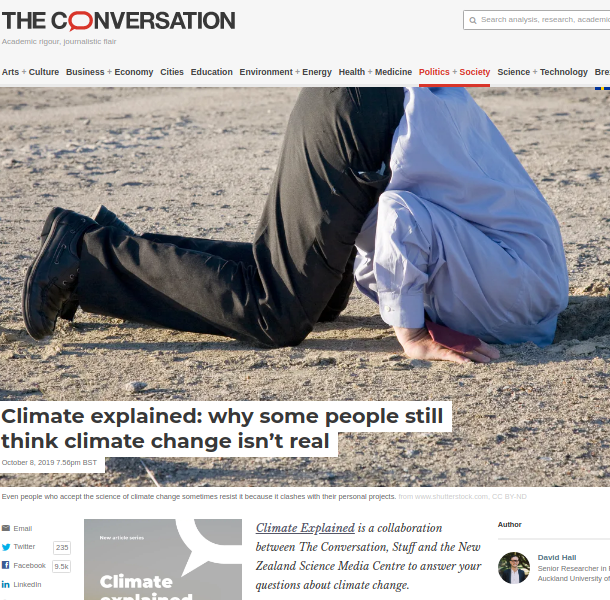
The Conversation has a “Climate explained” series with articles centered around a (climate change related) question that get answered by an “expert”. The question of the article that is the subject of this post is “Why some people still think climate change isn’t real” and the expert who answers this question is David Hall, a Senior Researcher in, ahem, Politics.
He tries to explain in the article what drives the “deniers” and how to “undo” their denial.
View original post 1,049 more words




Recent Comments