Oil and monetary policy
10 Apr 2026 Leave a comment
in applied price theory, defence economics, economic history, economics of bureaucracy, energy economics, financial economics, history of economic thought, labour economics, macroeconomics, monetary economics, politics - New Zealand, Public Choice, unemployment, war and peace Tags: 1973 oil crisis, monetary policy, oil shocks

I didn’t have too much problem with either the Reserve Bank Governor’s speech a couple of weeks ago on a framework for how monetary policy might deal with the oil shock, or with this week’s OCR review release from the Monetary Policy Committee. It was really all very orthodox stuff, much as any of the […]
Oil and monetary policy
Why “Gini Coefficients” Are Meaningless
09 Apr 2026 Leave a comment
in economics of education, entrepreneurship, financial economics, history of economic thought, human capital, industrial organisation, labour economics, labour supply, occupational choice, poverty and inequality
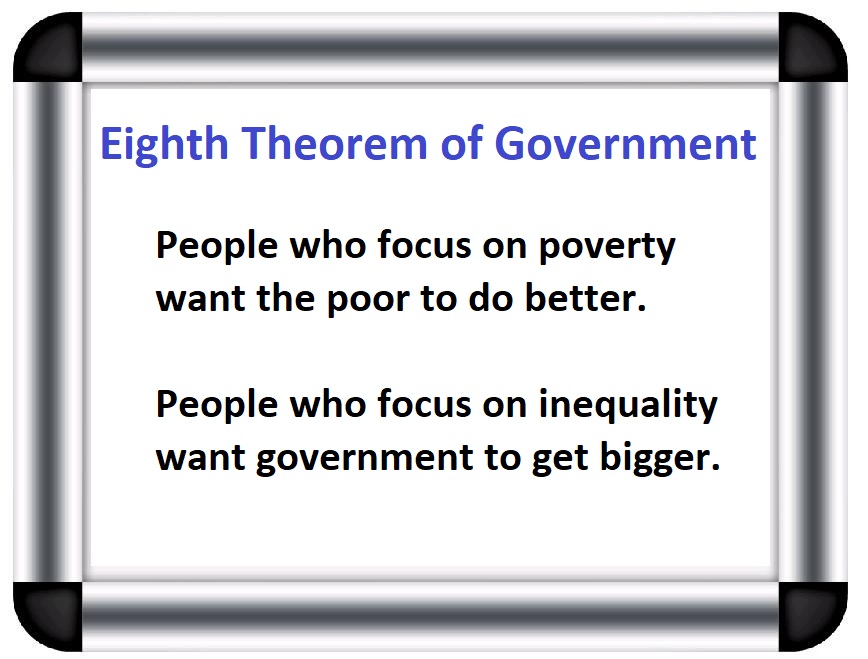
I created the 8th Theorem of Government because it’s important to distinguish between people who want to help the poor and people who want to punish the rich. The former group has good motives while the latter group has ignoble motivations. Envy (common among the leftist intelligentsia) Public choice (common among leftist politicians) Zero-sum illiteracy […]
Why “Gini Coefficients” Are Meaningless
Why Climate Alarm is Fading (Matt Ridley)
09 Apr 2026 1 Comment
in economics of climate change, energy economics, environmental economics, environmentalism, global warming Tags: climate alarmism

Matt Ridley explains the demise of climatism in his recent video The Great Climate Climbdown is finally here – How can we undo the Damage Caused? For those preferring to read, there is a transcript below with my bolds and some helpful images. I’m going to try and give you my perspective on which arguments […]
Why Climate Alarm is Fading (Matt Ridley)
Francesca Jackson: King Charles, President Trump and the State Visit: Some Constitutional Considerations
08 Apr 2026 1 Comment
in constitutional political economy, economic history, politics - Australia Tags: British constitutional law, British politics

Buckingham Palace has finally announced that the King and Queen’s planned visit to the US will indeed go ahead at the end of April 2026. After US President Donald Trump launched a string of verbal attacks on the UK Prime Minister, there had been growing calls for Keir Starmer to cancel the King’s visit, which […]
Francesca Jackson: King Charles, President Trump and the State Visit: Some Constitutional Considerations
Two “Times” obituaries for Robert Trivers
08 Apr 2026 Leave a comment

Reader Simon called my attention to a new obituary in the Times of London of Robert Trivers, a giant in evolutionary biology (and a notorious eccentric) who died on March 12. Because his death wasn’t announced immediately after he expired, this was bit late, but better late than never—especially given Trivers’s importance in the field. […]
Two “Times” obituaries for Robert Trivers
The Legacy of Al Gore’s “An Inconvenient Truth” 20 Years Later
08 Apr 2026 Leave a comment
in economics of climate change, environmental economics, environmentalism, global warming, movies Tags: climate alarmism
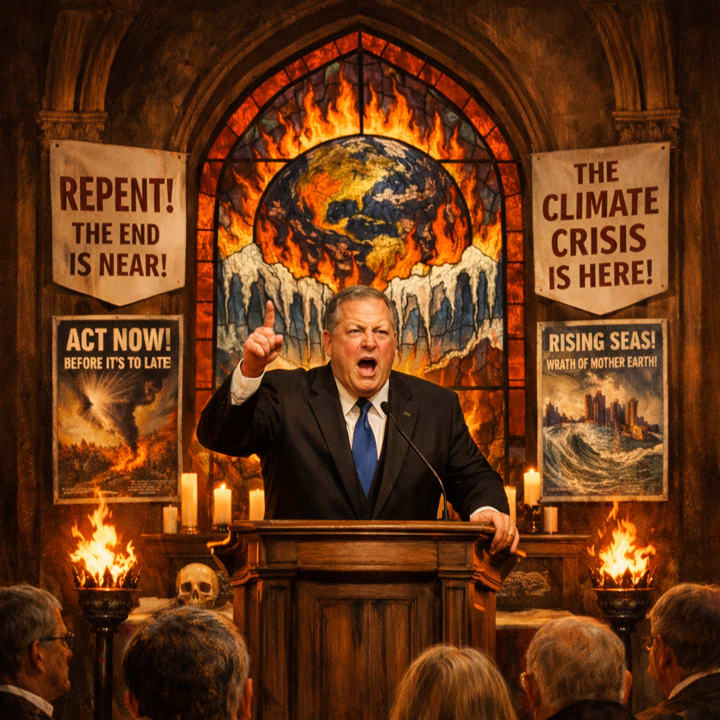
Gore to climate scientists: “Start getting involved in politics.” Boy, did they listen.
The Legacy of Al Gore’s “An Inconvenient Truth” 20 Years Later
More touting of indigenous knowledge as coequal with modern science
08 Apr 2026 Leave a comment
in economics of education Tags: conjecture and refutation, philosophy of science, regressive left

Once again we have an article about how science could be improved if only it incorporated indigenous “ways of knowing”—the “braiding of knowledge” referred to in the Guardian article below (click to read). I often see another metaphor used to express the same thing: “two-eyed seeing”, with one eye seeing the way indigenous people do,…
More touting of indigenous knowledge as coequal with modern science
Crypto-Communism and Game Theory
08 Apr 2026 Leave a comment
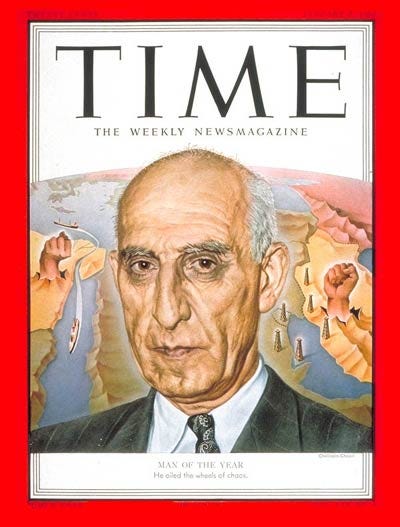
“Crypto-Communist” is a word with a strong conspiratorial crackpot connotation. But it simply means “secret Communist,” and the history of the Cold War is packed with bona fide examples. Fidel Castro ruled Cuba for two years before he admitted he was a Communist. Ho Chi Minh joined the Comintern in 1920, but spent decades posing…
Crypto-Communism and Game Theory
The Fatal Conceit of Cheap Drugs
07 Apr 2026 1 Comment
in applied price theory, Austrian economics, economics of information, economics of regulation, health economics, law and economics, politics - USA, property rights Tags: copyrights and patents, intellectual property

The U.S. Supreme Court agreed to hear Hikma v. Amarin to answer a narrow question. It may end up saying far more about how policymakers misunderstand pharmaceutical markets. On its face, the case is narrow. It asks whether a generic drug manufacturer can face liability for inducing patent infringement based on how it markets a…
The Fatal Conceit of Cheap Drugs
Is there something about manufacturing that requires special policies to help it that other industries don’t get?
07 Apr 2026 Leave a comment
in applied price theory, entrepreneurship, industrial organisation, politics - USA, survivor principle
I have excerpts from posts or articles by three different economists. The answer seems to be no. Two are older and one is very recent by Harvard prof Jason Furman, who was once the chair of the Council of Economic Advisors under Obama. Then two older sources. One is from Tyler Cowen (2023), professor at…
Is there something about manufacturing that requires special policies to help it that other industries don’t get?
Net Zero France Capitulates to an Iranian Safe Passage Fee for Gulf Oil
06 Apr 2026 1 Comment
in defence economics, energy economics, international economics, war and peace Tags: Iran
European Net Zero policies appear to have created a total dependency on imported fossil fuel.
Net Zero France Capitulates to an Iranian Safe Passage Fee for Gulf Oil
The 28th Amendment: Is it Time for a New Amendment on the Meaning of Citizenship?
06 Apr 2026 Leave a comment
in politics - USA Tags: constitutional law, economics of immigration

Below is my column in the Hill on the expected reaffirmation of birthright citizenship by the Supreme Court after the…
The 28th Amendment: Is it Time for a New Amendment on the Meaning of Citizenship?
The CA Minimum Wage Increase: Summing Up
06 Apr 2026 1 Comment
in applied price theory, econometerics, economics of regulation, income redistribution, labour economics, labour supply, politics - USA, Public Choice, unemployment
Two recent joint-papers Did California’s Fast Food Minimum Wage Reduce Employment? by Clemens, Edwards and Meer and The Effects of California’s $20 Fast Food Minimum Wage on Prices by Clemens, Edwards, Meer and Nguyen give what I think is a plausible and consistent account of California’s $20 fast food minimum wage. California’s $20 fast food…
The CA Minimum Wage Increase: Summing Up
Does working from home raise lifetime fertility?
06 Apr 2026 Leave a comment
in applied price theory, economics of love and marriage, labour economics, labour supply, population economics Tags: economics of fertility, economics of pandemics
See Work from Home and Fertility by Steven J. Davis, Cevat Giray Aksoy, Jose Maria Barrero, Nicholas Bloom, Katelyn Cranney, Mathias Dolls & Pablo Zarate. Abstract”We investigate how fertility relates to work from home (WFH) in the post-pandemic era, drawing on original data from our Global Survey of Working Arrangements and U.S. Survey of Working Arrangements…
Does working from home raise lifetime fertility?
 Utopia, you are standing in it!
Recent Comments