Eric Clapton — Layla (Unplugged) (Live at Bray Studios, England, 16/01/1992)
16 Jan 2023 Leave a comment
in Music, television, TV shows
Operation Bernhard
16 Jan 2023 Leave a comment


This story had all the makings of a great spy movie and no wonder that in 2007 ,film director Stefan Ruzowitzky made the movie “The Counterfeiters” which won the Oscar for best movie in a foreign Language.
Operation Bernhard was the name of a secret German plan devised during World War II to destabilise the British economy by flooding the country with forged Bank of England £5, £10, £20, and £50 notes, which was named after the SS officer who ran it.
Only a fortnight after the start of World War II, at a meeting that has remained a secret for more than half a century, officials of German finance and Nazi espionage approved an audacious plot to bring down the world’s financial system. Hundreds of millions of forged British pounds were to become a weapon of war. Operation Bernhard not only became the greatest counterfeit scheme in history but the most wide-ranging and…
View original post 1,496 more words
The first European bank note.
16 Jan 2023 Leave a comment
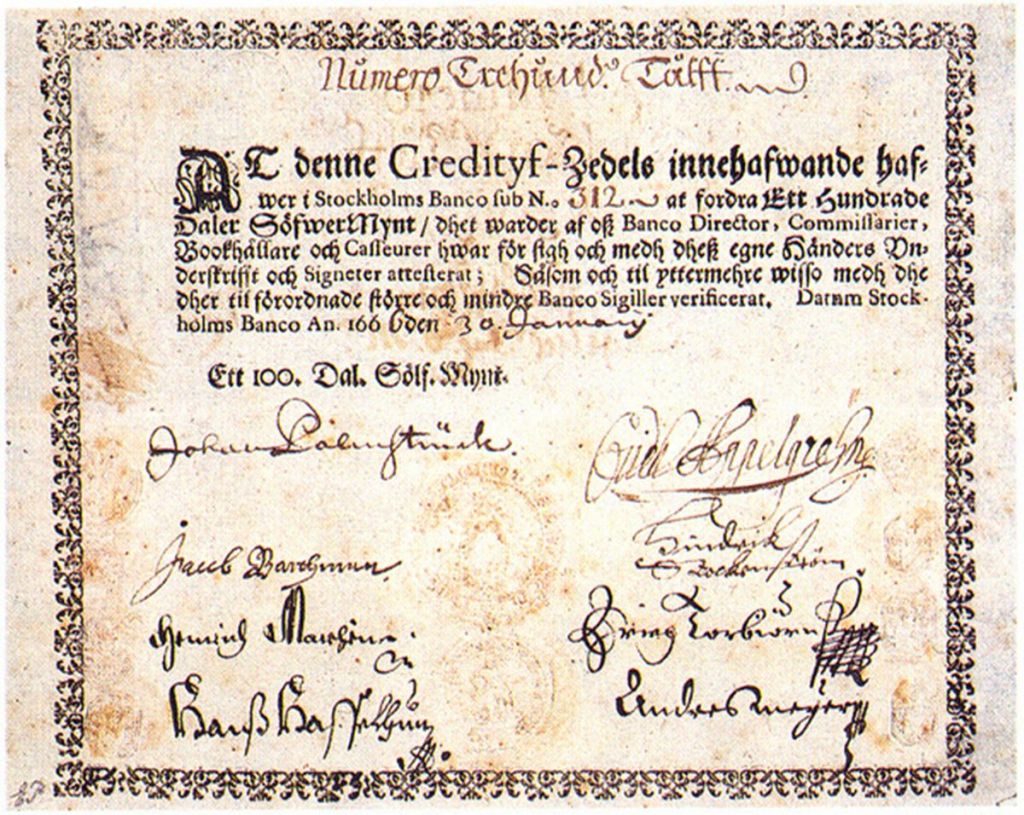
Europe used to be a continent with a great number of currencies. Most European countries now have the Euro as the their currency.
But where did it all begin?
Stockholms Banco (also known as the Palmstruch’s Bank, Swedish: Palmstruchska banken) was the first European bank to print banknotes. It was founded in 1657 by Johan Palmstruch in Stockholm, began printing banknotes in 1661. On July 16,1661 to be precise.The bank ran into financial difficulties though and was liquidated in 1667. Stockholms Banco was the immediate precursor to the central bank of Sweden, founded in 1668 as Riksens Stnders Bank and renamed in 1866 as Sveriges Riksbank, which is the world’s oldest surviving central bank.
Eventually the banknotes caused more problems than they were worth – so many people used the notes and lent them that the bank was unable to honour requests for the credit to be transferred into metal…
View original post 41 more words
The Ranked Choice Voting Elections of 2022 in Alaska and Maine
16 Jan 2023 Leave a comment

Maine, which became in 2018 the first state in the U.S. to adopt Ranked Choice Voting (RCV) for federal elections, was joined last year by Alaska, where RCV was rolled out as well for state elections. Moreover, in 2022 RCV tabulations were carried out in both states for races in which no candidate won an absolute majority of first preferences (no RCV counts took place in 2020, as all federal races in Maine were decided on the first count). However, the Alaskan implementation of RCV, while broadly similar to that of Maine, has a number of differences which influenced the outcome of the election in the former.
Maine
In many respects, the U.S. House of Representatives election in Maine’s CD-2 was a rerun of the 2018 race. Congressman Jared Golden ran again as the Democratic nominee in the district, while Republicans nominated Bruce Poliquin, who had represented the district from…
View original post 1,536 more words
The 10 Most Dangerous Movie Productions in History
16 Jan 2023 Leave a comment
in health and safety, labour economics, movies
‘Renewables’ Failure Rekindles German Love Affair With Nuclear & Coal-Fired Power
15 Jan 2023 Leave a comment


The fact that consumers want power as and when they need it, at prices they can afford, has scuttled Germany’s grand wind and solar ‘transition’.
This is one of the stories that the MSM has been running away from for years; since February 22, they’ve been running the meme that it’s all Vlad Putin’s fault. Ignoring the fact that the rot had well and truly set in years before.
Back in October last year, the decision was made to scrap a fleet of wind turbines to allow for the expansion of an open-cut coal mine at Garzweiler in the western German state of North Rhine-Westphalia (see above). Another example of just how shallow are claims that we’re well on our way to an all-wind and sun-powered future.
The future for coal-fired power in Germany has never looked better.
Likewise, Germany’s so-called ‘Greens’ have been forced to backflip on long-held policy…
View original post 786 more words
The Gas Stove Gambit
15 Jan 2023 Leave a comment


Remembering that natural gas is a fossil fuel, there must be more than meets the eye in the media firestorm over banning gas stoves for safety reasons. Could it be that the regime along with the media are gaslighting us regarding this maneuver? Kit Knightly thinks so and explains the gambit in his off-guardian article What is the US “Gas Stove Ban” REALLY about? Excerpts in italics with my bolds and added images. H/Y Tyler Durden
What sounds like overreach in itself, is actually a cover
for something potentially far, far worse.
The Biden administration is apparently looking to ban gas stoves, calling them a “hidden danger”. But while that sounds bad enough, a deeper dive shows – as usual – it’s not really about what they say it’s about.
Talk of banning gas stoves and “unregulated indoor air quality” could be a Trojan horse designed to get even more…
View original post 1,286 more words
What Climate Crisis? A Primer On Earth’s Turbulent Climatic Past
15 Jan 2023 Leave a comment

 Ross Ice Shelf, Antarctica
Blinkered climate obsessives, from protesters to governments, need to wise up about their pet topic. Professor Ian Plimer offers some assistance to trace gas worriers.
– – –
For more than 80 percent of the time, Earth has been a warm wet greenhouse planet with no ice, says Ian Plimer at Spectator AU (via Climate Change Dispatch.
We live in unusual times when ice occurs on continents. This did not happen overnight.
The great southern continent, Gondwanaland, formed about 550 million years ago. It occupied 20 percent of the area of our planet and included Antarctica, South America, Australia, South Africa, and the Indian subcontinent.
Gondwanaland was covered by ice when it drifted across the South Pole 360-255 million years ago. Evidence for this ice age is in the black coal districts of Australia, South Africa, and India.
View original post 474 more words
How to expel an MP from Parliament: The ejection of John Wilkes in 1764
15 Jan 2023 Leave a comment
in constitutional political economy, economic history, Public Choice Tags: British constitutional law, British history, constitutional law

John Wilkes is one of the more scandalous figures in the 18th-century. His publication of North Briton Number 45, and Essay on Woman, had both the Commons and the Lords denounce him. Parliament began to build a case against Wilkes. Dr Robin Eagles, editor of our House of Lords 1715-1790 project, reflects on how Parliament […]
How to expel an MP from Parliament: The ejection of John Wilkes in 1764
Countries That Share Territories (& Why?)
15 Jan 2023 Leave a comment
in economic history, international economic law, International law Tags: economics of borders, maps
Kuiper Belt: Realm of the Dwarf Planets
15 Jan 2023 Leave a comment
in economics of education, economics of media and culture Tags: space
Frozen Wind Turbines & Solar Panels Leave Thousands of Americans Freezing In The Dark
14 Jan 2023 Leave a comment
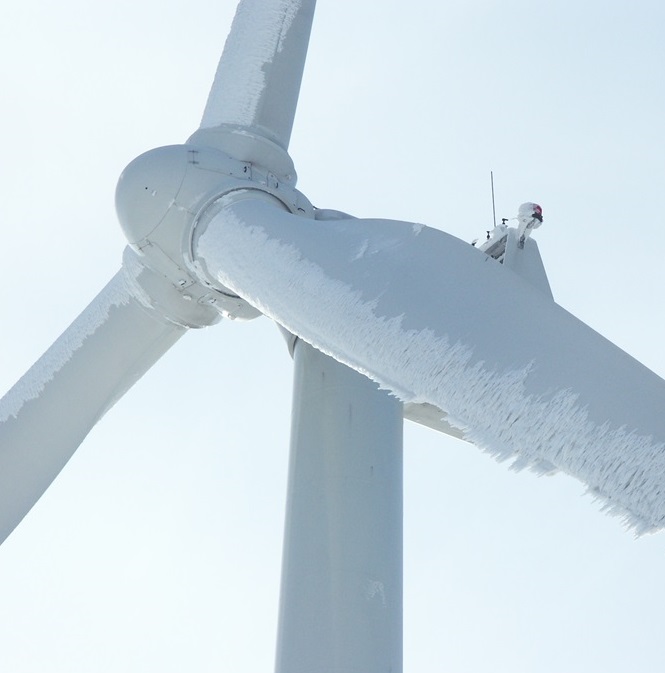
Far from threatening human existence, coal and gas have, once again, literally saved thousands of American lives. A bout of what is now known as ‘extreme weather’ demonstrates how extremely stupid it is to rely upon sunshine and breezes for power.
During December’s Big Freeze, millions of America’s solar panels were carpeted in snow and ice; thousands of its wind turbines were frozen solid – any that weren’t were shut down to prevent their destruction by gale-force winds.
The same thing happened back in February 2021 – and will keep happening, for as long as lunatics are left in charge of America’s energy policy.
Across Texas and the American Midwest power prices rocketed and power rationing (aka ‘demand management’ – if you call a series of rolling blackouts ‘management’) – saw to it that thousands of households were left freezing in the dark. No doubt modern energy Scrooges would have…
View original post 984 more words


Recent Comments