The world’s hardest language is NOT what you expect
24 Aug 2022 Leave a comment
in economics of education, economics of media and culture Tags: economics of languages
How the West Can Exploit Russia’s “Dutch Disease” and End the War in Ukraine
24 Aug 2022 Leave a comment
in defence economics, energy economics, international economics, war and peace Tags: nuclear power, Oil prices, Ukraine
Energy crisis: UK expands gas emergency exercise ahead of winter
23 Aug 2022 Leave a comment

 Image credit: thecount.com
Ministers ‘insist’ there will be no blackouts, but is anyone comforted by that? They’ve already contracted some extra power from coal that was supposed to be being phased out. Maybe they’re relying on the high price of energy cutting demand.
– – –
A regular emergency planning exercise to help the UK prepare for the possibility of a shortage of gas supplies has been doubled in size, reports BBC News.
Potential scenarios – including rationing electricity – will be wargamed over four days, rather than the usual two, as energy concerns grow.
The government insists there is no risk to UK energy supplies and consumers should not panic.
View original post 244 more words
Industrial Degeneration: Crippling Cost of Subsidised Wind & Solar Destroying Our Economic Future
23 Aug 2022 Leave a comment


Thanks to the hidden and crippling cost of subsidised wind and solar, households and businesses are being hit with staggering bills, with prices at levels unimaginable, until recently.
Double digit annual percentage increases are now the norm.
As we reported yesterday, Brits are already suffering power prices more than double what they were 12 months ago, with prices set to double again before their next winter is over. Germans are watching their power prices spiral out of control; with state-controlled rationing sets of institutionalised across the country.
Hopelessly intermittent wind and solar sit at the heart of this economy wrecking chaos. Notwithstanding the efforts of renewable energy rent-seekers to pretend otherwise.
Politicos and the MSM continue to blame everything else under the sun, Vlad Putin, included.
Energy users can only despair, with logic and reason banished from energy policy, long ago. Engineers don’t get a look in. Instead, the realm…
View original post 985 more words
Charles I in search of friends: government in crisis and the rewards of loyalty, 1640-1644
23 Aug 2022 Leave a comment

Today we hear from Dr Vivienne Larminie, editor of our Commons 1640-1660 project, who discusses Charles I’s attempts to secure loyalty by giving out peerages and other honours in the early 1640s…
By late 1640 the government of Charles I was in deep trouble.A treaty signed at Ripon on 26 October signalled the end of three years of war against his Scottish subjects – the so-called Bishops’ Wars – but peace came at a price. The Scots maintained an army of occupation in Northumberland and were to be paid £850 a day until a final settlement was ratified by the English Parliament.That Parliament assembled on 3 November in no mood to oblige the king, but instead set about attacking key components of royal policy.On 11 November, impeachment proceedings were launched against Thomas Wentworth, 1st earl of Strafford, Charles’s chief minister in Ireland; a fortnight later he was languishing…
View original post 996 more words
Orr defending the LSAP
23 Aug 2022 Leave a comment

The Governor of the Reserve Bank must have been feeling under a bit of pressure recently about the LSAP programme. Losses have mounted and some more questions have started to be asked – by more than just annoying former staff – about value for money.
And thus on Thursday morning “Monetary Policy Tools and the RBNZ Balance Sheet” dropped into inboxes. It was an 10 page note setting out to defend the Bank and the MPC over the bond-buying LSAP programme and the inaptly-named Funding for Lending programme, the crisis facility under which the Bank is still – amid an overheated economy and very high core inflation – lending new money to banks.
Of course, the Monetary Policy Statement had been out the previous day. Had the Governor been serious about scrutiny and engagement, he’d have released his note a day or two before the MPS (or even simultaneous to…
View original post 2,941 more words
August 22, 1485: The Battle of Bosworth Field
23 Aug 2022 Leave a comment

The Battle of Bosworth or Bosworth Field was the last significant battle of the Wars of the Roses, the civil war between the Houses of Lancaster and York that extended across England in the latter half of the 15th century. Fought on Monday August 22, 1485, the battle was won by an alliance of Lancastrians and disaffected Yorkists.
Their leader Henry Tudor, Earl of Richmond, became the first English monarch, Henry VII, of the Tudor dynasty by his victory and subsequent marriage to a Yorkist princess, Elizabeth of York the daughter of King Edward IV.
His opponent Richard III, the last king of the House of York, was killed during the battle, the last English monarch to die in combat. Historians consider Bosworth Field to mark the end of the Plantagenet dynasty, making it one of the defining moments of English history.
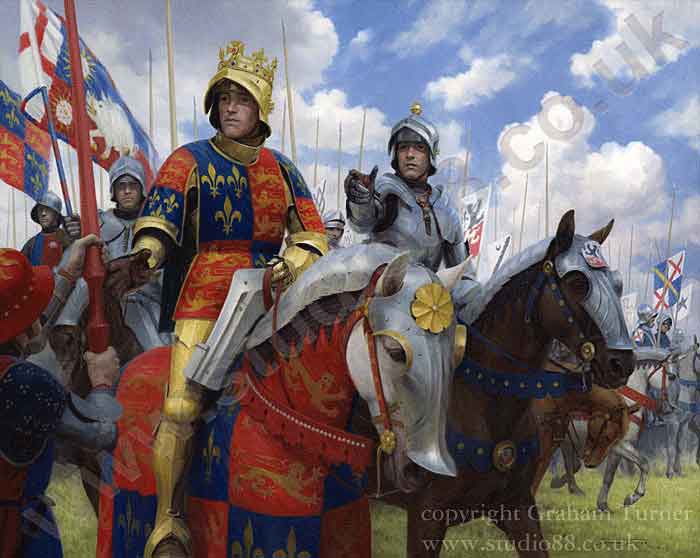 King Richard III of England at the Battle…
View original post 479 more words
Milton Friedman on Keynesian Economics
23 Aug 2022 Leave a comment
in business cycles, economic history, fiscal policy, great depression, history of economic thought, macroeconomics, Milton Friedman, monetarism, monetary economics, unemployment Tags: Keynesian macroeconomics, monetary policy
The Dissolution of the Holy Roman Empire Part X: Abdication of Franz II
23 Aug 2022 Leave a comment
In the face of Napoleon’s assumption of the title “Emperor of the French” in 1804 and the Austrian defeat at the Battle of Austerlitz in 1805, the Habsburg monarchy began contemplating whether the imperial title and the empire as a whole were worth defending.
Many of the states nominally serving the Holy Roman Emperor, such as Baden, Württemberg and Bavaria, had openly defied imperial authority and sided with Napoleon. Even then, the significance of the empire was not based on actual control of resources, but on prestige.
The main idea behind Franz II’s actions in 1806 was to lay the groundwork needed to avoid additional future wars with Napoleon and France. One concern held by the Habsburg monarchy was that Napoleon might aspire to claim the title of Holy Roman Emperor.
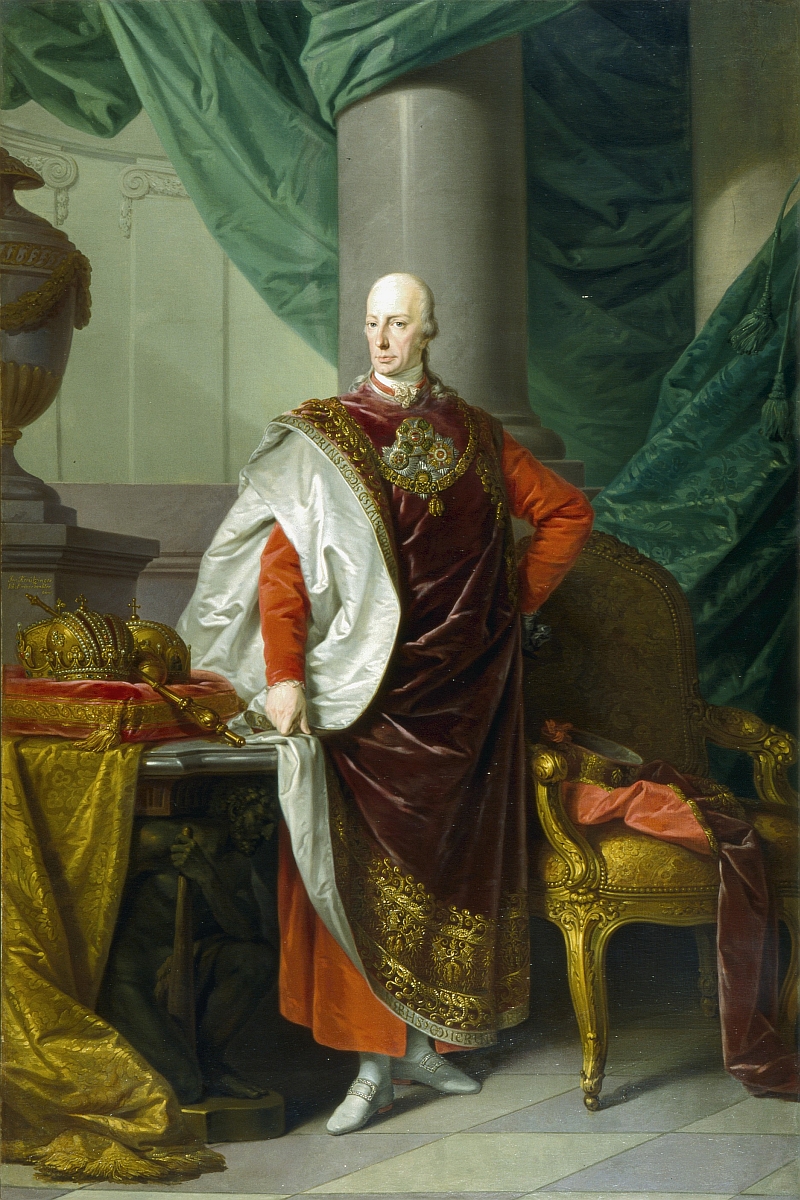 Franz II-I, The Last Holy Roman Emperor and First Emperor of Austria
Napoleon was attracted to Charlemagne’s legacy; replicas…
View original post 663 more words
Oh So ‘Cheap’!: Power Prices Set to Quadruple in Wind & Solar ‘Powered’ Britain
22 Aug 2022 Leave a comment

The ultimate cost of renewable energy virtue signalling is truly crippling, wind and solar-obsessed Britain is a case in point. Power prices have doubled over the span of a few months and will quadruple as energy demand spikes again in winter.
Attempting to ditch its coal-fired power plants (and converting them to run on wood pellets imported from the US) was never going to end well.
The first sign of trouble in wind-powered paradise began in September last year when (and for months following) Britain’s much heralded wind-powered future ran headlong into reality when the Big Calm struck. Wind power output was reduced to a risible trickle across the continent. The Brits were forced to fire up their mothballed coal-fired power plants, and wholesale power prices went through the roof.
Natural forces continued to conspire into November: on 2 and 3 November, wind power output across the UK once…
View original post 885 more words
Milton Friedman on the leads and lags in monetary policy
22 Aug 2022 Leave a comment
in business cycles, economic growth, fiscal policy, history of economic thought, macroeconomics, monetarism, monetary economics
From The New Palgrave 1987
The Watergate myth: Why debunking matters
22 Aug 2022 Leave a comment

My recent post about the heroic-journalist myth of Watergate prompted a few blinkered, ahistoric observations.
Among was this comment, posted at Romenesko‘s feedback site:
“Who cares?” the comment reads. “Watergate was in the early 1970s. … Arguing the point now about what role a paper played almost 40 years later in a presidency that a significant number of people have no recollections of? Ya gotta admire those authors willing to tackle cutting-edge topics.”
So why does it matter? Why is addressing and debunking the heroic-journalist myth of Watergate — the notion that intrepid reporters for the Washington Post brought down Richard Nixon’s corrupt presidency — still important?
Several reasons present themselves, not the least of which is the vigor that characterizes the Watergate myth: It lives on in textbooks, in classrooms, in newsrooms. It’s a very robust myth, little-restrained in its reach and infiltration.
A hint of its reach…
View original post 377 more words


Recent Comments