Pravar Petkar: Consultative Referendums and Constituent Power in the UK
06 Jul 2022 Leave a comment

 On 28 June 2022, the Scottish First Minister announced that the Lord Advocate had made a reference to the UK Supreme Court on whether a Bill for a consultative referendum on Scottish independence would fall within the Scottish Parliament’s legislative competence. Although there has already been much discussion on the issue of legislative competence (see here, here and here), this post argues that consultative referendums have a broader constitutional significance that might impact both the determination of competence and the steps that will follow the court’s ruling.
Consultative and determinative referendums
Consultative referendums do not have direct legal consequences. Notable examples in the UK include the 2014 referendum on Scottish independence and the 2016 Brexit referendum. In both cases, the enabling statute for the referendum was silent as to the consequences of the result. Consultative referendums are contrasted with binding or ‘determinative’ referendums (asTierneyterms them) in which…
View original post 1,374 more words
What is democratic backsliding and is the UK at risk?
05 Jul 2022 Leave a comment




Concerns about the health of UK democracy and the risk of democratic backsliding are rising. Meg Russell, Alan Renwick and Lisa James warn that MPs, who are the ultimate democratic safeguard, cannot afford to be complacent if we wish to prevent backsliding and safeguard our democracy.
Commentators, civil society groups, think tanks and academics are increasingly warning about the health of UK democracy. Such warnings often draw on the concept of ‘democratic backsliding’.
But what is democratic backsliding? And is there good reason to worry about a risk of it in the UK?
What is democratic backsliding?
Democratic backsliding is, in its simplest form, the process by which a state becomes gradually less democratic over time. Scholars emphasise that no cataclysmic state collapse or overthrow is required for backsliding to take place; instead, it is a gradual process, coming about through actions of democratically elected leaders.
Democratic backsliding…
View original post 1,586 more words
Beware of fish-hooks in free trade deals
05 Jul 2022 Leave a comment
in applied price theory, applied welfare economics, comparative institutional analysis, economics of regulation, income redistribution, international economics, politics - New Zealand, Public Choice, rentseeking Tags: customs unions, tariffs, trade diversion, trade negotiations

#OTD 1776
05 Jul 2022 Leave a comment
in defence economics, economic history, war and peace Tags: Revolutionary War

Western Europe, Wagner’s Law, and Economic Growth
04 Jul 2022 Leave a comment
The EU stopped catching up with the USA 50 years ago!

In this clip from an interview with Chile’s Axel Kaiser, I discuss “Wagner’s Law” and the lessons to be learned from fiscal policy in Western Europe.
If you don’t want to watch the video, my discussion can be summarized in three sentences.
- Yes, welfare states in Western Europe are comparatively rich by world standards.
- But those countries became rich when they had relatively small governments.
- Adopting high taxes and big welfare states has since stunted their economic growth.
And here’s a fourth sentence that I should have mentioned.
- They compensate for bad fiscal policy by having laissez-faire policies in other areas.
I expect that some people won’t accept my argument without some supporting evidence, so I’m going to share some charts.
We’ll start with this chart from Our World in Data. As you can see, nations in Western Europe has almost no welfare states prior to…
View original post 339 more words
Schools presentation on free trade and inequality
04 Jul 2022 Leave a comment

Here are the slides from a presentations I gave last week to A-level students of economics, politics and business studies…
US Supreme Court Slams EPA’s Attempt to Wreck America’s Reliable & Affordable Power Supply
04 Jul 2022 Leave a comment


It appears as if adults are finally taking charge of energy policy, wresting it from the hands of boffins and bureaucrats determined to have us freezing or boiling in the dark.
Germany has restarted its coal-fired power plants and looks unlikely to shut down its nuclear power plants as previously mandated; the French are determined to maintain their 56 nuclear plants and have plans to build 14 all new plants in the near future.
In the US, its Supreme Court has just crushed Joe Biden’s surreptitious efforts to destroy America’s coal-fired power plants by a mixture of underhanded stealth and unlawful regulation.
The Epoch Times had this report on Joe’s latest constitutional blow.
Supreme Court Narrows EPA’s Ability to Regulate Carbon Dioxide Emissions
Epoch Times
Matthew Vadum
30 June 2022
The Supreme Court ruled 6–3 on June 30 that the Clean Air Act doesn’t give the U.S. Environmental Protection Agency…
View original post 1,451 more words
Anurag Deb and Nicholas Kilford: The UK Internal Market Act: Devolution Minimalism and the Competence Smoke Screen
04 Jul 2022 Leave a comment

 The UK’s territorial constitution is, at present, under a great deal of pressure. Those familiar with one force unsettling the devolution framework — the attempts to override the Northern Ireland Protocol — will no doubt recall the legislation that first countenanced a similar approach: the UK Internal Market Act 2020 (UKIMA). This piece of legislation is, however, once again causing its own stir, this time in the form ofa clash between Scottish and UK ministers over gene-editing regulations.
The UKIMA, in short, effectively deprives future provisions of devolved legislation—even within competence—of effect to the extent that they are incompatible with its “market access principles”. In other words, although such devolved legislation would remain law, its practical effect is limited by the application of the market access principles. The UKIMA, we suggest, contributes not only to a growing momentum towards a minimalist conception of devolution, but does so by fundamentally…
View original post 2,035 more words
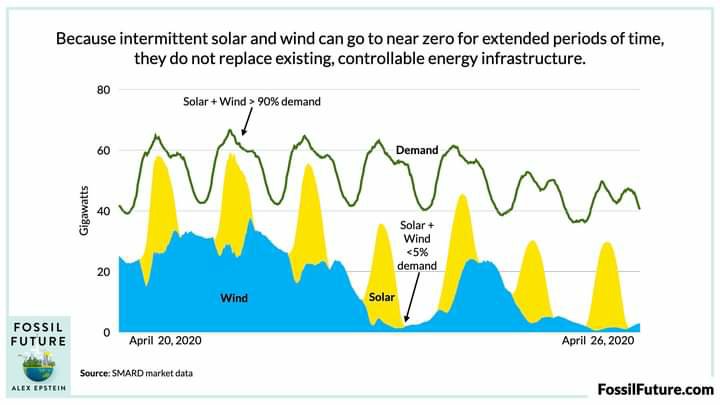
Part-time power
04 Jul 2022 Leave a comment
in energy economics, environmental economics, global warming Tags: celebrity technologies, solar power, wind power
Arctic sea ice extent: spiraling down or doing just fine?
04 Jul 2022 Leave a comment

There was some controversy about Arctic sea ice in May of this year. Back then, I saw some (contradictory) messages in a quick succession. First, there was a tweet claiming that Arctic sea ice extent was the same as in 1989, followed by a fact-check claiming that this was just cherry-picking and that it in fact going steadily downhill, finally a reply that also the fact-check was cherry-picking and overall sea ice extent was just fine.
So, what is it? Is Arctic sea ice going to hell in a handbasket or is it doing just fine, already recovered to 1989 levels?
It is several years ago since I looked at Arctic sea ice extent data and at that time there was what seems to be a modest beginning of a pause, so I was curious how it evolved since then. Did that pause continue or is it straight down again?
View original post 809 more words
The real “Elvis,” the real “Comeback Special”
04 Jul 2022 Leave a comment

One of the better sequences in Baz Luhrmann’s “Elvis” is recreating that sacred piece of Elvis lore, “Singer Presents…Elvis,” the Xmas season TV show labeled “The ’68 Comeback Special.”
Luhrmann does spectacle like few filmmakers working today.
But you might be surprised how impressive that analog live on videotape show was for its day, and remains. Here’s a favorite but featuring a song by Burt Reynolds ‘ future sidekick, Jerry Reed.
You can find the entire special on YouTube, in pieces and in complete form. Some of it is teeth grindlingly dated. But what worked still works.


Recent Comments