How Farmers Accidentally Killed Off North America’s Locusts
09 May 2022 Leave a comment
in economic history, economics of education
Extreme Weather during the Maunder Minimum
08 May 2022 Leave a comment

By Paul Homewood
Extreme Weather during the Maunder Minimum (1645–1715 A.D.)
The region around the eastern Mediterranean (the Ottoman Empire) was severely affected by adverse climate during the Maunder Minimum.
Most areas suffered drought and plague in the 1640’s, the 1650’s and again in the 1670’s, while the winter of 1684 was the wettest recorded in the eastern Mediterranean during the past five centuries, and the winters of the later 1680’s were at least 3° C cooler than today.
In 1687 a chronicler in Istanbul, Turkey reported ‘This winter was severe to a degree that had not been seen in a very long time. For fifty days the roads were closed and people could not go outside. In cities and villages, the snow buried many houses. In the Golden Horn [major urban waterway and the primary inlet of the Bosphorus in Istanbul], the…
View original post 10,463 more words
Brexit is not to blame for the surge in UK inflation
08 May 2022 Leave a comment

(Written on 2 May) Ouch! It looks increasingly likely that the headline measure of consumer price inflation is going to start with a ‘9’ in April (official data will be released on 18 May).
Most economists had expected a jump from 7pc in March to around 8.5pc. This assumed that the price increases we already know about – notably the 54pc hike in the Ofgem cap on domestic energy bills – would be at least partly offset by slower inflation elsewhere.
Unfortunately, this doesn’t appear to have happened. In particular, petrol and diesel prices have edged up further, despite the 5p cut in fuel duty, and food price inflation is continuing to rise. These pressures have been compounded by the geopolitical risks that Liam Halligan explained well in the Sunday Telegraph.
I have therefore upped my own forecast to 9pc for consumer price index (CPI) inflation in April, with the…
View original post 981 more words
Robert Hetzel – “New Keynesianism in central banking: friend or foe?”
08 May 2022 Leave a comment
in business cycles, economic growth, great recession, history of economic thought, inflation targeting, macroeconomics, monetarism, monetary economics
Baldrick’s ‘cunning plan’: A health restructuring transition unit without a transition plan
07 May 2022 Leave a comment

On 21April 2021 Minister of Health Andrew Little announced a major restructuring of Aotearoa New Zealand’s health system involving three main changes to take effect on 1July 2022. Better understanding the third of these changes is helped by drawing upon Baldrick of the Blackadder television comedy.
The first two changes are commendable; the establishment of the Maori Health Authority (MHA) and the new crown public health agency (located within the Ministry of Health). They both have the potential to sharpen the effectiveness of addressing the impact of external social determinants of health, wellbeing, and access to quality patient care treatment.
Establishing these two new entities does not of themselves disrupt or destabilise the health system. Both new entities could established without any other restructuring, aside from transferring some functions to them presently performed by the health ministry.
Removing the ‘point of connection’
But the third change does disrupt and destabilise…
View original post 1,423 more words
China And Russia Rejoice At America’s Quest To Go Green
07 May 2022 Leave a comment

 By Ronald Stein ~
China and Russia are great War historians of WWI and WWII, and know that the countries that controls the minerals, crude oil, and natural gas, controls the world! Biden has done an excellent job of relinquishing “CONTROL” for the “green” materials to China, and relinquishing “CONTROL” of the crude oil to OPEC and Russia! God help America!
 How is it possible that America has allowed itself to become so dependent on authoritarian countries like China, Russia, Venezuela, and Saudi Arabia over the 30 years since the end of the Cold War? The weaponization of energy by China and Russia have been extensively discussed in the three books co-authored by Ronald Stein and Todd Royal, including the 2022 Pulitzer Prize nominated book “Clean Energy Exploitations – Helping Citizens Understand the Environmental and Humanity Abuses That Support Clean Energy.
America is in a fast pursuit toward…
View original post 878 more words
The Hard Data: Why Subsidised Wind & Solar Inevitably Drive Power Prices Into Orbit
07 May 2022 Leave a comment

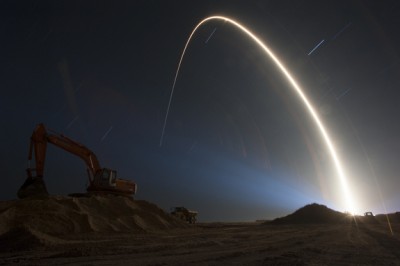
The relationship between rocketing power prices and heavily subsidised and chaotically intermittent wind and solar couldn’t be clearer. Every country that’s embarked on the so-called ‘inevitable transition’ to an all wind and sun powered future is suffering from surging power prices.
Add wind and solar generating capacity and watch power prices go into orbit, as night follows day. The Danes know it, the Germans know it and South Australians became the butt of international jokes, because of it.
STT has been spelling out the connection for the best part of a decade, now. But, as more and more countries fix their energy hopes on the unreliables, the volume of mounting data they provide leads to an incontrovertible truth, not just the hint of a causal connection.
Kathryn Porter digs into a couple of datasets to reach the inevitable conclusion about the ‘inevitable’ transition.
Addressing the high real cost of renewable…
View original post 2,234 more words
May 6, 1910: Death of King Edward VII of the United Kingdom
07 May 2022 Leave a comment

Edward VII (Albert Edward; November 9, 1841 – May 6, 1910) was King of the United Kingdom of Great Britain and Ireland and the British Dominions, and Emperor of India, from January 22, 1901 until his death in 1910.
Edward was born at 10:48 in the morning on 9 November 9, 1841 in Buckingham Palace. He was the eldest son and second child of Queen Victoria and her husband, Prince Albert of Saxe-Coburg and Gotha. He was christened Albert Edward at St George’s Chapel, Windsor Castle, on January 25, 1842. He was named Albert after his father and Edward after his maternal grandfather, Prince Edward, Duke of Kent and Strathearn. He was known as Bertie to the royal family throughout his life.
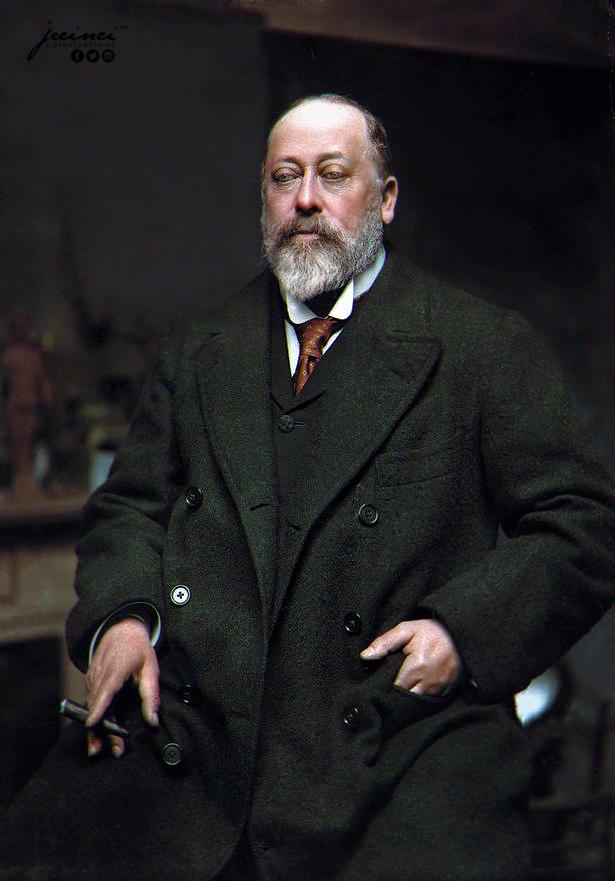 As the eldest son of the British sovereign, he was automatically Duke of Cornwall and Duke of Rothesay at birth. As a son of Prince Albert, he also…
View original post 1,330 more words
Sinking of the Lusitania – The Gorlice-Tarnów Offensive I THE GREAT WAR – Week 41
07 May 2022 Leave a comment
in defence economics, laws of war, war and peace Tags: World War I
Total Flop: Nothing ‘Inevitable’ About So-called ‘Transition’ to Wind & Solar
06 May 2022 Leave a comment
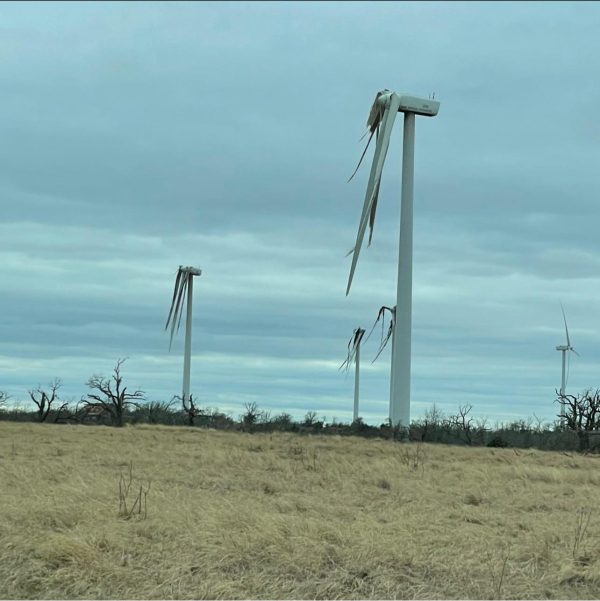
A mixture of wishful thinking and childish pipedreams, there’s nothing inevitable about the so-called ‘transition’ to wind and solar – Sunset remains a fixed feature of daily life, as does stubbornly calm weather. But the acolyte and rent seeker would have us believe that these natural phenomena are either trivial obstacles to be overcome – with mythical mega-lithium-ion batteries – or a fossil-fuel backed, right-wing conspiracy.
Pushing reality to the sidelines and perpetually confusing the cruelly tangible with the woke and desirable, those still pitching an all wind and sun-powered future are untroubled by earthly concerns such as economics and physics.
As Mark Mills details below, wind and solar have been hopelessly overrated by those with nothing more than a wish to believe.
How Much Energy Will the World Need?
PragerU
Mark Mills
29 March 2022
Are we heading toward an all-renewable energy future, spearheaded by wind and solar? Or…
View original post 848 more words
Covid Evidence: Supply Vs Demand Shock
06 May 2022 Leave a comment

By the time most students exit undergrad, they get acquainted with the Aggregate Supply – Aggregate Demand model. I think that this model is so important that my Principles of Macro class spends twice the amount of time on it as on any other topic. The model is nice because it uses the familiar tools of Supply & Demand and throws a macro twist on them. Below is a graph of the short-run AS-AD model.
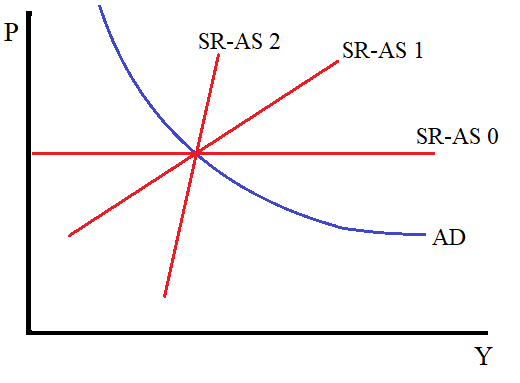
Quick primer: The AD curve increases to the right and decreases to the left. The Federal Reserve and Federal government can both affect AD by increasing or decreasing total spending in the economy. Economists differ on the circumstances in which one authority is more relevant than another.
The AS curve reflects inflation expectations, short-run productivity (intercept), and nominal rigidity (slope). If inflation expectations rise, then the AS curve shifts up vertically. If there is transitory…
View original post 966 more words


Recent Comments